The Wall With Nothing On It
Bats distributed: twelve. Bats taken in Boston to be proven wrong about: two.
We came into Boston on Thursday, up the seaboard from Philadelphia, and the first thing I did in the city was carry forty-eight baseball bats up to a room on the third floor, six at a time.
Gary had refilled the wagon in Philadelphia — a pallet of Douglas fir trucked out to meet us, the count back up to forty-eight, the Knockwood number from the lower lot in March. Boston was the first real clubhouse since the marketing week, and he'd sent us in loaded for it. Forty-eight to seed or sell now, twelve landed since spring, the rest of them gone into cages and onto desks and a cousin's truck in Georgia. I carried them up in armloads of six, alone, same as the first forty-eight in Phoenix in March. Cecil's room was on another floor.
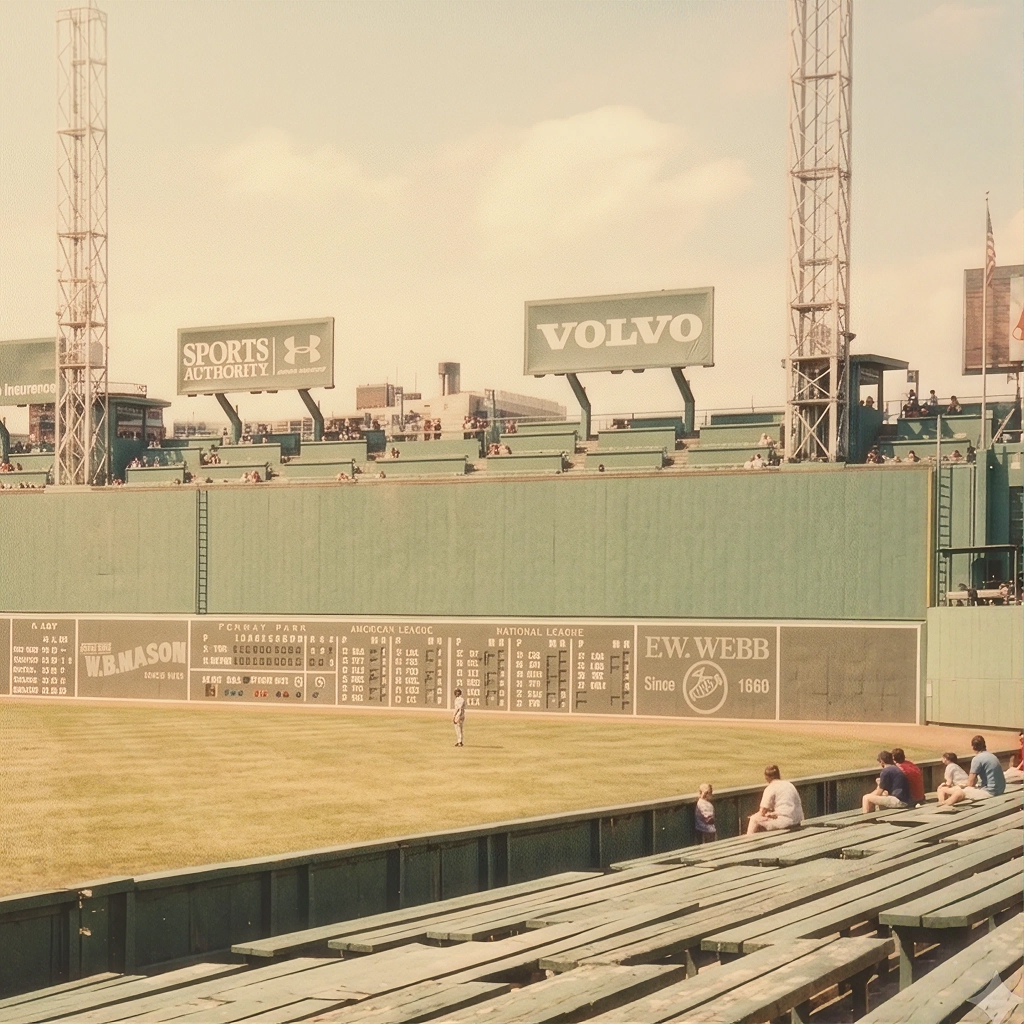
The Boston Common Nine have played in the same park since 1912, which in this country is close to forever, and the park has a wall in left field thirty-seven feet high that everyone in America can picture without ever having been. I'd be lying if I said I wasn't glad to finally see it.
They played two on Friday — a doubleheader, the first at two o'clock and the nightcap under the lights, with a turnaround between them barely long enough to hose the infield. I bought two seats for the first one, out where I always buy them, the back rows of the bleachers in right-center, four dollars dearer than they ought to be and still the cheapest real estate in the building. I bought the one beside me for Cecil. I keep starting to say I don't know why. I bought it so he'd have a place if he wanted one.
He sat in it half an inning. Then somebody down along the bullpen fence lifted a hand at him — a coach, a catcher warming somebody, I never got the name — and Cecil went down to the rail and was gone into it. He knew people in Boston. He'd known people in nearly every city we'd rolled through. He spent the afternoon down there among his own, and the seat I'd bought sat open at my elbow while the Nine took the visitors to pieces.
It was ten to nothing by the sixth and had never been as close as that. Fifteen hits, a new one every time I looked up. And the wall stood out there in front of me the whole time, the green one, the famous one. I've stood back from a wall in Washington with sixty thousand names cut into it, and stood at a wall of bronze faces in Cooperstown, and I'll tell you the Green Monster is not that kind of wall. It's a wall with nothing on it. There's a scoreboard down in the bottom of it they still change by hand, and every half inning a man behind it slides the old numbers out and the wall goes blank and green again. I watched a ten-run game alone next to an empty seat.
I had set up a meeting for the gap between the two games. Only later did I learn there is no worse forty minutes to ask an equipment man for his time than the forty minutes between halves of a doubleheader he has to flip by himself. Cecil would have known that in his sleep. Cecil would sooner have asked the man for a kidney. I didn't know it, so I booked it, and for some reason the man said yes.
He said yes because of New York. The Uniques — the ones whose money cleared in Philadelphia, whose feeds had carried Cecil's face wrapped in red, white and blue for the country's birthday — had put their name on our bats first, and loudly.
His name was Fitz. He met us in a cinderblock hall under the stands with a hand truck of his own to push, a wad of tape in one fist, already half-turned back toward the work I'd pulled him out of. "You got two minutes," he said. "Go."
I opened. I'd built the pitch all season out of Cecil's own lines. "It's a bat. Douglas fir, off the flank of Mount St. Helens — volcanic soil, forty-six years of new growth. There's mineral in the wood, you can hear it come off the ball. I've got samples in the—"
"Fir." He said the word like it named a food he didn't eat. "Everybody's ash or maple. Nobody swings fir."
"That's the whole—" I could feel the two minutes running out under me, so I reached for the thing I thought I had that Cecil didn't. "New York swings it. Bought a run of them last month. Paid for them, too."
I said it like a closer.
Cecil made a sound beside me — the front of a word, low, meant for me, the sound a man makes right before he tells you to choke up an inch. "Don't—," he said, and caught it, and let it go.
He didn't need it. The thing had landed, only not the way I'd thrown it. Fitz's chin came up off the tape.
"The Uniques bought these."
"Six of them, and we're prepping for a larger second order."
"Huh." He leaned the hand truck against the wall and put a hand out — not toward me — and Cecil had a bat in it before I got the bag open. "Let me see what New York's wasting its money on."
That was the last thing anybody in that hallway said to me for a while.
Fitz rolled the barrel under the hall light and thumbed the grain, hunting the flaw he'd walked up sure was in there. "What's it weigh?" he said — to Cecil. "It cupped?"
"Thirty-one, thirty-two ounces, off the billet. Cupped however you want it," Cecil said. He was into it now — warmer than I'd seen him since the reunion — the whole thing coming up easy out of a man who'd given it in a dozen clubhouses. "Forget the volcanic soil a second. Put your thumb on the label, feel where the weight wants to sit. Dried slow, most of a year in the air before it ever sees a kiln — dense where a hitter needs it, quiet everywhere else. Same stick as anybody's, loaded where a hitter lives."
Fitz took a short half-swing in the cramped hall, stopped, looked down the barrel, and took another. "Huh," he said again, and set the bat down, and picked it right back up.
They were talking past me now — Fitz asking, Cecil answering, the two of them closed into it — and me with the bag finally open and no one needing what was in it. Then Fitz put a hand back for a second bat without breaking off what he was saying to Cecil, and I put one in it. He asked Cecil something about the handle and reached back again, and I filled his hand again. He never once looked at me. I stood a half-step behind them and passed the wood up as it was wanted, and somewhere in there I became the place the spare bats were kept.
"So New York put their name on these." Fitz was grinning now, a bat in each hand. "Figures. They'll buy anything with a story on it." He said it to Cecil, one baseball man to another, an insult to the Bronx and a joke on nobody standing in front of him. He had no way of knowing that the room where the Bronx bought them was the last room Cecil and I stood in as partners. Cecil laughed with him and gave something back, and it played as a man enjoying a rivalry. But his hand had gone still on the barrel while he said it — a second, no more — and then it moved again. I was the only one in that hallway with any reason to watch his hands.
I tried to get back in. "We could leave you a few for the cage, no—"
"Tampa measures all this." Fitz went on over me, not unkindly, turning a bat to the light. "Exit velo, barrel that, smash the other thing. Look where it's got 'em." He tipped his head toward the field, where the visitors were in the middle of being swept out of his ballpark. "We've won ten straight. Eleven after tonight, and we clawed all the way back to even doing it. You know what a room like that changes?" He set the bat down. "Nothing. Nobody in here's switching lumber in the middle of this run."
I had heard that sentence before. A man named Devon said a version of it to us in a dome in Florida in May, about a Tampa club that was the best in the league and couldn't be bothered — the same Tampa club Fitz was tipping his head at now. The sentence hadn't changed a word. It had only moved to whoever was winning.
He kept two anyway — not to swing, but to be right about later. "I'll take a look," he said, which is what they all say, and put the two under his arm with his tape and his hand truck and went off to flip his ballpark for the nightcap. Cecil told him the numbers were coming. The numbers are always coming. The count that counts held at twelve. Somewhere in that building tonight there are two Wallop bats a man carried off to prove a point, and I've decided to enjoy that a good deal more than the truth of it deserves.
The nightcap I watched from the same bleachers, alone in earnest this time — I hadn't bought the second seat. You learn. The park was full and loud in a way the blowout never got to be, because a sweep would make it eleven straight, and this town had gone ten years without a number like that, and you could feel forty thousand people counting toward it before it came.
The home runs the crowd came for were Boston's — the catcher put one over the wall in the first, and the place came up out of its seats. The one I watched belonged to the other team. Junior Caminero got under one in the third and put it over the Green Monster and out onto the street behind it — that wall with nothing on it — and it wasn't a Boston run and it wasn't ours. I'd been watching that man hit all season without meaning to. There was Florida in May, off the club that measures a bat instead of listening to it, the one with no use for what we carry. There was last week in Philadelphia, in the Derby — him and the Boston catcher both in it, forty-four thousand people counting them off — before he went out in the semifinals. And now here, in road grays, over the most famous wall in the sport by forty feet. The Relentless Sunshine lost anyway, five to three, swept, on a night nobody in Boston will remember his ball at all. I was the only one in my section watching where it went instead of where the game was. I wrote the number down.
Cecil went off after the game with the bullpen crowd — a late dinner somewhere, I gathered, though I wasn't told and didn't ask. So I did the only other thing there was to do in Boston at night, which was the tourist thing, alone.
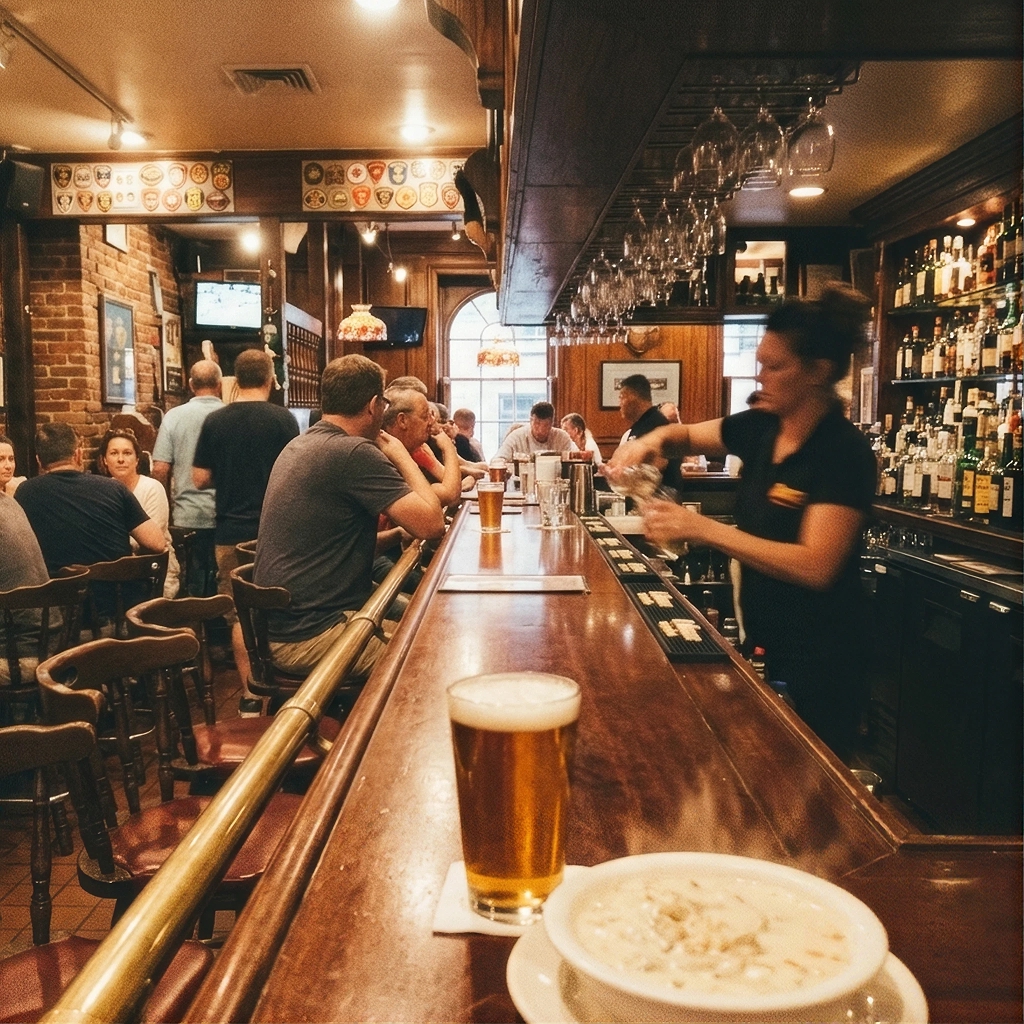
There's a bar downtown a television show was set in, or set at, some forty-odd years back. It's a real bar, or a bar built to look like the set they built to look like a bar. I couldn't sort out which and it didn't matter. There was a line to get in and I stood in it. Inside it's gift shop up front and barroom in back, and I found a stool — they'll tell you whose stool was whose if you ask, and I didn't — and had a beer and a bowl of chowder, both on the company card. The bartender was slammed. The place was full of people who'd stood in the same line I had, and not one of us said a word to another one of us. I finished the beer, gave up the stool, and went back out.
Coming out, my phone went off. My ex-wife.
The text was about Grinnell tuition. The first payment was due the first of August, the letter had come with the number on it, and she'd broken my half out to the dollar and put it in the text so there'd be nothing to discuss — six thousand two hundred forty dollars, by the first, and did I want to send it to her or straight to the school. Then, under that: I told Asher you'd want to know.
I read it twice on the sidewalk. It was more than four years at Western Washington had cost me, the whole degree. Then I put the phone away and walked back to the room.
They won again Saturday, and again Sunday — four straight over the visitors, thirteen in a row for the year, the city lit up like it hadn't been. A team on a run like that doesn't adjust. Fitz had told me as much between games; the whole weekend was the city telling me the same.
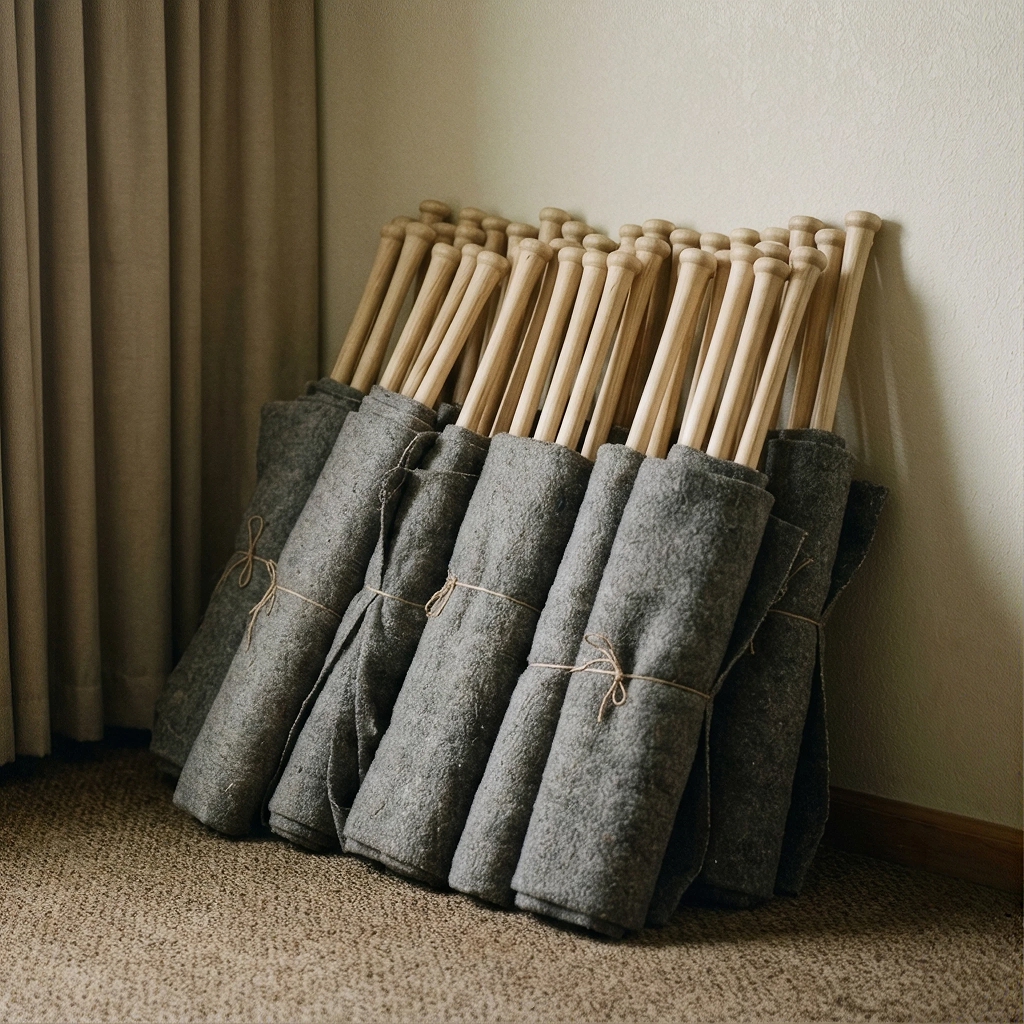
The bats were up in the corner of the hotel room, where they'd been since the first night. Cecil came by once, to settle what time we were leaving Monday, saw them there, and said nothing.
Today we point the wagon north, across the border, up to Toronto. Forty-six bats in the back now, and twelve that ever counted. I'll drive — that part's still mine — and Cecil will ride beside me with his window rolled up.
— Freely
Fantasy baseball without the homework.
Want in for the 2027 season? Leave your address and we’ll send one note when leagues open in March.