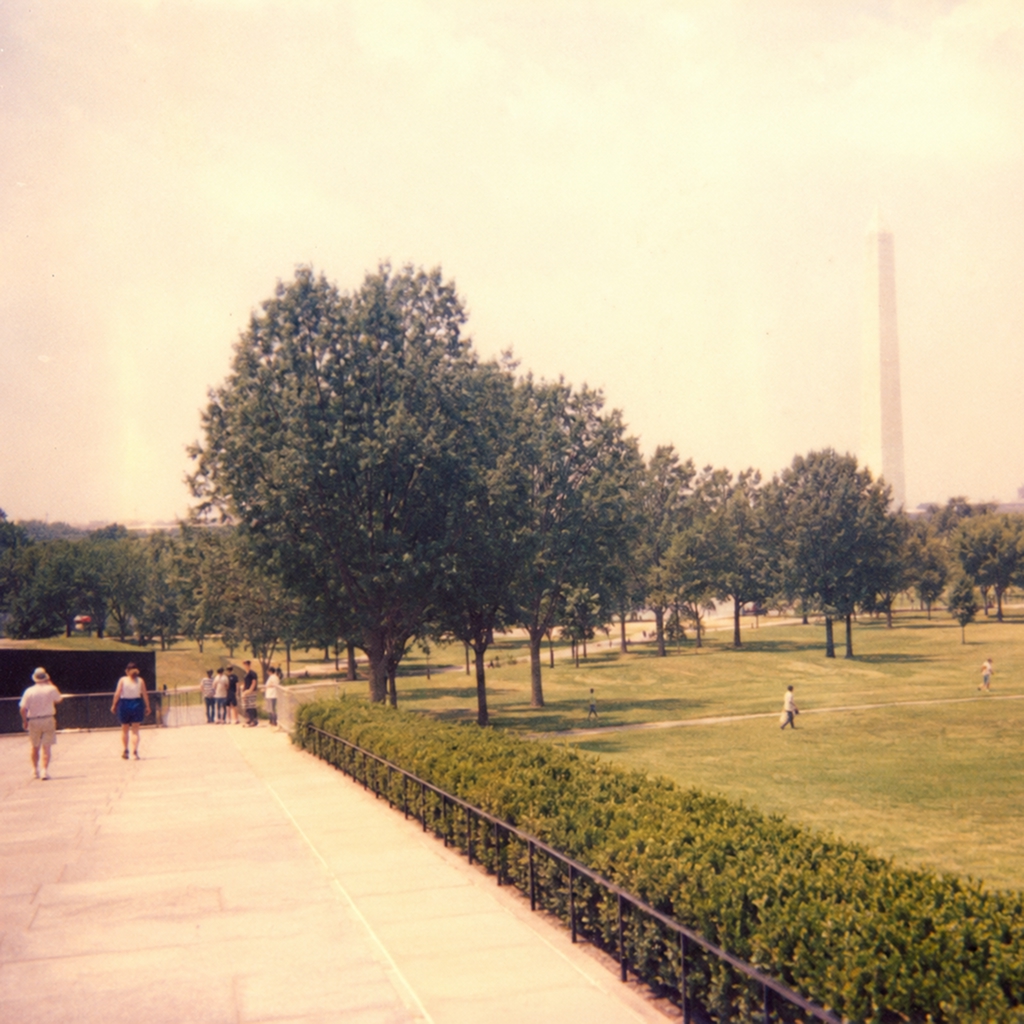
The Wall
Bats distributed: none. The two meant for Washington are still in the back of the wagon.
They let Cecil out on Friday, four days after I pulled over to the curb.
A woman wheeled him to the door because that is the rule, and he rode the chair like he was preparing to jump from a moving train, and at the door he dismounted cleanly. There was a paper sack of pill bottles and a sheet of instructions folded in quarters. Naomi carried both. He let her, which was its own kind of news.
"Cecil Thelonious Tate," she said, supporting him at the elbow. "Would you just smell that fresh air?"
I hustled to bring the wagon around. I'd cleaned it out that morning — the cups, the gas receipts, the maps gone soft at the folds — everything but the bats and the Polaroid. The bats because there was nowhere else for them to go; the Polaroid because by now you don't move the Polaroid. It rides the dash where Hayden left it, Sochi with her hand up, turned toward the window.
Tate took his position in the front passenger seat, Naomi in the back. And I want to get this part right, because it is where the week turned and I didn't feel it turn: I asked him where to. I meant the room. I meant the brick place south of the ballpark with the hot plate and the window unit, the place a man goes to get better. He looked out the windshield a second and said, the Mall.
It was the heat the city had spent a week warning itself about, the kind that comes up off the pavement and just stands there. I had the air going full. The hospital sits up in its own corner of the city, and the Mall is a few minutes south and east of it. I figured we'd see it and go on to the room. We were most of the way there before I understood the room could wait.
The Mall was full — it was Juneteenth, families down the length of the green, coolers and folding chairs, somebody's speaker carrying a long way in the heat. I got the wagon as close as the day let me, and we went the rest on foot, the three of us, because there is no quick way to move a man four days off a heart attack. I had an arm under him. I knew where we were headed before he said a word — the Wall, the Vietnam Veterans Memorial, down in the trees where the path drops away, the names cut into the black of it.
At the top of the path, where the ground tips down toward the names, Naomi came around and got her hand under his other arm. I stopped. He felt me stop. "Aren't you coming?" he said, already half-turned to start down. I said no — you two go on. Some of it was the curb still in me, the hospital desk and the woman asking was I family, all the gentle things they tell a man who isn't. Most of it was simpler than that. There was no third place at those names. I slid my arm out from under him and set his hand into his daughter's and let go. She took his weight and looked at me once and didn't say anything. He didn't argue. He is not a man who argues.
They went down the rest of the way together, her hand under his arm, slow, his shirt already going dark between the shoulders, and I stayed at the top of the path and watched them get small.
I'm not going to tell you what happened down there, because I didn't see it, and because for once on this whole trip I had the sense not to go and find out. From where I stood they were two people at the far end of a long dark seam in the ground, close together, not moving much. A man passed me with a kid on his shoulders and a rubbing kit under his arm. The heat came up off Constitution and made the two figures swim. Off across the way the reflecting pool had gone green — somebody'd painted the bottom of it blue in the spring and the summer had turned it into an algae bloom, the blue coming up in flakes — and I looked at that a while, because it was a thing to look at that wasn't them. After a while the smaller one put her arm all the way around the bigger one, and they stayed like that, and I looked at my shoes for a respectable amount of time.
He told me in the car. Not all of it. Cecil Tate has never told me all of anything.
We were back on the parkway with the river coming up on the left, Naomi quiet in the back with her face to the window, and he said it the way he gives me the score of a game I missed.
"My brother's up on the wall."
I said I hadn't known he had a brother.
"Earl," he said. "Earl Tate. Junior — that was my father's name too." A half mile of road. "He could really play. Clubs were after him. The Army got him first." And then, because I think he could feel me hunting for the thing to say and wanted to spare us both the show of me finding it: "In seventy-two. He was nineteen. Few more months and they'd have rotated him home — it was all but over by then."
I had a response. I have a response for everything; it is the occupational disease. I didn't use it. I drove. In the back seat Naomi had her hand over her mouth, and I understood that whatever he had given her out there on the grass he had given her the long way — the whole of it, the way you hand a thing down to your own. So I took it and kept my mouth shut and drove us home.
Naomi stayed three more days.
The man who runs the brick place had held both rooms for us the whole time Cecil was in the hospital, and somewhere in there he'd stopped putting them on my card and started asking after Cecil by name every morning, by his first name, the way you do about somebody you've decided to be worried about. I let him hold the second room. I didn't look too hard at what any of it was costing. There are weeks for that and this was not one of them.
Naomi took over the hot plate the first night and never gave it back. She is her grandmother's granddaughter; she cooked the way she'd cooked in that kitchen in Atlanta, like feeding people was a thing you did with your hands so your mouth didn't have to. She made her father eat. She made me eat. The little room filled up with the smell of it, garlic and something low and long-simmered, in a place with one burner and half a refrigerator, and I watched her not reach for the salt, not once, and Cecil sat propped against the headboard on the far side of the half-wall and let his daughter put plates in front of him.
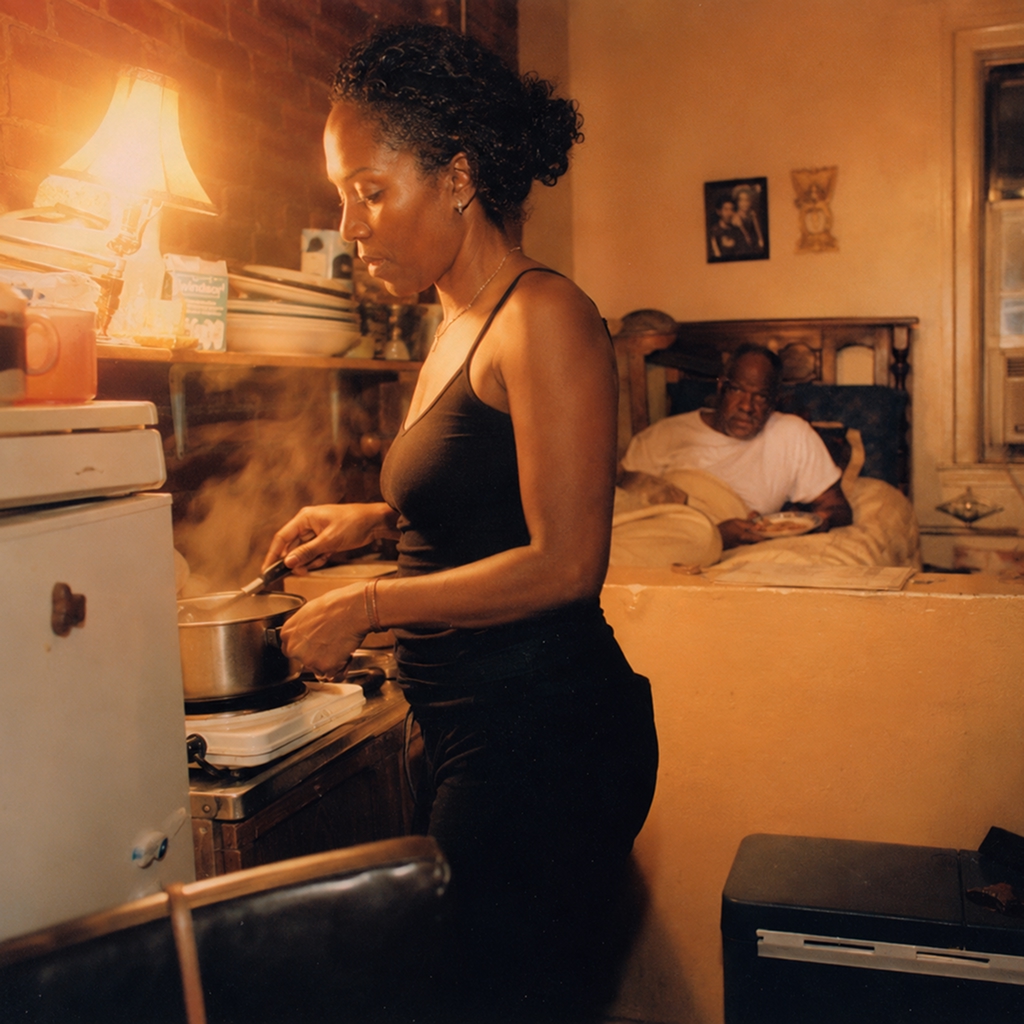
Sunday was Father's Day. The phone had sat quiet in my pocket all day — nothing from the kid, nothing from their mother — and I had no business expecting otherwise. A kid most of the way out the door doesn't text you on Father's Day, and the week after you miss their graduation is not the week they start. Their mother quit expecting things from me a long time ago; her quiet was just the steady state of us. I knew all of it. After dark, the dishes done and Cecil asleep behind the wall, I got my phone out anyway and started a message to my kid.
I still hadn't told them why I wasn't in that hall for graduation on Tuesday. They had the fact of it — a seat that didn't fill, a father who didn't come — and they did not have the reason, and the reason was lying twelve feet from me with a brand-new stent in his heart, breathing. I wrote three lines. I read them back. They sounded like a man trying to excuse himself. I deleted them and put the phone in my pocket with the thing unsent, the way I'd put it away in Savannah, the way I keep putting it away. Naomi asked was I all right. I said I was hungry. She put a plate in front of me. It is a hard house to go hungry in, that family. I have written that before, about a different kitchen. It keeps coming up true.
Somewhere in those three days I tried to go back to calling him Tate. It is the colleague's name — the name for a man you are hauling bats around the country with, the name the job would want — and it had done me fine for ten weeks before the curb. It would not sit anymore. I'd think Tate and the page would come out Cecil. I've quit fighting it. You can take from that whatever I can't.
On the third day he asked me, from the bed, were the bats still in the wagon. I said they were. He asked when Baltimore was. I told him — the twenty-sixth, the Ushers, forty-five minutes up the parkway. He nodded, the small nod of a man confirming what he'd already decided somewhere I wasn't invited, and that was all of it. He never said he was staying. He just started asking the questions of a man who was going on. Naomi was at the hot plate with her back to us, and she heard it, and her hands went still a moment, and she did not turn around.
She found me the last night out on the steps, where it was a couple degrees cooler than in, with a dish towel still in her hand. For a while neither of us said anything, which from Naomi is not a restful silence; she is a person who fills a room. Then she said, not looking at me, "I'm not going to get him to come home."
I said I didn't know that.
"You know it," she said. "I watched you walk him to the edge of it and hand him to me. You didn't come down."
She folded the towel over once and smoothed it down on her knee.
"I want to say thank you," she said. "And I do say it. You kept him alive on the side of a road, and I'm going to be grateful to you for that till the day I die." She got the towel exactly square. "And there's the other part, and I'm only saying it the once, so hear me." She looked at me then. "He's staying on account of you."
I started in on her that it wasn't that. I told her about the cage in Phoenix and the kid with the phone in Denver and the big man in the LA bleachers he'd laughed with like I'd never heard him laugh — I told her what I'd been watching for three months, a man down in the last of something, back near the game he'd given his whole life to, and that you do not take that off a man, and that I was the help, I was a guy from a bat company, I was not the reason for anything that —
"Marshall," she said. Just my name. And she let me run all the way down to the end of it.
Then: "He went out to that wall and gave me my uncle because he just found out he might not get another chance to. And then he came home and asked you when Baltimore was." She stood up off the step. "He doesn't need the road for the game. He can watch every game there is from my couch, with his feet up, and me in the kitchen. It isn't the game anymore." She got the door. "You're the one man who could put him on a plane with me tomorrow, and you won't do it. That's all right. I'd want him too." She wasn't hard about it. That was the worst of it — there was no heat in it anywhere. "I just wanted one of us to say it out loud, the once."
Then she went in. In the morning she was gone — a car to the airport before either of us was up, a note for her father under the salt shaker that I did not read, and the kitchen left cleaner than she'd found it.
The Philadelphia Fraternals were in town, and once Naomi was gone, Cecil said he wanted to go. So we went.
I got us seats. He sat in his. He didn't work the rail, didn't go down to watch the hands the way he's done in every park since February — he sat the whole night in his seat, and I didn't say anything about it and neither did he. The rain had pushed first pitch past eight; when they finally pulled the tarp it was still warm, the field that lit-up green it gets, the city softening off behind the upper deck.
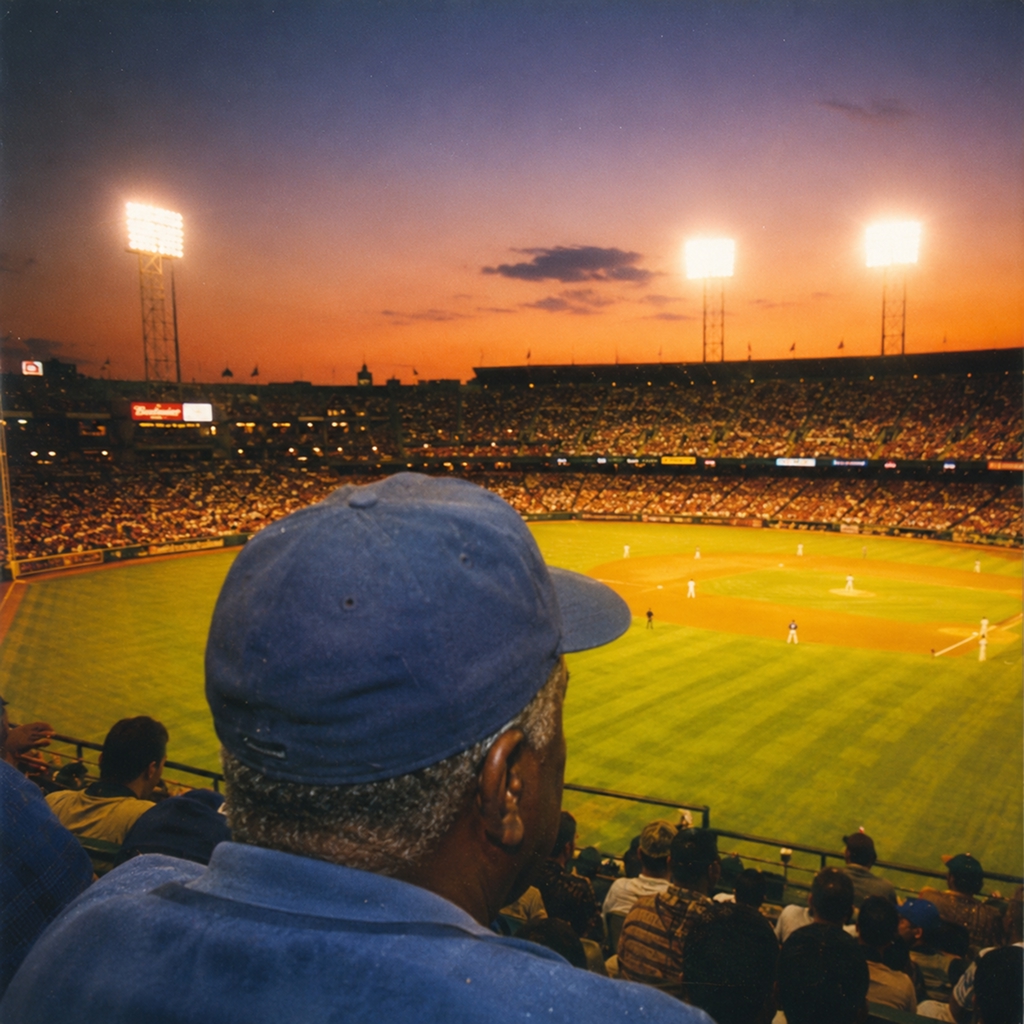
In the fourth a man came up the aisle in a Standing Committee polo with a credential swinging on a lanyard, and he stopped at our row and said, "Cecil Tate."
It was the man. Del, the one we'd been driving up to see the Monday it happened — the one Cecil had been worried about from the passenger seat while his own heart was going out from under him, we gave the man our word, you don't do that to a fellow who took your call. He'd heard, of course. Everybody in the building had heard. He took Cecil's hand in both of his and said, "Forget the bats. God almighty, forget the bats. I'm just glad you're sitting here."
The two sample bats were in the wagon in a lot four blocks off. Nobody said a word about them. Cecil said something back, low, and Del laughed, and the two of them did what old baseball men do, a whole friendship in about nine words, and then he had to get back down to the clubhouse, and he went. Cecil watched him go with a look I'd been trying to name on him since the first week in Phoenix and only now could — somebody in a polo knowing his name in a ballpark, the heat coming up off it, a man glad he was in the seat.
And I thought, sitting there next to him: there it is. That's what she can't see from a couch in New Orleans. That's what he stays for. Not me. That. I was so relieved to be thinking it that I very nearly didn't notice I was thinking it.
Neither of us had a dog in it. We stayed to the end anyway.
Cecil's asleep in the next bed. Friday we drive up to Baltimore.
— Freely
Fantasy baseball without the homework.
Wallop is a home run-only game for friends — simple enough to play all season without the daily grind. Start a league and draft any time before September.
Start a League