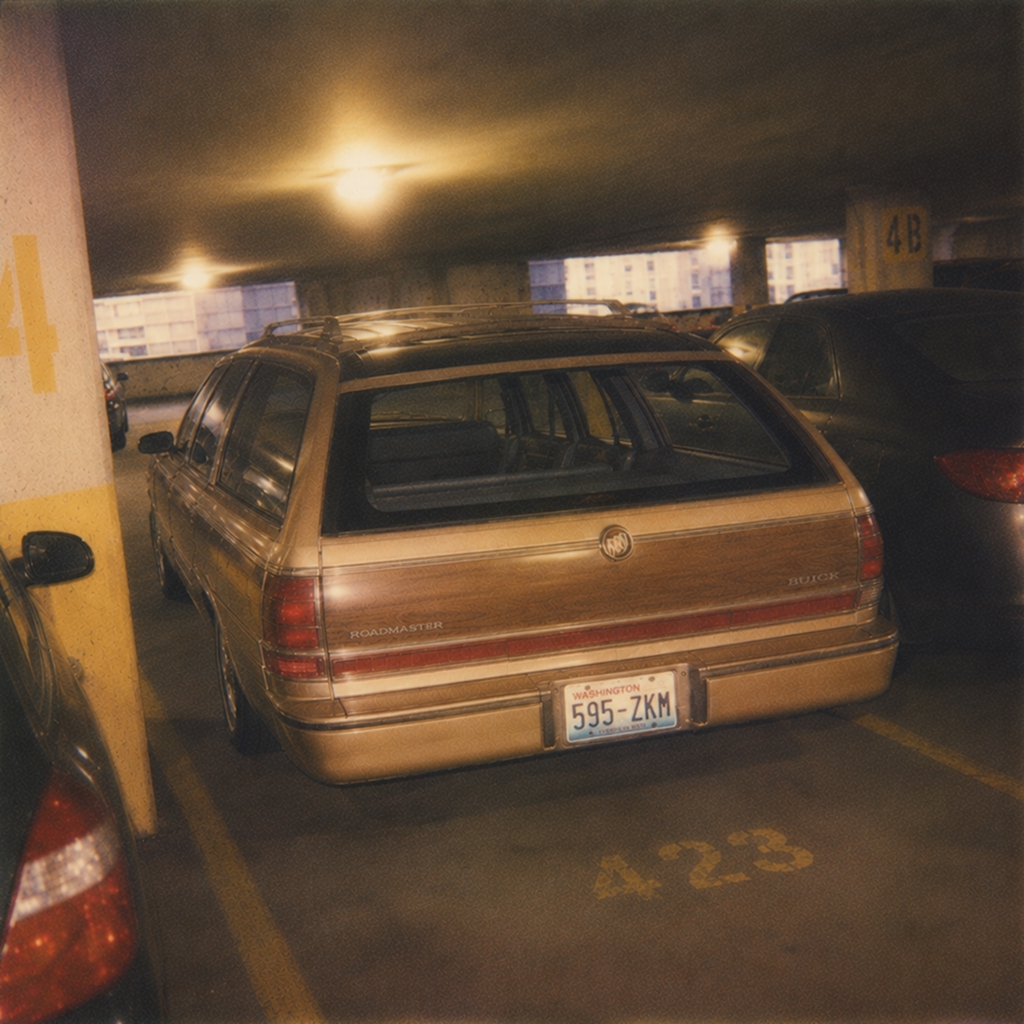
The Curb
Bats distributed: doesn't matter.
There was no dispatch for three days. The home office said why, and didn't dress it up, and I read what they wrote a hundred times off my phone in the hospital room, where there was nothing to do but wait.
Cecil is alive. They assure me he is going to stay that way. I am going to set down how that happened in the order it happened, because the order is the only part I had a hand in, and because I am afraid of how it comes out if I tell it any other way.
Monday afternoon we were driving up to the stadium to see a man Cecil knew with the Washington Standing Committee. He'd been out of town and was finally back, and we were going to show him our bats before the night game. It was the heat the radio keeps naming. I had the air going. We were maybe a mile from the park, close enough to see the light towers, when I looked over to complain about the traffic and the words died in my throat.
He was gray. Not pale — gray, the color gone out of him and something else come into his face, and he had a sweat on him the air conditioning did not explain, and he was breathing like a man who'd walked up a hill, sitting still in a seat. He told me he was fine. He told me to keep going, we'd be late.
I pulled over.
I've already caught myself making it sound like I knew what I was doing. I did not. What I had was a paragraph I wrote years ago — a safety procedure for Amazon warehouses, the kind they tape up on a break-room corkboard — about what to do when somebody's heart is going wrong in front of you. Call. Don't drive — you will want to drive, and you mustn't. An aspirin, chewed, not swallowed whole. I'd written stay calm, and I remember thinking, at that curb with the hazards going, that it had been an easy thing to write at a desk.
I called 911. I found an old aspirin in the glovebox and made him chew it. Then I kept a hand on him and kept talking. What he was worried about — sitting there like that — was the man we were on our way to see. We'd given our word we'd come by, and you do not do that to a fellow who took your call. I told him the man would understand. I told him the bats would keep, the trip would keep, that there wasn't one thing in this world that wouldn't keep until somebody had looked at him. I don't know that he believed me. He was still working at it when the ambulance came, and after that he didn't have the air to work at anything. They took him to George Washington University Hospital, across the city. I followed the ambulance in the wagon, and the man inside it had been having a heart attack the whole time he was telling me to keep driving. The bats rode in the back. They're still back there.
At the hospital they took him through a set of doors and I went to a desk to ask where, and a woman asked me, kindly, was I family. I said I was the friend who'd brought him in, like that was a thing a person could be. It is not a thing a person can be. She told me what they tell a man who isn't family, which is very little and all of it gentle. And I stood there understanding for the first time that I had no standing in that building at all — that I could be the last face he'd seen go by and still be nobody anyone was obliged to tell a single thing. That's what did it. That's what put the phone in my hand. Naomi had given me her number weeks back, in Alabama, the day we dropped her off — anything happens, you call me — and I'd carried it like the key to a house I didn't expect to have to enter. I called her from the waiting room and told her where we were. She was on a plane before I'd worked out where I was going to sleep.
Tuesday morning, in the chair I'd slept in by his bed, my phone went off in my hand with a notice that my flight was boarding. The airline was very pleased to tell me so — all groups, now boarding — a gate number, a seat number, the five hundred and eighty dollars I'd put down to fly home and watch my kid graduate. I did not cancel it. There was no version of that morning where I sat in that hallway and got an airline on the phone. The plane boarded without me and flew to Seattle, and the seat I'd bought went with it, empty. I'll say one thing about it and then leave it alone: the ceremony was at five o'clock, and I knew the hour because my kid had given it to me.
She got in on no sleep, and by the time I understood she was there she was already in the chair by his bed and I was the one in the hall. That's the right order of things. She is his blood; I am a man from the bat company. But I'd been the one in the chair for a day, and I felt the trade of it more than I'd have guessed, and kept that to myself.
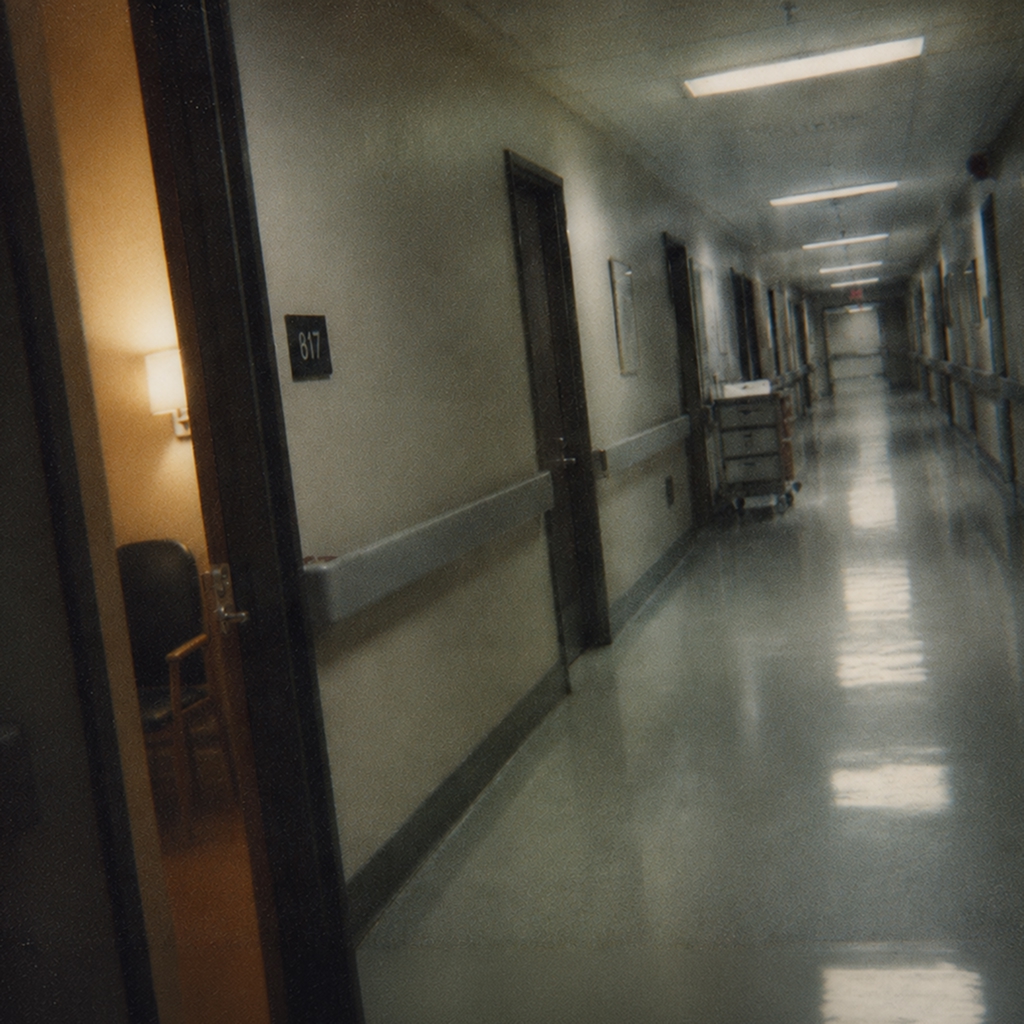
They ran tests for two days. I learned more words than I wanted to. At night I went back to our room — the brick efficiency south of the ballpark, the one with the hot plate — and the man who runs it quit charging me for the second bed after the first night and didn't make a thing of it, just slid the key over and asked how Cecil was, by name, every morning. After the second night I paid for a second room so Naomi would have a door to close, and made myself not look at what it cost. Once, in the hall, I heard her on the phone — she'd be a few more days, somebody'd have to cover her prep, she was sorry, that was twice up in a month now. I kept walking.
There was a nurse who'd been with us since the first night, who ran his numbers and called him my friend, and when some paperwork came down and I watched Naomi go still over it, this nurse said, not looking up from what she was doing, honey, his Medicare's good, you don't have to worry about that. Naomi said thank you. I thought about myself for a second, fifty-some and a long way short of any such comfort, and then I quit.
On Wednesday a doctor told us it was the less bad kind of heart attack, if there's a good way to say that, which there isn't. They'd gone in and found the trouble and propped open the place it was happening, and Tate would mend, with rest and a fistful of new pills and a long unglamorous slog of it ahead. Naomi had her hand over her mouth and then she didn't. The doctor was leaving when she stopped him and asked, I think, whether it would've been worse if it had gone on longer. He said it might have. He said — plainly, to her, not to me — that it was a good thing somebody with him had recognized he wasn't himself, because the man himself would've sat in that car till the game let out. Then he went on to the next room.
Naomi looked at me. There was a thank-you in it. I didn't try to sort out the rest.
By then Tate was awake enough to be a problem. He'd twice tried to leave, once with the gown still on, and been walked back by people used to walking men like him back. When I came in he asked were the bats still in the wagon. I said they were. He said good and shut his eyes, and that was when I knew for certain he was going to be all right.
The last thing. Earlier tonight Naomi and I were down in the cafeteria while Tate slept, working at the eggs they keep going down there at all hours. She'd been holding something a while before she said it: somewhere in these days her father had told her I'd given up a flight home, and she wanted to know what it was I'd given it up for.
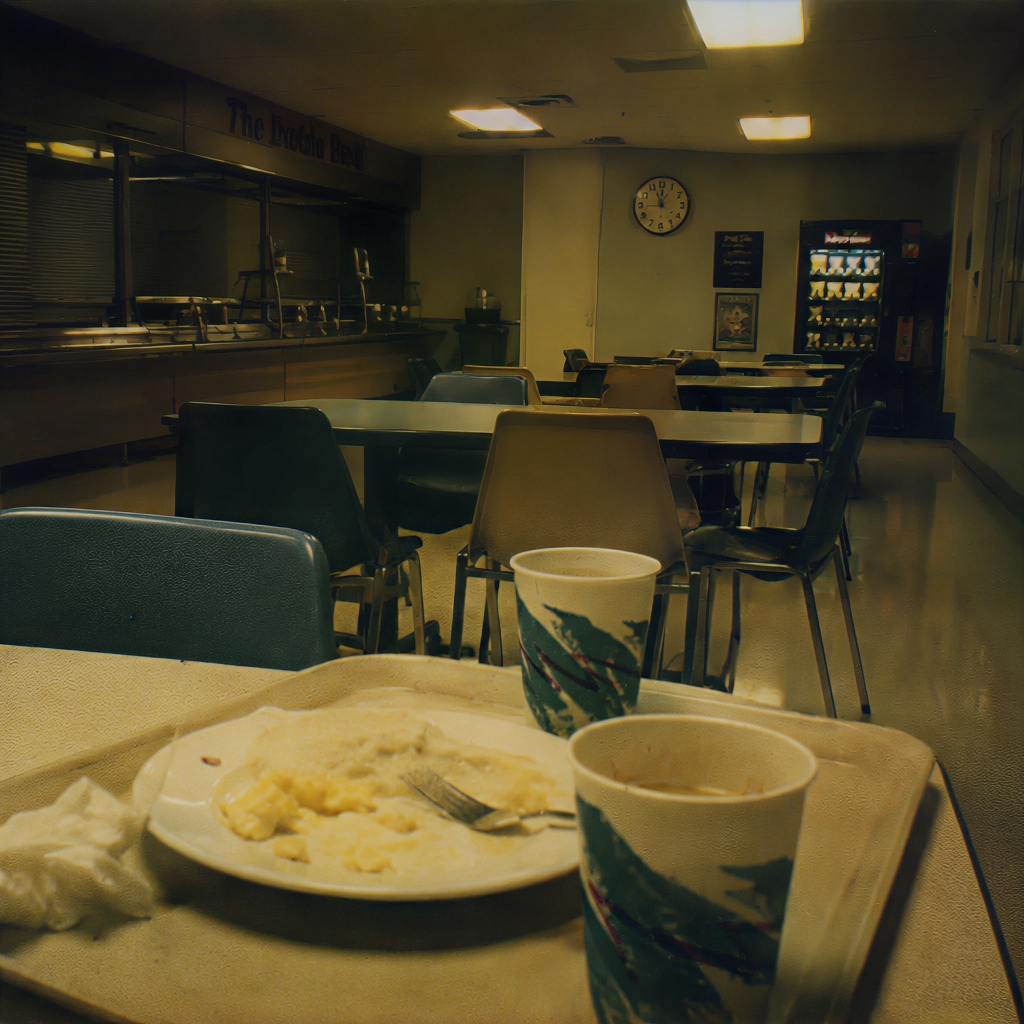
I told her. My kid's graduation, Tuesday — I'd let it go. I didn't make it a sad thing. I laid it down like a fact, the way her father lays things down.
She put her fork down. "You missed your kid's graduation," she said. "For my father."
"He's the one who talked me into the ticket," I said. "Right here, not a week ago — I was being cheap about the airfare, and he told me he'd missed yours and would've liked that one back. That was the whole reason I bought the seat."
She looked at me a moment, and then she laughed — one short laugh she hadn't meant to give, her hand coming up a beat too late to stop it.
"Marshall," she said. "He didn't even know me then."
And then she told me the rest, quiet, no heat in it. She'd crossed the stage before he knew the first thing about her. There was never a version where he was in that room. She'd made her peace with it a long time ago; you could hear that she had.
Then she gathered up the cups, and on her way to the trash she said, like it was already settled, that when she got him home she was going to make him slow all the way down. When she got him home. She said it kindly. She wasn't asking me anything. She said it as a fact, not a wish, and went to throw the cups away, and I sat there with it.
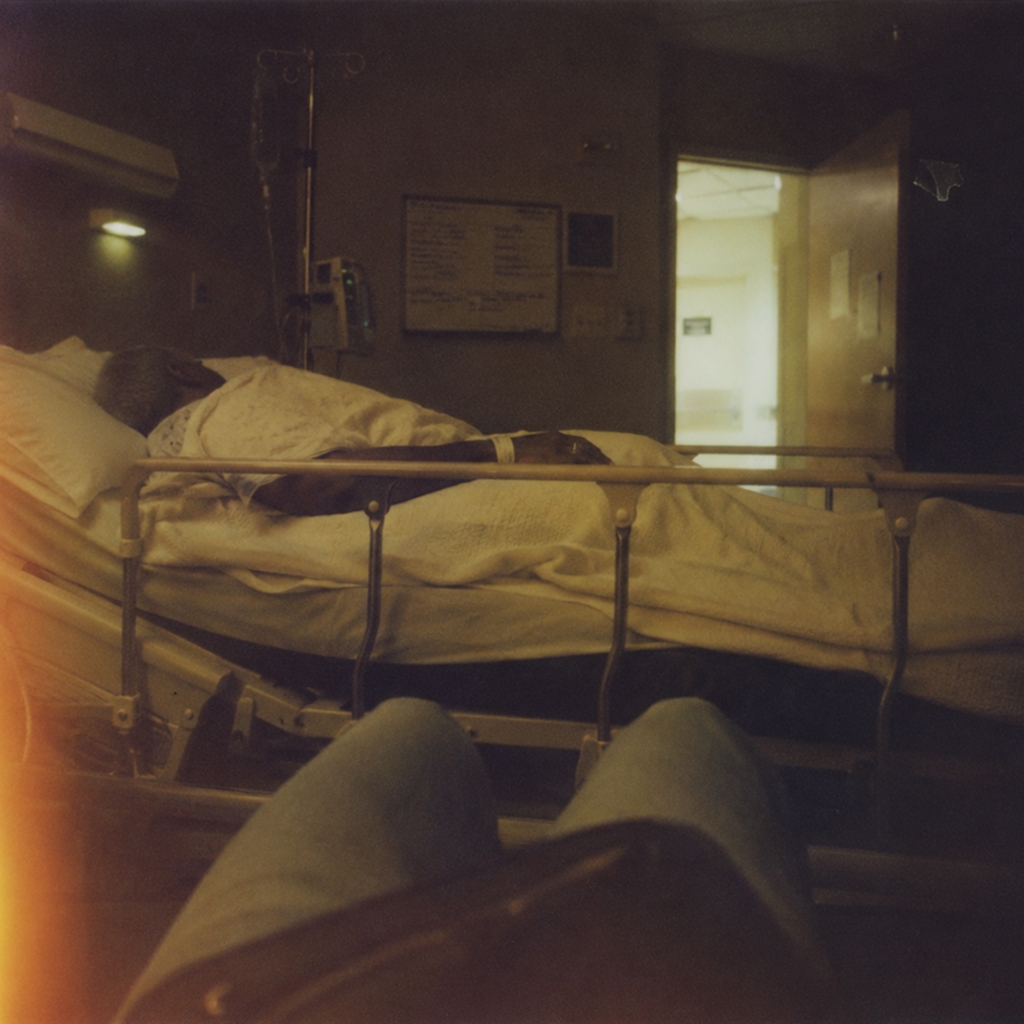
I went back up. Cecil was out, and Naomi had gone to the room I'd paid for, and the chair by his bed was empty, so I took it. He'll wake up tomorrow and there'll be a question in the room, and it isn't whether he lives — that one got answered, and I got to be there for the answer. It's whether, a week from now, I'm driving him up to Baltimore or watching a daughter take her father home.
I sat down in the chair. I didn't wake him. There was nothing to do but sit where I could see him, and wait for the morning.
— Freely
Fantasy baseball without the homework.
Wallop is a home run-only game for friends — simple enough to play all season without the daily grind. Start a league and draft any time before September.
Start a League