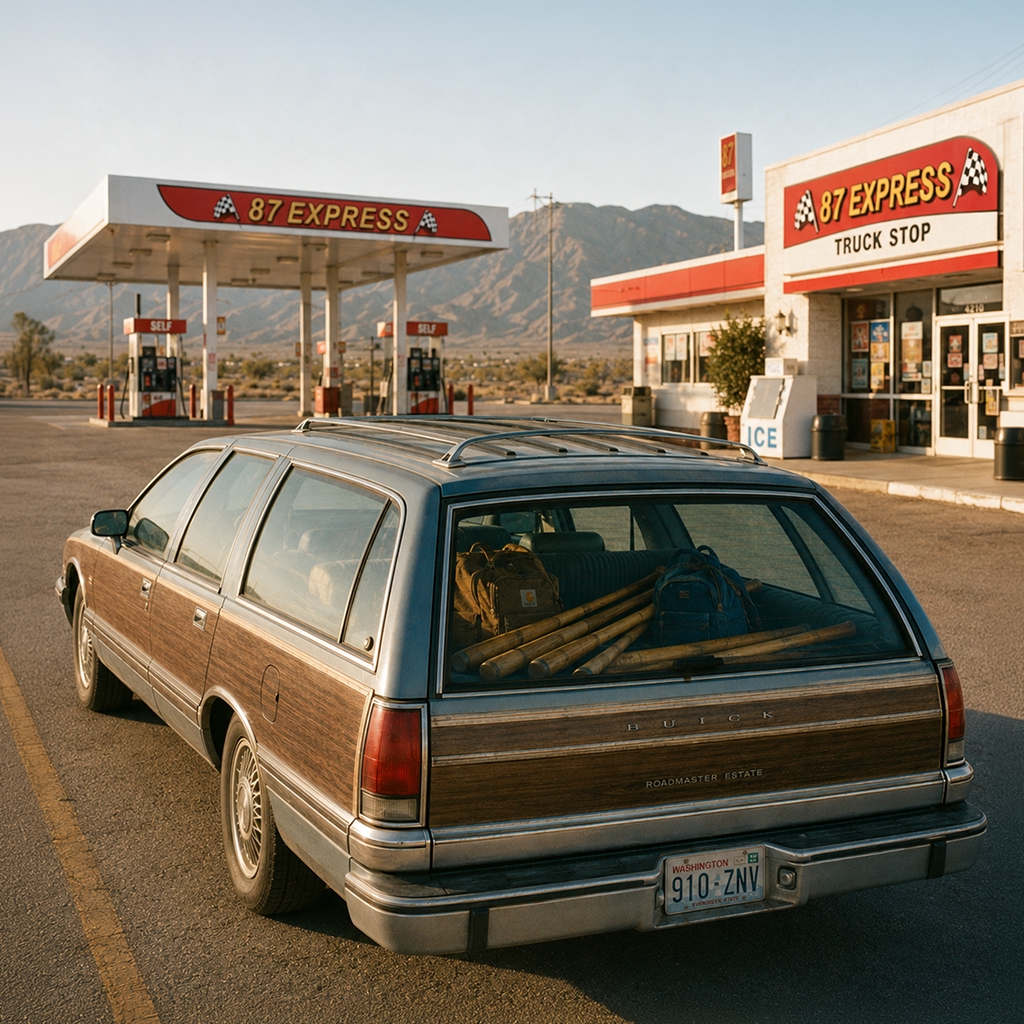
The Hitchhikers
Bats distributed: zero. Pitches delivered, in full, for the first time on the trip: one. Audience: two. Verdict, rendered: by a lift operator's mother in Lewisville, TX, by proxy.
We left Trinidad, CO at first light Friday and ate breakfast twenty-five miles south at a truck stop diner in Raton, NM I had Yelped the night before. Two coffees, eggs, the kind of register conversation you can have with your wallet open and your brain still asleep. The light came in sideways through the front windows. Through those same windows, halfway through my second coffee, I saw Tate watching two kids out at the diesel pumps holding a cardboard sign.
The kid on the left was lanky and sandy-haired with a halo of curls on top and short sides — denim jacket open over a hoodie that looked too thin for May at altitude. The girl was stouter with a dark braid, layered into a Carhartt jacket the way someone layers when they have actually been cold before. The sign between them read Dallas / DFW in Sharpie. The DFW was written below a crossed-out FORT W— where the cardboard had run out mid-word.
I looked Tate in the eye, said something about the time. How we had ten hours on the road and the wagon was half-bats and we did not know them. I said think twice.
Tate's eyebrows seemed to settle it. He poured the rest of his coffee in a to-go cup and walked outside.
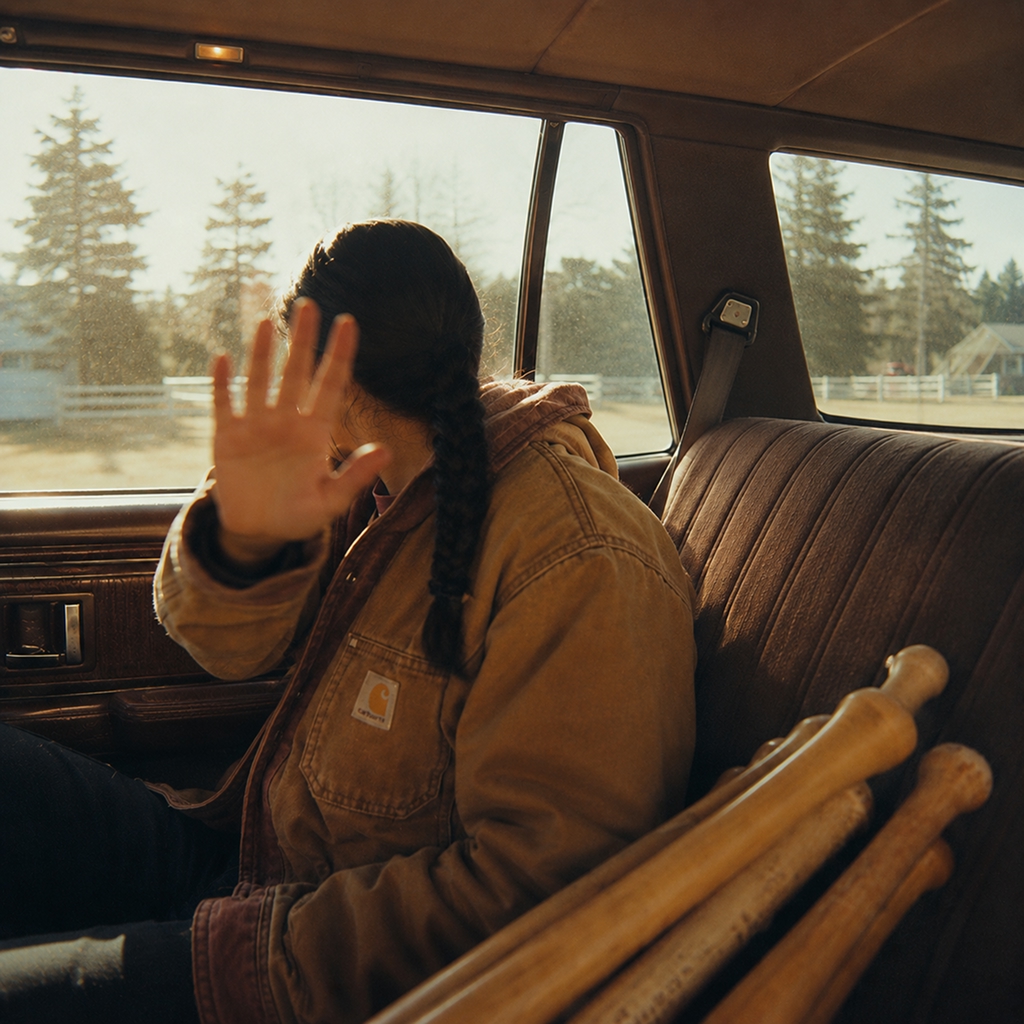
By the time I had paid and made it across the lot, the bags were in among the bats. Tate was in the shotgun seat. The girl was in the back, Carhartt unzipped now in the warming light, a small backpack on her lap. A turquoise-and-silver beadwork keychain hung from the zipper, the tribal bead pattern intricate enough to be handmade. She gave me a small nod through the window. I nodded back.
The taller kid bounded out of the truck stop a minute later holding something in plastic clamshell packaging — a charger, with a cigarette-lighter end, bought inside while Tate had been getting them settled. He climbed in next to her, leaned forward between the seats, and offered a hand.
"Hayden," he said. "This is Sochi."
I caught the name as Sochi. She did not correct me. He was already mid-sentence about something else. He shook with Tate. Hayden said it was a hell of a thing, us picking them up.
Pulling out of Raton, Hayden held the charger up between the seats. "Mind if I plug this in?" he asked. He was asking Tate. Tate took the cord, plugged the lighter end into the dash, and set Hayden's phone face-down on the console between us.
US-64 east of Raton is a long sentence with no commas. Wind farms in the middle distance, the Sangre de Cristos receding behind us, sun almost blinding over the hood. Hayden filled the cabin. He had run a ski lift at Red River that winter — the slow one, by the bunny hill. He had watched Sochi go up that lift with her ski classes twenty times a day. By January they were together. He said all of this without his partner contributing. She leaned her head on the window and watched the wind farms.
He talked about his mom. "My mom says he means well, which I think she mostly says to herself when it's obvious he doesn't," he said about his stepdad, in passing. He talked about introducing Sochi to his family. His mom had opinions. His older sister was Air Force. His mom had been a substitute teacher and had hated it.
He asked Tate what he did before this. Tate said, "I played ball, coached some." Hayden waited a polite second for more, did not get it, did not push. He asked me. I told him I had written for the paper in Seattle for a long time. He nodded the way a 22-year-old nods at the word paper.
Tate, after a moment: "You heading back next winter?"
"Both of us," Hayden said. "I'm gonna do another season at the lift, save up, then look at trades — HVAC or diesel, undecided. They asked Sochi to keep doing the kids' classes."
Sochi made a small adjustment to her position against the window. "It beats the alternative," she offered.
I pumped gas in Clayton, NM. I tapped the Asher message thread. Sunday's text. Tuesday's text. Yesterday's. All still on the unread side of the line. I did not send a fourth. I put the phone away. The kids were in the shade of the canopy, splitting a pack of crackers.
When Hayden climbed back in he reached for his phone on the console. The screen was dark. He looked at the cord, at the lighter, at me. I admitted I had never tried it. He tucked the dead phone in his pocket and the charger in his backpack.
He saw the Polaroid in the console well next. "May I?" he said, half-reaching. I let him. He turned in his seat and pointed it at Sochi. She put her hand up, turned toward the window. The shutter clicked anyway. He shook the print dry, looked at it without showing her, set it on the dash. It stayed there.
Out of Clayton we turned south on US-87. Texas came a few miles later. Somewhere past Dalhart, in a stretch of nothing, a fireworks barn called Crazy Eddie's came up on the right — two stories of bottle rockets and a plywood eagle with a sparkler in each talon. Hayden read the sign aloud. "Now that's an idea." Sochi did not look up from the window.
A while after that, Tate half-turned in the shotgun seat and addressed Sochi over his shoulder, with enough volume that everyone heard.
"There's a story about DiMaggio," he said. "1936. He's a rookie out of San Francisco, never been east. Yankees put him in a car with two other Italians from the Bay Area for the drive — all the way to St. Pete. After the first day they ask DiMaggio if he wants a turn at the wheel."
He let it sit a second.
"DiMaggio says, I don't drive. Three days in that car together, those were the only words he said."
A pause.
"I can relate," Sochi said.
Tate turned back around.
There was an extended silence, the first of the drive.
Sochi lifted one of the bats from beside her with both hands. She held it for a second. Tested the weight and balance. Set it across her knees. "They're heavier than they look," she said.
"Yeah," Hayden said. "What's with all the bats?"
I had been writing this sales pitch in my head, off and on, for two thousand miles. I had said it to a Diablos assistant equipment manager in San Diego and to a Choirboys equipment manager in Anaheim and to a junior staffer with a phone in Denver. I had never had the room to finish it. The kid in the back seat of a 1991 station wagon doing seventy-five east on US-64 was not going anywhere. I let it run.
We were trying to sell them, I said. To major-league clubhouses, one at a time. Mount St. Helens went off in May 1980. The north flank failed and the lateral blast laid down two hundred and thirty square miles of timber — four billion board feet, give or take. The trees that came back came back through that volcanic ash. Geologists call it a fertilizing event. The ash carried a mineral signature the soil up there hadn't held in any previous century. Forty-six years of regrowth in it. The Douglas fir is genetically identical to the fir in the next valley over. The wood isn't. Whether the bat is better, in the way the question gets asked at this end of the supply chain — that's the proprietary part. What isn't proprietary is the soil. It's volcanic. It happened when it happened. The wood sat in the ash and the ash did what the ash did. The bat behind your seat was a tree, six months ago, that had grown its whole life in ash off a mountain you can see from Portland.
I finished. The road kept going.
There was a brief silence in the cabin. Then Hayden, mild, said: "My mom would call that explaining, not selling."
He said it the way he might have quoted any of her sayings. "She's in roofing," he added, "out of Lewisville." Then he was talking about what his mom was going to make for Mother's Day — chicken and rice — and what Sochi was going to think of his stepdad.
Tate glanced over at me. Returned his eyes to the road.
I drove.
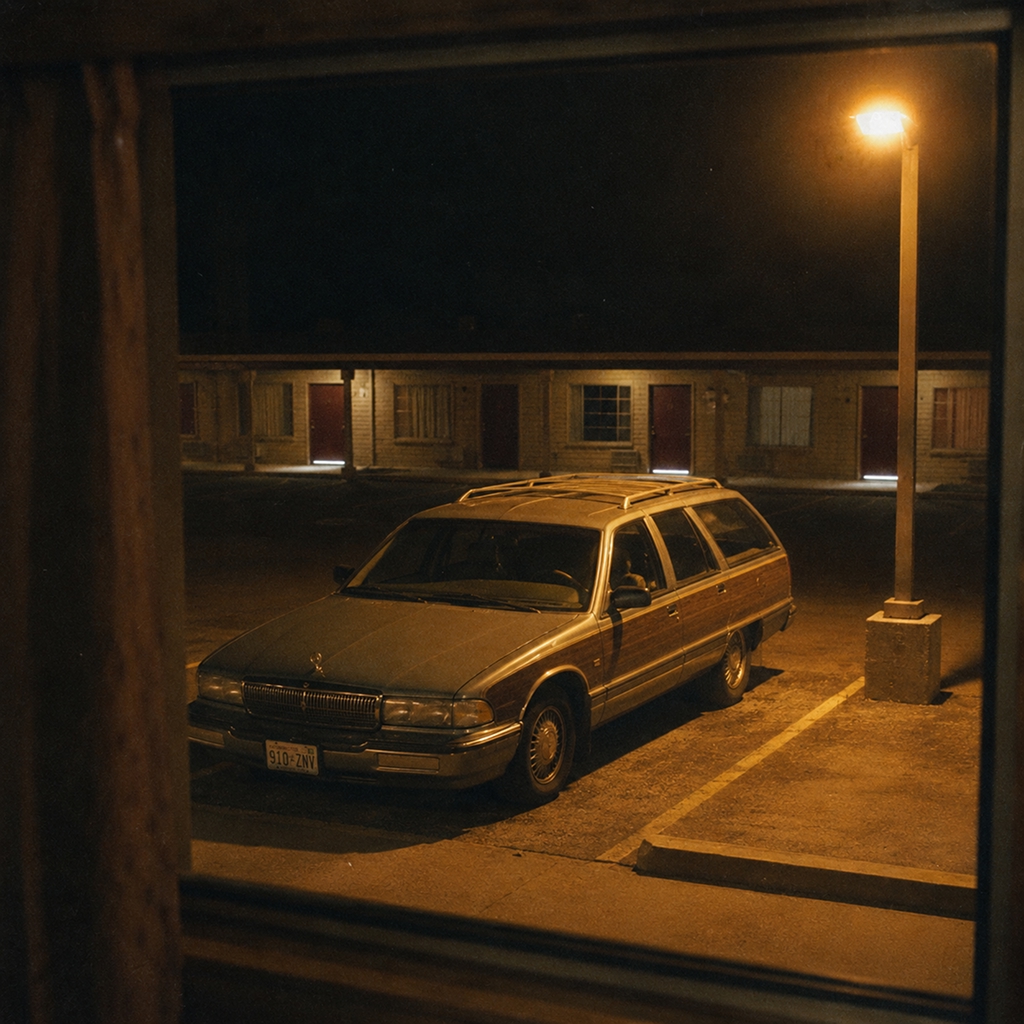
It was past ten when we pulled into a motel in Childress on US-287, three hours from Arlington. I had our usual two rooms booked. The kids were standing under the parking-lot light with their packs at their feet talking softly about the wagon being fine for one night, the family meeting them in Dallas in the morning, no need to spend on a room.
Sochi's backpack was a school backpack, the kind with a top loop. For the first time I noticed the right strap was held to the body of the pack with a piece of duct tape that had been cut and re-applied more than once.
I cut in. Offered my room key.
"Take it," I said. "We've got two."
They protested, mildly, briefly. I insisted once and was done. Hayden looked at Sochi. Sochi looked at her backpack.
I dropped my bag in Tate's room and then began hauling in the bats.
Tate was unpacking his shaving kit on the dresser. He nodded at the second bed. After a beat: "Mother's Day weekend's a lot of weekend to be meeting the family for the first time." He did not look up.
Lights out. Tate breathing slow on the far bed, dead asleep with the practice of someone who had lived on the road. I lay on my back in my clothes with the phone face-down on my chest.
After a while there was laughter through the wall. Hayden's loud one and Sochi's quieter one, part of it. Real laughter, the kind that has room in it. I listened for a while, not trying to make out any words, until the laughter or I trailed off.
— Freely
Fantasy baseball without the homework.
Want in for the 2027 season? Leave your address and we’ll send one note when leagues open in March.