Kept
Bats distributed: twelve. Passengers sitting shotgun: zero.
I left the city Thursday morning with the harbor at my back filling up with the world. They'd been gathering all week for the Fourth — sixty ships, the radio said, thirty countries, the biggest fleet anybody's ever put in one American harbor, the tall ships we'd watched come up the coast off Baltimore now swinging at anchor under the bridges for the country's two hundred and fiftieth. The whole nation was driving toward the water. I drove the other way, northwest, up the interstate into the green middle of the state, until the harbor and the ships and the party were three hours behind me and there was nothing out the windshield but hills.
Gary called somewhere short of Oneonta. He'd read the last one, and he led with how sorry he was, which was decent and which he meant. Then, because the job is the job, he got to the rest of it before I made the next town. The home office wanted Cecil on a call to line the words up for the rollout, which was going out the week of the Fourth — the country turning two hundred and fifty, a man and his bats made for it. People were writing in, he said. Forwarding it around. "He's the face of this thing now, Marshall." To him it was good news, and it sounded like it. "We can't do the Fourth without him. Get him back in the picture."
I said I'd handle it. I did not say that Cecil Tate had carried his bag out of a Bronx hotel and gone, that the only word since had been two words from his daughter telling me he was all right and nothing else, that the man himself wouldn't pick up a phone or text me back, that I did not know where on this earth he was. I said I'd handle it, and Gary said he knew I would, and told me the writing was doing what he'd always said it would do, and we hung up, and I drove.
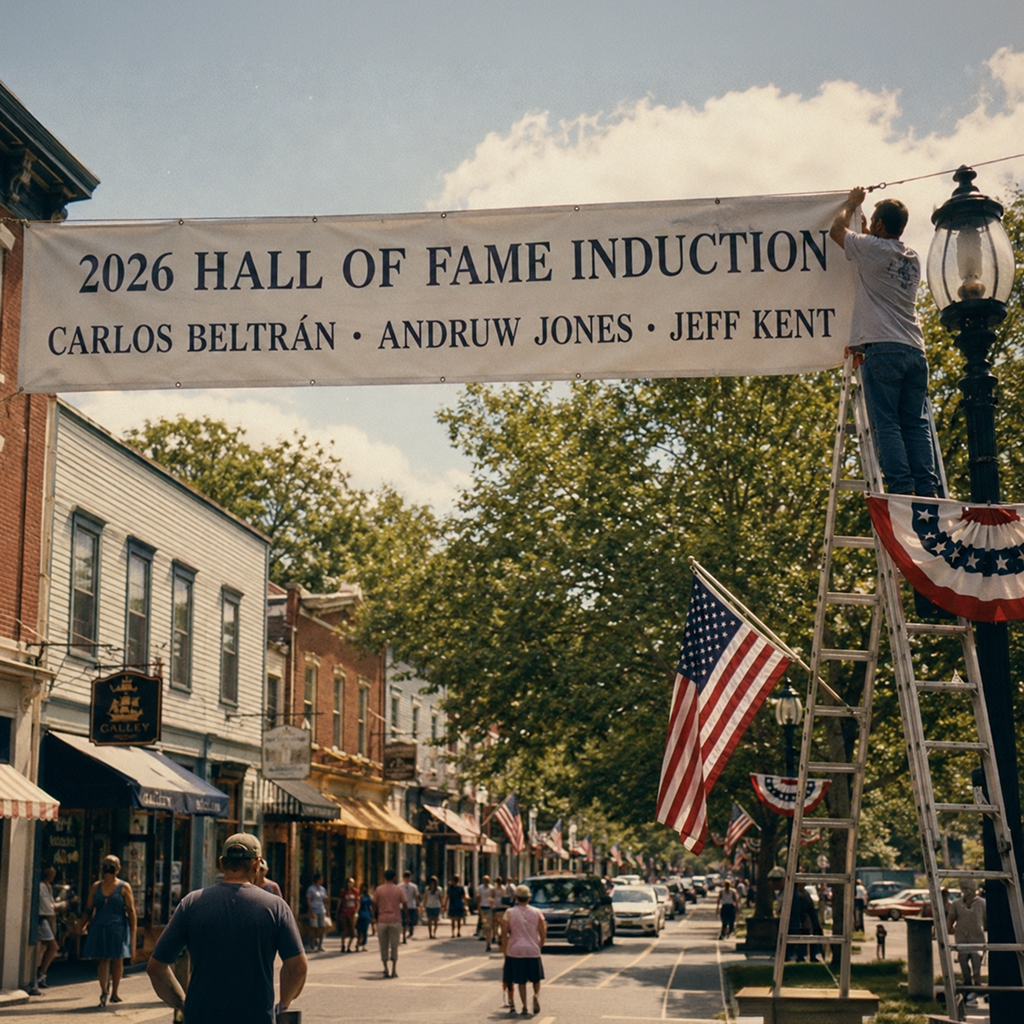
Cooperstown is a small pretty town at the foot of a long lake, and it was dressed for a party. Two parties. The flags were out for the Fourth, and the bunting was going up for the induction — the town's own high holy weekend, three weeks off — and as I came in a man was on a ladder over Main Street hanging a vinyl banner with this year's three names on it — Carlos Beltrán, Andruw Jones, Jeff Kent. The shop windows had bats in them. The ice cream line ran out the door and down the block. Off Main sat Doubleday Field, where the game was born, or wasn't. I found a room. Then I went to the Hall, because the Hall was the thing on the sheet.
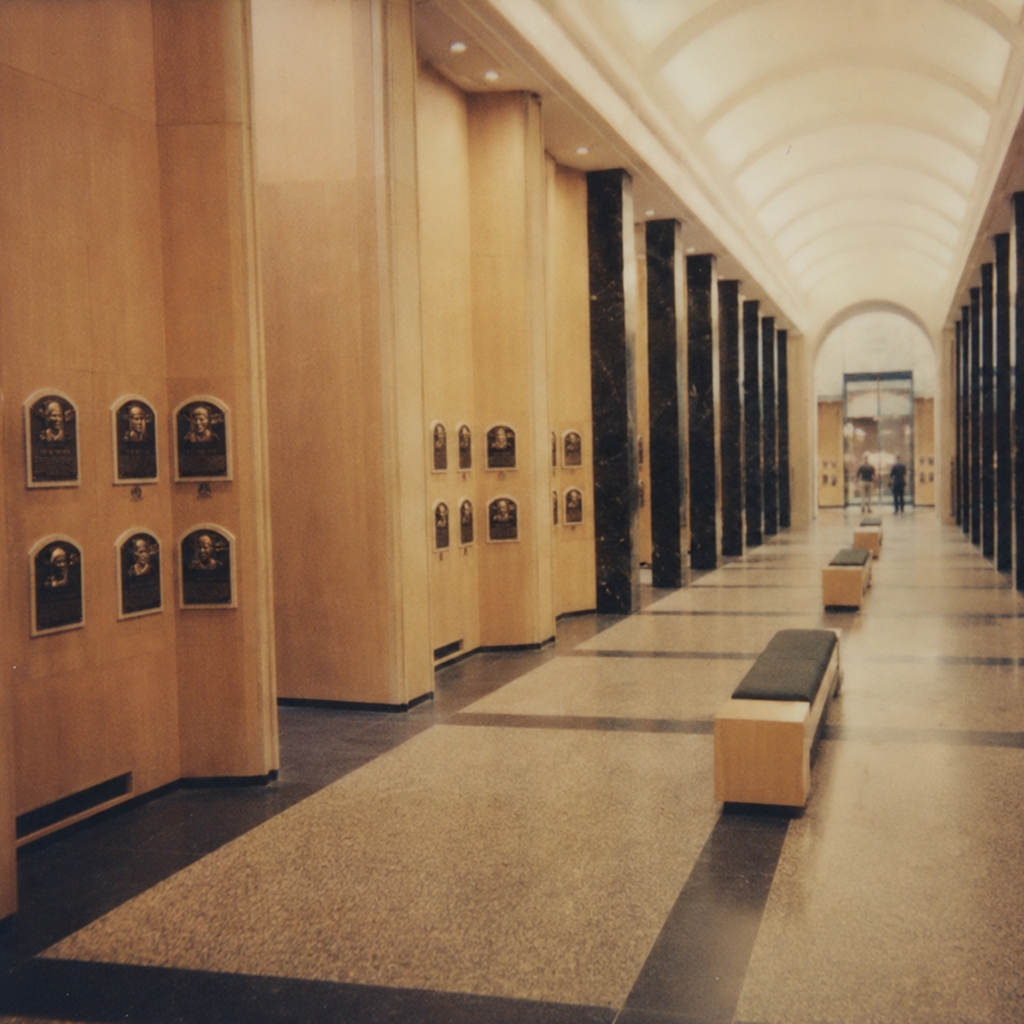
The plaques hang in a long high room, bronze faces in rows down both walls, and the room does what it was built to do — it hushes you, it slows your feet. I'd been looking forward to it. This is my kind of place, the one stop on a hard trip I'd circled for myself. Give me a hall of old names and long odds and I'll find you something to feel about every one of them. It's the thing I do.
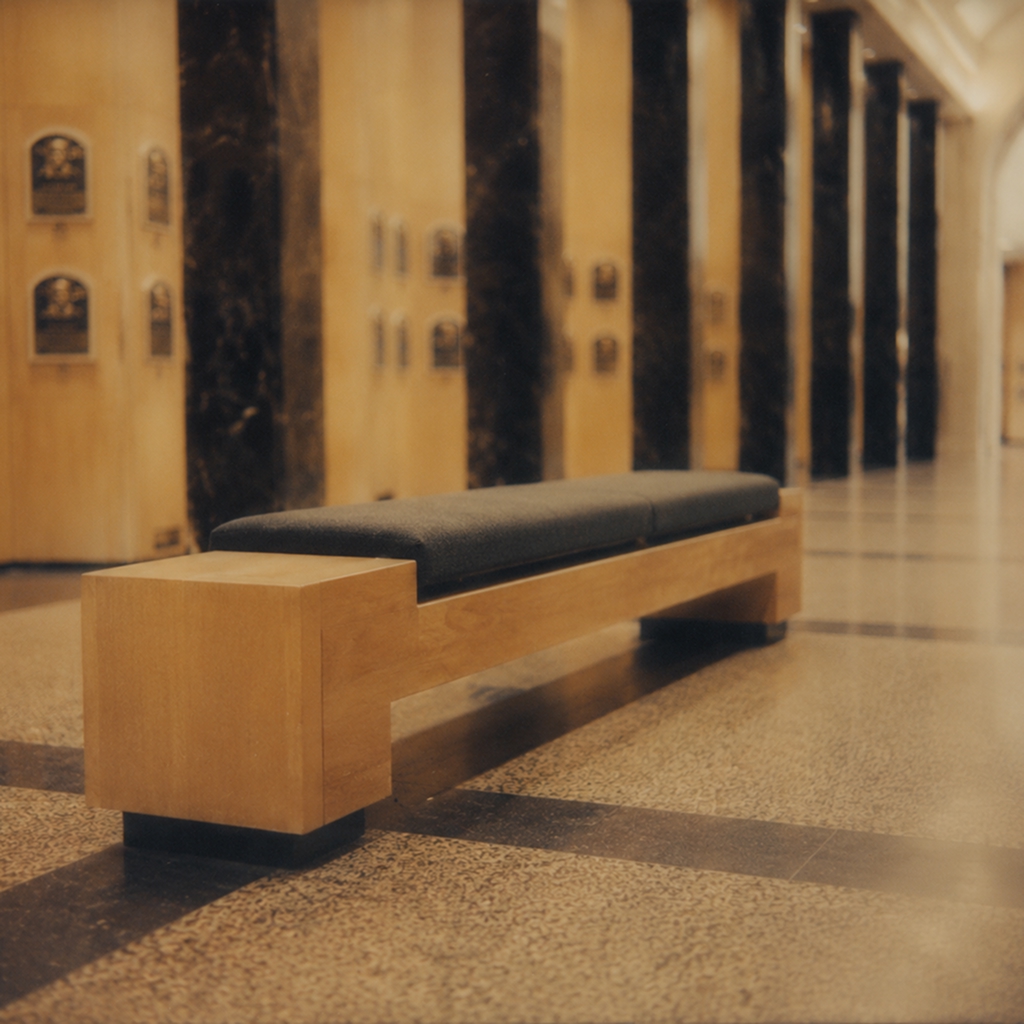
I stopped at the first plaque and read the name and the years and the little paragraph under the face, and I stood there, and nothing came. I went to the next one and read it and nothing came. I'd get three lines into a man's bronze and feel my eyes slide off it and find myself already walking. Start, stop, move on. Start, stop. There was a bench in the middle of the room and I sat on it for a while and then got up because sitting was worse.
Somewhere in the middle of it I stopped in front of a shortstop — the name wouldn't take — and Cecil came up in me uninvited. Slow. Stopping at the ones I'd skated past. Telling me about the ones who never made a wall at all: a kid in Tucson the summer of '83 who hit thirty-some and couldn't get a soul to send a car; another in Albuquerque who tore a knee the one week the big club had a hole to fill. He carried a whole hall of his own, the unbronzed rest of them, and he took me down that row until I understood the wall was only the part somebody decided to keep. I could hear exactly how he'd say it. I didn't say it. I went and stood in front of another plaque I couldn't read.
Down at the far end a man was walking a boy of about eight along the wall, reading it to him. Stopping at each one. Telling the kid who the man was and what he'd done, the boy's chin up, taking it in. The kid didn't know the names. The father did. I stood at my end of the hall and watched.
Ozzie Smith is in that room — the Wizard, class of '02. The whole trip had been pointing at that plaque since San Diego. I made myself go and stand at it. It was bronze and it was a face and it held as still for me as all the others.
I was out on Main Street before four. I brought a sandwich back to the room and didn't get through much of it. On the television they were talking about the fifth of July, when the whole country was meant to sit down to one supper at the same time, America's potluck. I turned it off.
Naomi called after dark.
She'd put her number in my phone herself, back in the spring, at a gas station east of Biloxi — you call me if anything happens. I'd used it once, from a hospital hallway in Washington, and she'd come. Now it lit the dark room up on its own, and I answered too fast.
She wasn't loud. Naomi doesn't get loud. She asked if I knew what I'd done, and then she told me. She'd put me next to her father to look after him, and I'd taken the most private thing he had and handed it to strangers, and he'd read it off one of their screens in a room they'd walked him into because of it. "You were supposed to keep him," she said.
Then she went quiet a second, and she said the other thing, the one she'd carried up from that wall in Washington where I'd stood at the top of the path and let the two of them go down to the names alone. She said, "He told me no." And then: "For you."
I opened my mouth. Nothing came out.
"I talk to him every morning," she said. "Every night." Then nothing for a moment. "He won't get on a plane."
She didn't tell me where he was. She hung up, and her name sat lit on the screen a moment longer, and went dark.
My friend was out there somewhere, and I was not allowed to know where.
After a while I opened the phone again and scrolled down to my kid's thread, quiet since the graduation I didn't make. I got as far as the first word. Then I put the phone in my pocket and left it there.
In the morning I loaded the bats back into their places and drove out the way I'd come in. The man was back on his ladder over Main Street, squaring the banner. Three hours south the harbor was full of the world and the country was a day from its birthday, practicing to be glad of it. The seat beside me was empty.
The Outer Borough Club is home next week. The sheet says we're there.
— Freely
Fantasy baseball without the homework.
Want in for the 2027 season? Leave your address and we’ll send one note when leagues open in March.