What They Left
Bats we drove into Canada: forty-six. Bats going back out: forty-seven.
We came up from Boston on Monday and crossed into Ontario at the Peace Bridge without anyone opening the back of the station wagon. A 1991 Roadmaster with Washington plate, two graying men, the back full of wood wrapped in moving blankets. The officer asked where we were headed and how long we'd stay and waved us through before I'd finished the sentence. I have been crossing into Canada my whole life — Blaine to the far side and back by dark, a tank of gas and an afternoon — and it has never once felt like leaving one place for another. You drive north, the money turns to pictures of birds, the speed signs get ambitious. That's the whole of the difference.
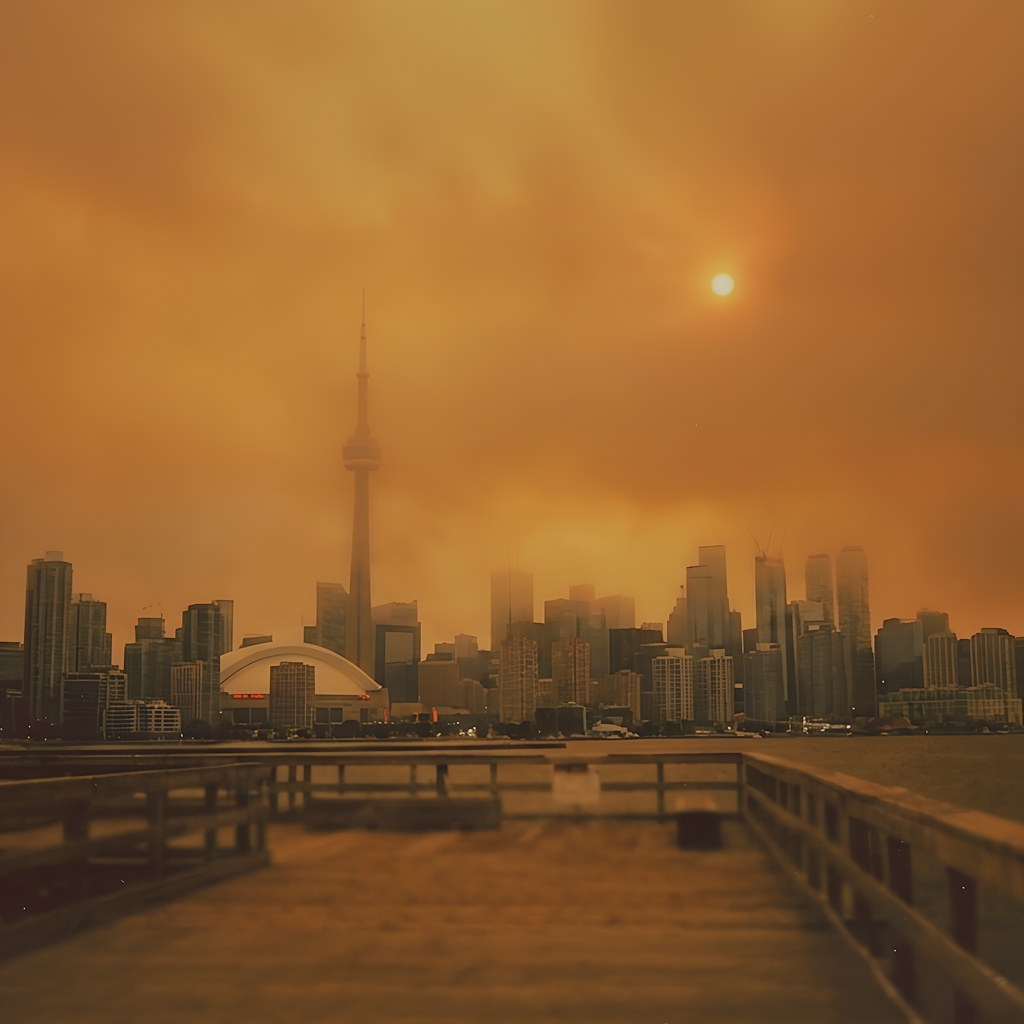
The city was coming down off one of the biggest months of its life, and doing it under a sky the color of old newspaper. Half the country is on fire — the motel TV said eight hundred and some blazes going, a couple hundred of them in this province alone — and the smoke has come down over the lake and sat on the city and turned the sun into a dulled coin you can look straight at. "Whole country's burning," Cecil said, the first morning, and that was all either of us had to say about it.
Toronto had also just spent a month as a World Cup city — six matches, a festival down on the water that folded its tents the night before we came. The soccer banners still hung off the downtown poles, gone soft in the heat and the haze. The whole world had been here and gone.
The Canada I know is the wet quiet one across the water from home — a ferry, a harbor, flower baskets on Government Street. Toronto is the other kind — glass and stacked up and loud. The Provincials play in the middle of it, under a roof that rolls back, though they kept it shut all week against the smoke. The stadium sits jammed against the foot of a tower so tall it embarrasses everything near it, at least on days when you could see the top of it. It's the only ballpark in the sport that flies another country's flag over it. They ran both anthems before the first pitch, and thirty thousand people sang the second one straight through, every word of it, which is not a thing that happens back home.
Cecil made a call Tuesday morning, which was new. Since Philadelphia he had kept to the passenger seat and done most of the not-talking, and what talking there was he spent on other men, in other rooms. Then Tuesday, over a paper cup of motel coffee, he took out his phone and called a man he'd played winter ball with years back, now something in the Provincials' clubhouse, and told him we'd come by. He didn't ask whether I wanted to. He told me what time to be in the wagon. It was the nearest thing to the old shape of us I'd had in a month — Cecil finding the door, me a step behind with the bag — and I was glad of it, which tells you how far down I'd gotten.
Getting in was the easy part. That was the joke of the day, though it took me most of the day to hear it. His man met us at the players' gate, walked us back through the underneath of the place to a room with soft chairs and a coffee machine and a window on the concourse, said Mr. So-and-so would be down to look at what we'd brought, and went back to his afternoon. And there we sat. A woman put her head in after a while and asked did we need anything, and we said no thank you, and she brought coffee anyway. People crossed the window with lanyards swinging off their necks, not one of them coming for us. I read the same three things on my phone four times over. The number my ex-wife had put in a text back in Boston came up out of the screen at me again, the same as it had since Massachusetts — six thousand two hundred and forty dollars, by the first of the month — and I put it away again, which is the only thing I have ever known how to do with it.
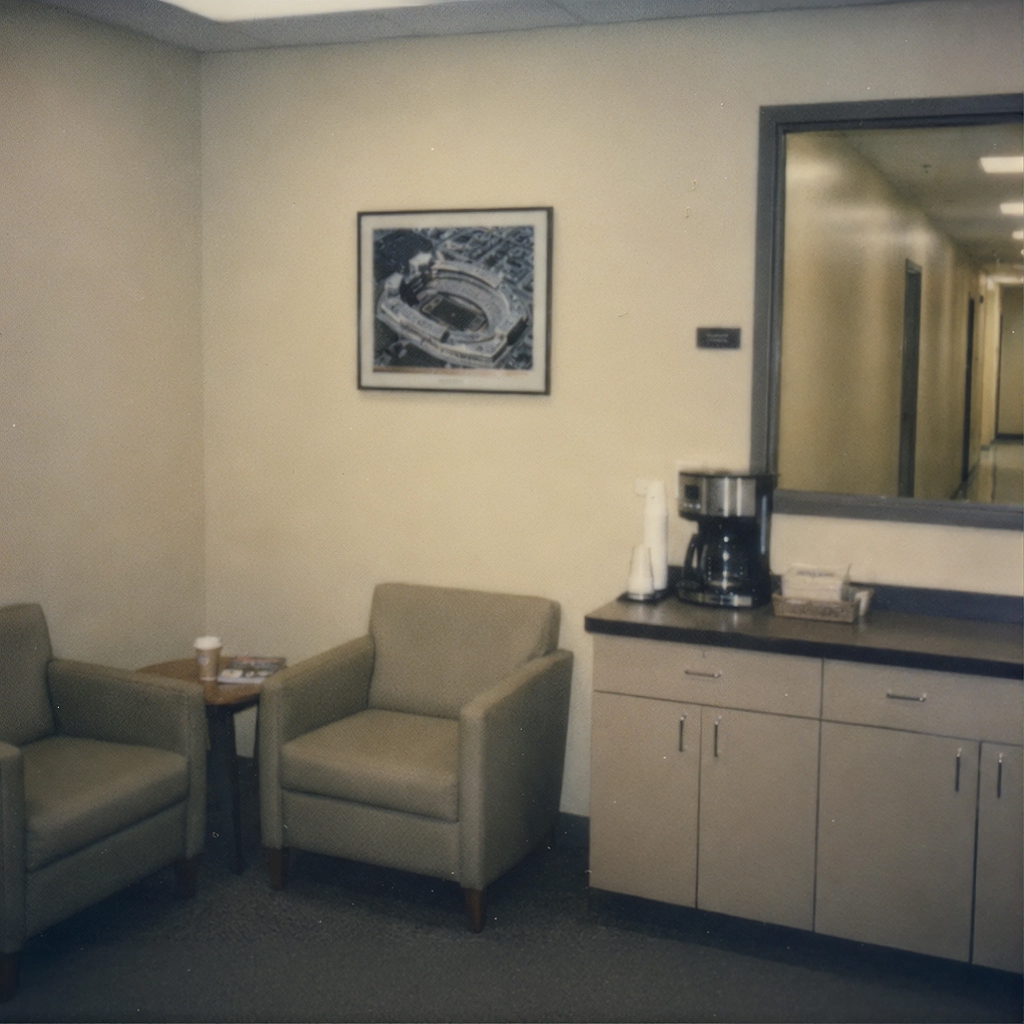
Cecil sat with his cap in his hands and watched the concourse and said nothing, and it came to me, sitting there, that there was nothing for either of us to do — two men in good chairs with a bag of bats between them and not a single move to make. The coffee she'd brought went cold between us.
They came for us in the end, or a piece of them did — not the man we'd been promised but a kid with a badge and an apology, to say Mr. So-and-so had been pulled into a thing upstairs and would we mind leaving the bats and a card. Cecil said we'd hang onto the bats. We'd been in the building the better part of two hours. Nobody had picked up the wood. Nobody had said no. I've been told no in a lot of rooms on this trip and I'll take it every time over the other thing, which is a room where you were never quite worth the answer. A no you can carry out to the car with you. A no is at least a thing that happened. Cecil didn't say a word about it going out, and neither did I, and his forty years and his one open door had bought us an afternoon in a waiting room and a coffee we hadn't asked for. Even he couldn't make it go. That was in the not-talking too.
The Relentless Sunshine, run out of Boston in four straight last weekend, came into Toronto and played like a different team — twenty-one hits in a night, twelve runs, the Provincials never in it. I kept an eye on Caminero, the same as I had since Florida, and he didn't hit one out. He came around to score in the first and otherwise gave me nothing. It was Fortes and Díaz who put balls in the seats, two men I hadn't been following at all. I watched from a single seat up the third-base line, Cecil from wherever the clubhouse men stood. We are not, this week, two men who sit together.
In Boston I'd carried every bat up to the room the first night and hauled them all down again when we left, because Boston is that kind of town and I'd made myself its kind of worrier. In Toronto I didn't. The lot behind the hotel was gravel and floodlight with a gate that latched, and it was Canada, where nothing has ever once happened to me, and I was tired in a way that had quit being about sleep. I left them in the wagon, wrapped in their blankets. It felt like setting something down — putting away a thing I'd been hauling around for no reason, up here of all the places on earth, where you can leave the car unlocked and come back to find a stranger has shut a door you left open.
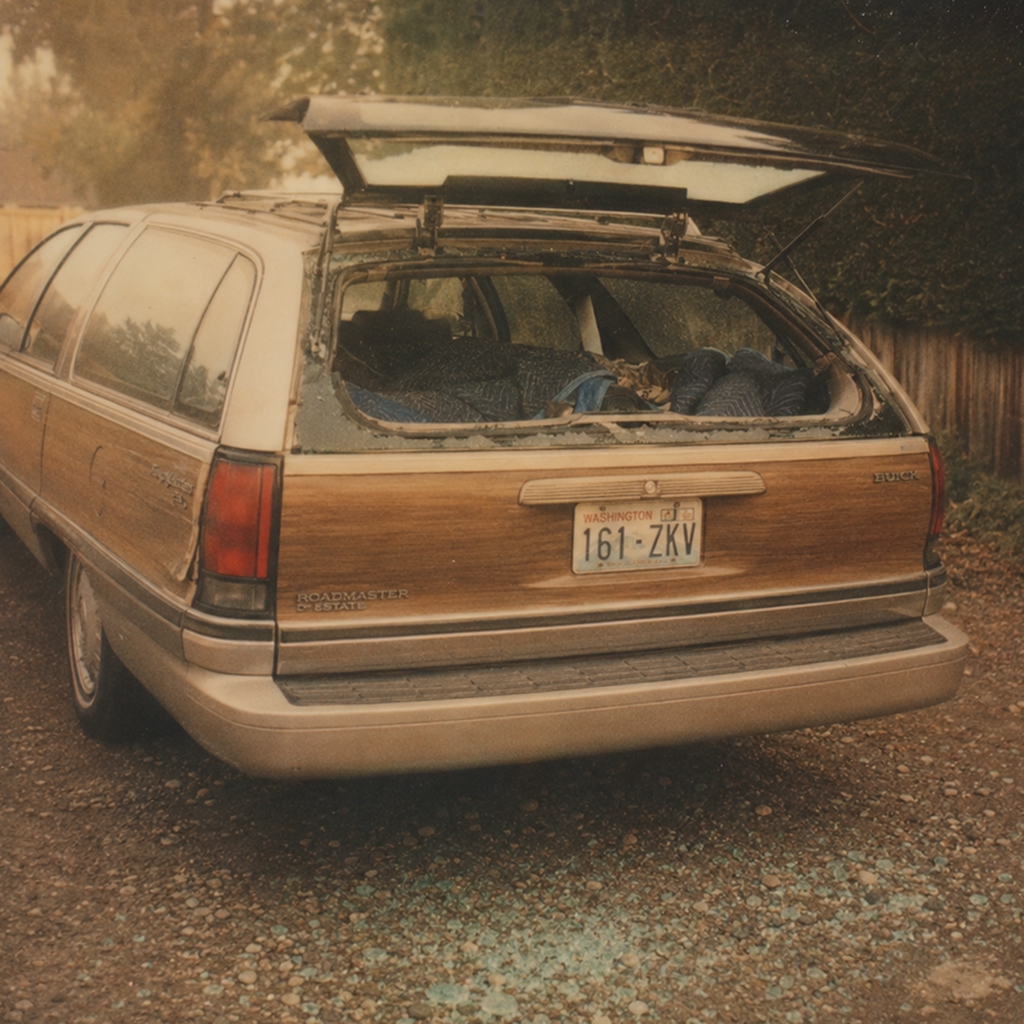
Wednesday morning came up orange with the smoke again. Cecil got to the wagon a step ahead of me and stopped — went still, the coffee halfway to his mouth and staying there — and I read the wrongness off his back before I was near enough to see it. Then I was beside him: the back window spread across the gravel in little blue-green pebbles of glass, the tailgate standing open, somebody gone all through the inside of it. The glovebox hung emptied. The maps and the gas receipts and Cecil's glasses case lay flung in the wheel wells, the cooler lid flipped back on its hinge.
We went through it out loud. Radio, still in the dash. The folding money I keep behind the visor, still there. Cecil's glasses, unbroken in the well. "Doesn't look like they took anything," Cecil said, and it didn't land like relief.
A man wants to have been worth robbing.
Then he started in counting the bats, because that is what we are, and I counted down the rows with him, the blankets pulled back off them where somebody already had, and we came to forty-six, which is every last bat we own — and his hand stopped on a forty-seventh.
It was aluminum. A gray, dinged, sporting-goods-store special, black tape wound around the grip. Whoever swung it through our back window had gone down forty-six lengths of dried fir cut off the shoulder of a volcano, decided not one of them was worth the carrying, and left theirs behind with the rest.
I don't altogether remember picking it up. I had it over my head and brought it down on the gravel — once, hard enough to feel it in my teeth — and it rang and didn't so much as bend. I heard my own voice come out of me flat and low and not like anything I would ever set down on a page. I couldn't tell you now what I said. I had it up again —
A hand closed on my arm. Not hard, the way you'd catch a screen door before it banged. Cecil. He worked the aluminum bat out of my fingers and turned it once in the morning light, like a man checking a billet for the grain.
"It's a bat," he said.
And he carried it back to the wagon and laid it down with the other forty-six, and that was the end of it. He had said maybe forty words to me since Philadelphia and not one of them about us, and this one wasn't either, on the face of it. But he'd put his hand on my arm to say it. I had not been touched by the man since before the Bronx.
We taped a garbage bag over the empty window. Forty-seven bats in the back now, and still only twelve that anyone alive has wanted. The aluminum one rides with the rest — I'd have had it in the lake by now, but Cecil won't allow it out of the wagon, and I haven't worked out what he thinks it's for. Then we were on the highway south, the bag snapping where the glass used to be, and the country coming on through the haze.
— Freely
Fantasy baseball without the homework.
Want in for the 2027 season? Leave your address and we’ll send one note when leagues open in March.