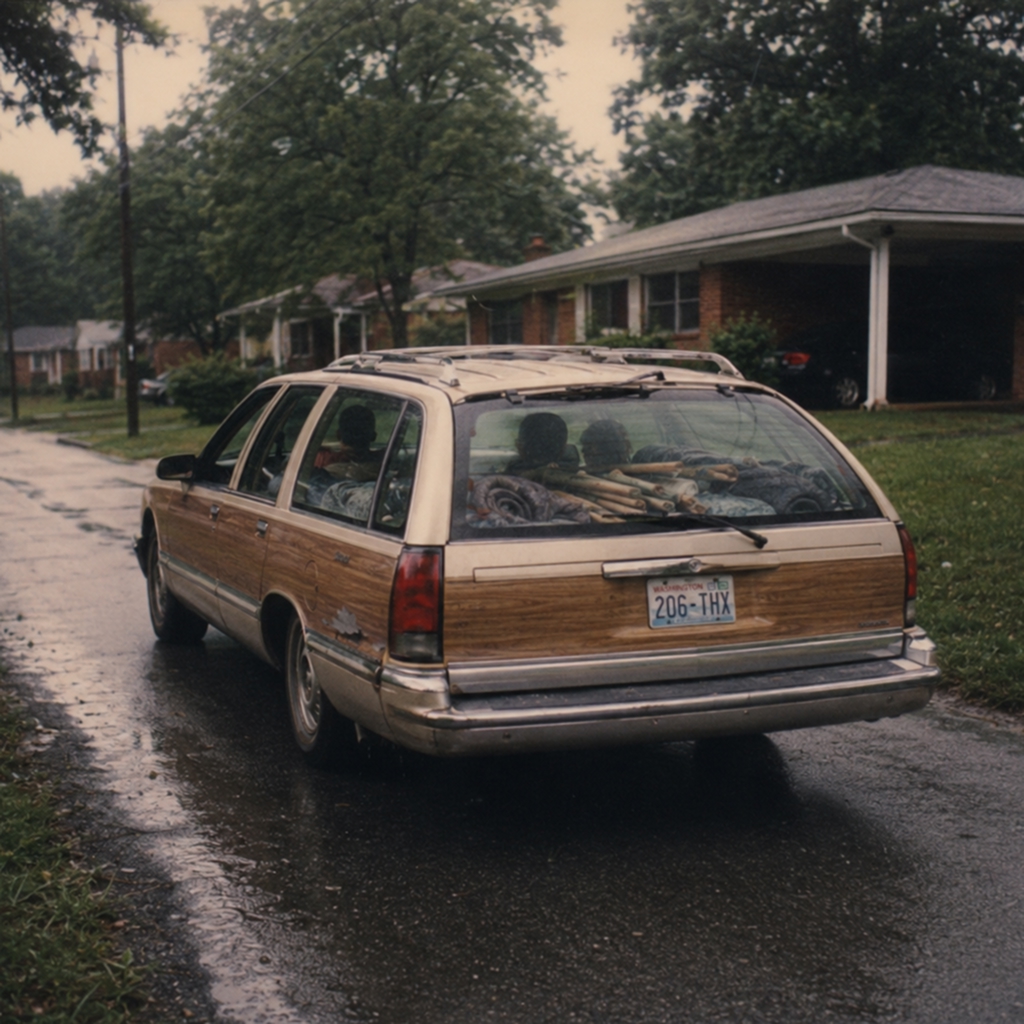
Hartsfield
Bats distributed: four, potentially five. Lab protocol: compromise reached. Flights delayed: one, not ours.
We'd left the Reed call for Monday. A little before noon Tate made it from Miss Cordelia's carport steps, the legal pad on his knee, while I sat off far enough to give him the room. There'd been the makings of an argument in it — Wallop, our employer, had lined up two of its own labs to test the volcanic soil bats, and Reed wanted two off Miami's own list — but it came to nothing, like most things you wait on. Reed accepted one of Wallop's and kept one of his. The bats would go to both. The numbers would come back in some number of weeks and be whatever they were.
That was the Lumber Co. business for Monday, and it was the smallest thing that happened all day.
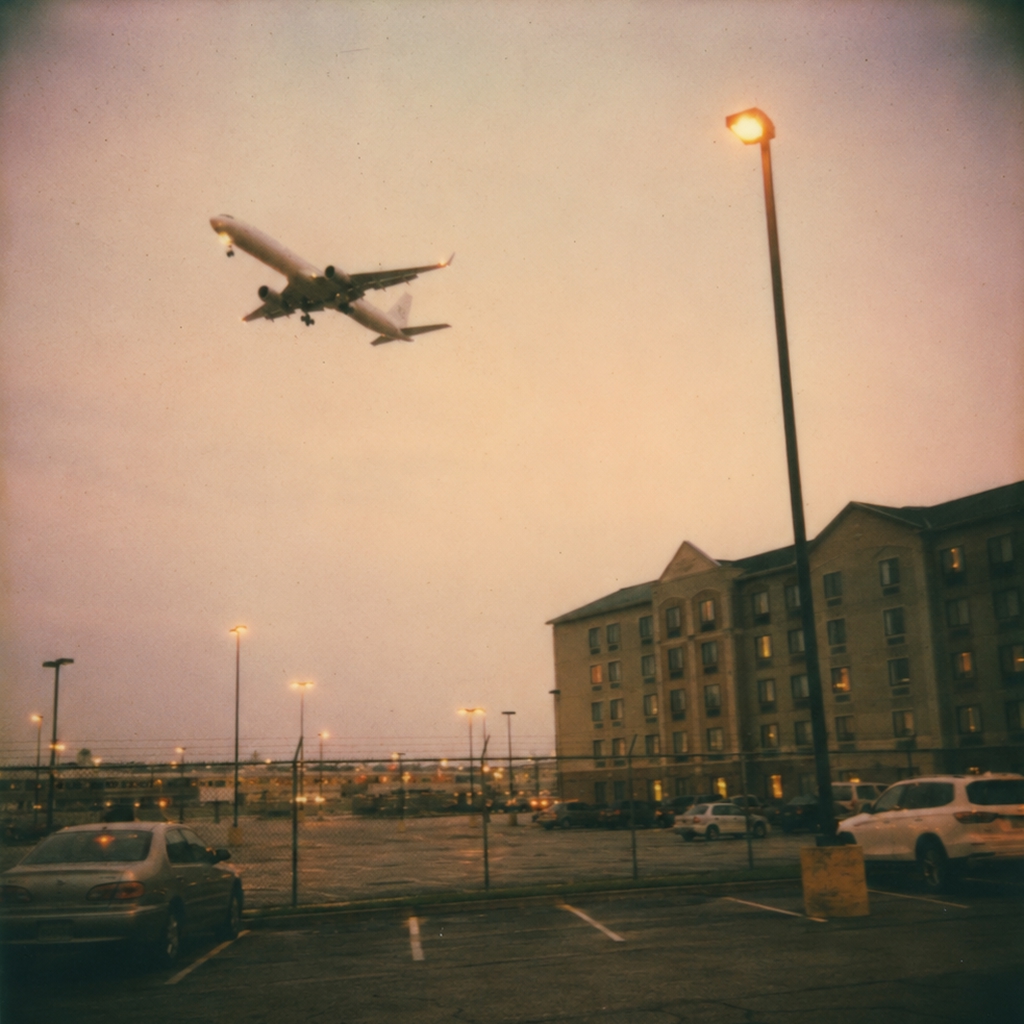
Gwen was flying back to Los Angeles that afternoon. The Atlanta Terminus was returning from a road series and there was a ballgame for us Tuesday. We'd taken a room out by the airport, which is its own kind of nowhere — rental returns, long-term lots, hotels built for flight crews and other people who'll be gone by morning. Each day we drove over to Cascade Heights, to the house, because that was where everyone was. I spent those days going to a family that wasn't mine and coming back to a room to sleep. The 90th birthday party was two days behind us, the road not yet asking for us back, all of us close to the airport and watching a clock that belonged to somebody else.
What I know about those days I know mostly from Naomi, in pieces, in the gaps — a glass to dry, a thing left out in the car. I was the one she could tell. Everyone else in that house wanted something from the weekend; I was only the man her father came in with, which made me the one person she didn't have to manage.
What she was managing was time. Her mother had flown in late Saturday — a flight out of L.A. hours delayed, pulling up in a cab at the end of the party. Her days in Atlanta were nearly gone, and the hours left in them were what everybody wanted a piece of and what fell to Naomi to divide. Who sat with Miss Cordelia. Who took Gwen to see which cousin. When her mother and her father would be in the same room, and for how long. She ran it the way she ran her kitchen, which is to say you didn't see her run it; you only noticed the food kept coming and nobody went hungry and she herself ate standing up, late, alone, if at all.
Her father was easy to schedule because he never asked for anything. You could give Tate the leftover hour, the seat at the end of the table, the slot between two other things, and he'd take it and be glad.
There was no job in it for me — they had a hundred years of practice at this, and I had ten weeks of knowing one of them.
I saw her do it once, with both of them in the room.
Sunday afternoon, the front room. Gwen on the sofa with some cousin's baby asleep against her chest. Tate in a chair by the window with a plate he wasn't eating from. Naomi moving between the kitchen and the room with a dish towel over her shoulder, and on every pass she touched something — straightened a coaster, removed an empty glass, asked did anybody need — and none of it needed doing.
In New Orleans she had ribbed her father the second he came through the door. At the party she'd run the whole kitchen and still found the breath to needle me about Miami. Here, with the two of them in one room, the needle was gone. She was all motion and no edge, waiting-room polite, and she gave the room everything except the part of herself that makes a joke.
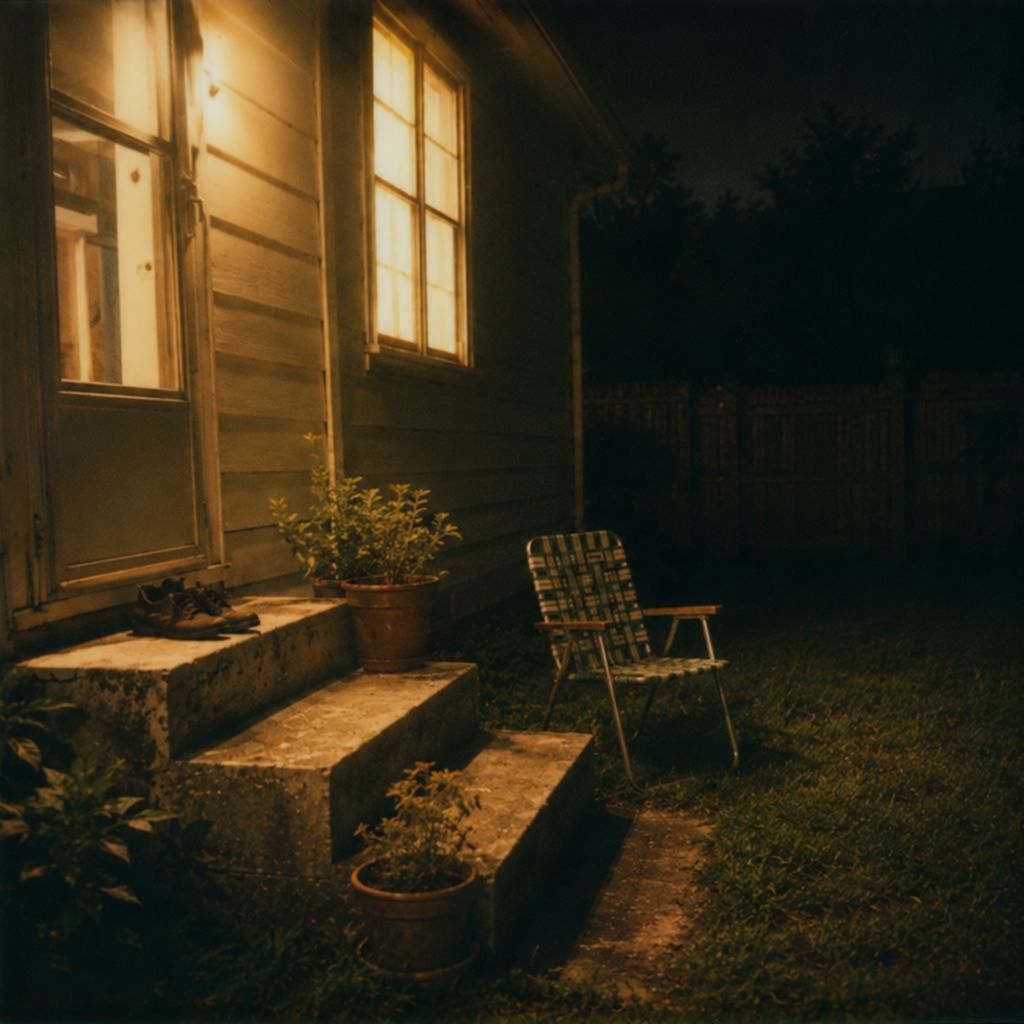
I found her on the back steps Sunday night with her day's one cigarette.
She didn't put it out or wave the smoke away, which I took for as much of an invitation as I was going to get, so I sat down on the step below hers. The yard ran dark to the fence. Behind us the house was still going — a television, a child who wouldn't settle, somebody laughing in the kitchen.
"You doing all right in there?" I said.
She considered the cigarette. "Everybody in that house loves me," she said. "And there's not one of them I get to be tired in front of."
She didn't say it like a complaint. She said it like a fact she'd checked more than once.
I didn't say anything back. She finished the cigarette, stubbed it on the edge of the step, and put the butt in her shirt pocket instead of the yard. Then she went back in to those people who loved her.
I finally talked to Gwen on Monday, if you can call it that.
I'd been around her for two days — aware of where she was in a room at all times, careful not to be caught looking. I had a whole apparatus built up about her by then. She was the woman I'd seen from a parked car in Los Angeles, seven weeks back, the two of us never once having spoken. I expected, when she finally turned the full of her attention on me, to be weighed — to feel her decide how much of the family's business this stranger with the notebook had pieced together, and how much of it he could be trusted with.
What happened was she handed me a roll of packing tape and asked me to hold my finger on a knot.
She was boxing up a tin of something from Miss Cordelia's kitchen to check through, kneeling over it on the carport floor, out of hands. I was the pair of hands standing nearest. "You're the writer," she said, not looking up, dragging the tape across. "Cecil says you don't drive too fast, which from him may as well be a love letter."
I said something about trying to keep the bats from shifting. "Mm," she said, and bit the tape, and that was the warmest thing she gave me, and it was plenty warm, and it was completely closed.
She asked how the trip had been on him — on Tate. Before I could answer, she stopped with the tape half across the box and looked out at him in the yard a moment longer than the question asked for. I followed her look. He was only standing by the wagon, doing nothing in the heat — but I saw him older than I kept him in my head, a little gray under the brown. Then her thumb sealed the tape. "He looks fine," she said. "Always looked good to me."
She wasn't guarded. Guarded would have given me something to work with. She was just done with the subject, and had been for years.
Gwen's flight was at four-forty. The plan, the one Naomi had built and rebuilt all weekend, seemed simple enough: get Gwen out to Hartsfield by two, beat the worst of the traffic, be back before the rain that had been promised all day actually fell.
The plan died a little around noon. The airline pushed the flight to seven, then to a window that said only that they'd know more by five. Weather somewhere else — Dallas, maybe. It didn't matter why. What mattered was that all the hours Naomi had carefully divided collapsed into one long shapeless afternoon, and Gwen, who had been leaving, was now simply still there, in the house, with all her goodbyes already spent.
It was the thing Naomi had wanted, technically. More time with her mother. It came as four hours of everybody pretending the long goodbye they'd just finished wasn't still going on — the baby fussing, the rain holding off, Miss Cordelia asking twice why Gwen hadn't gone yet.
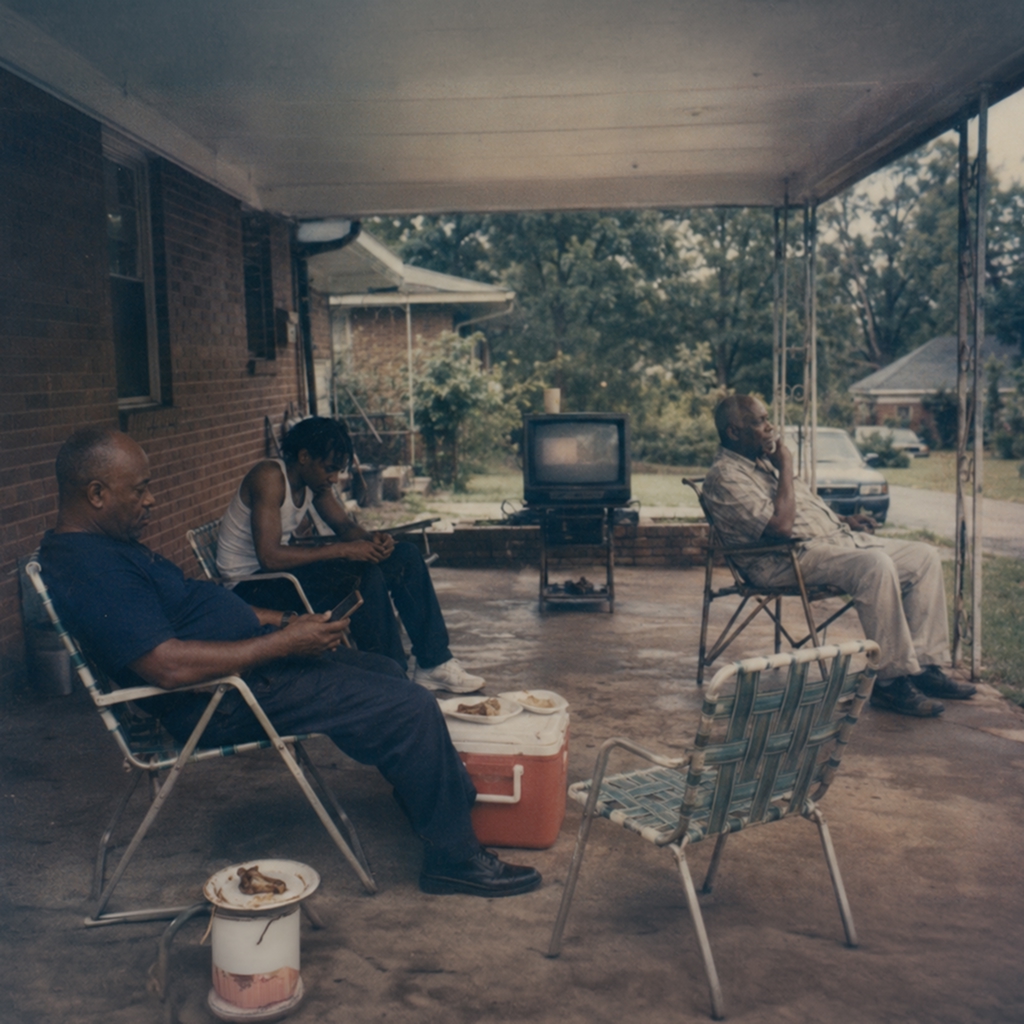
So we waited. That's the only verb for that afternoon. The men drifted to the carport. Highlights were playing on the TV that nobody watched. I took the back steps where Naomi had her cigarette at night, and waited there.
A little after five the airline gave up a real number — boarding at seven-forty — and Gwen stood up off the sofa and said she'd rather wait at the gate than wait here, which everybody understood, because waiting is what a gate is for. So it became a thing that was happening, all at once, the way departures do: the bag, the tin, the coat, where are her glasses, somebody find the umbrella.
I had the keys in my hand. I'd had them in my hand for ten weeks; it is the one job on this trip that has never once been in question. I went toward the driver's door of the wagon like I go toward it forty times a week, without thinking, and Naomi put her hand out — not even looking at me, calling something back toward the kitchen at the same time — and I put the keys in it. She knew the way, she said. She knew the back roads that beat the airport traffic. She got behind the wheel.
Gwen took the front. Tate folded himself into the back, in among the bats, where the seat doesn't recline and your knees come up. Nobody arranged it. Nobody said you sit here. He got into it like it was the best seat in the house.
I stood in the driveway. They had a flight to make that wouldn't leave for two and a half hours. They pulled out. The wagon went down the drive and turned, and the last of it I saw was Tate's window coming down in the back and his hand going out into the damp air, catching the wind as he'd done before, when I'd been sitting right beside him. The bats were in there. The Polaroid was still on the dash. They drove off with all of it, and I watched them go, and then there was the house behind me and the rain finally starting and nothing at all in my hands.
And then I was a man alone in another family's yard with the rain coming down, and the strange part is that they would not let me be alone in it.
Miss Cordelia was in her chair in the carport, where she'd been most of the weekend, presiding over the part of the party that hadn't ended, because for her it apparently wasn't going to. Aunt Carol — one of Naomi's sous chefs on Saturday — put a plate in my hands before I'd thought to want one. Somebody pulled a chair over so I'd have a place out of the wet. The plate had a little of everything left on it, the good ends of the weekend, and it was the third or fourth plate that house had handed me in two days, and I still hadn't carried so much as a roll into it. You don't get hungry in that house.
Cordelia patted the chair beside her. She'd lost my name and didn't pretend she hadn't. She just said, "You're still here," pleased about it, and then, "Cecil get off all right?" and I told her the flight was delayed but they'd gone to wait on it, and she nodded like that was the most natural arrangement in the world — her granddaughter and that granddaughter's father running her other daughter to the airport in a stranger's car — because to her it was. "Don't be a stranger in this yard," she said, which she'd said to me on Saturday too. I sat in the chair and ate the plate and watched the rain come down on a yard that had been full and was empty now, and I was as looked-after as I'd been in months.
Then my phone buzzed. Not Tate but my ex-wife. How many tickets do you want for the graduation? They only give each kid six. I typed what day is it again and sent it before I could think better of it. It came back fast. June 16. Then, hard on its heels: How do you not know this, Marshall. No question mark. She wasn't asking. I set the phone face-down on my knee. I'd had it in my head as the twentieth.
The Terminus came home Tuesday night to play the Toronto Provincials, and Tate nudged Naomi to tag along with us. So I did the one thing it was in my power to do.
I bought good seats.
I have spent this whole trip in the four-dollar seats, and argued that a writer would be a fool to leave them. And then in New Orleans, weeks back, Naomi leaned out of her kitchen at one in the morning and whispered to me like a conspiracy: couldn't you get my dad up closer? You know he won't ask. I'd filed it away, and Tuesday I cashed it — three seats eight rows back of the first-base dugout, close enough to read the brand on the bats — and I didn't tell Tate why.
We weren't in those seats twenty minutes before they were one short.
During batting practice, Tate spotted somebody down on the field — an older assistant with the Terminus, a man he'd come up with in the short-season minor league towns half a century ago and hadn't seen since. Tate knew him by the limp before he knew the face — an old catcher's roll, the knees long gone. The next thing I knew Tate was at the rail, and a guard was lifting a rope for him, and he was down in the photographers' well, and then he was gone.
So the good seat I'd bought for Cecil Tate sat empty between me and his daughter for most of the ballgame, and he spent the night down by the dugout rail, with a man who knew exactly what he had been.
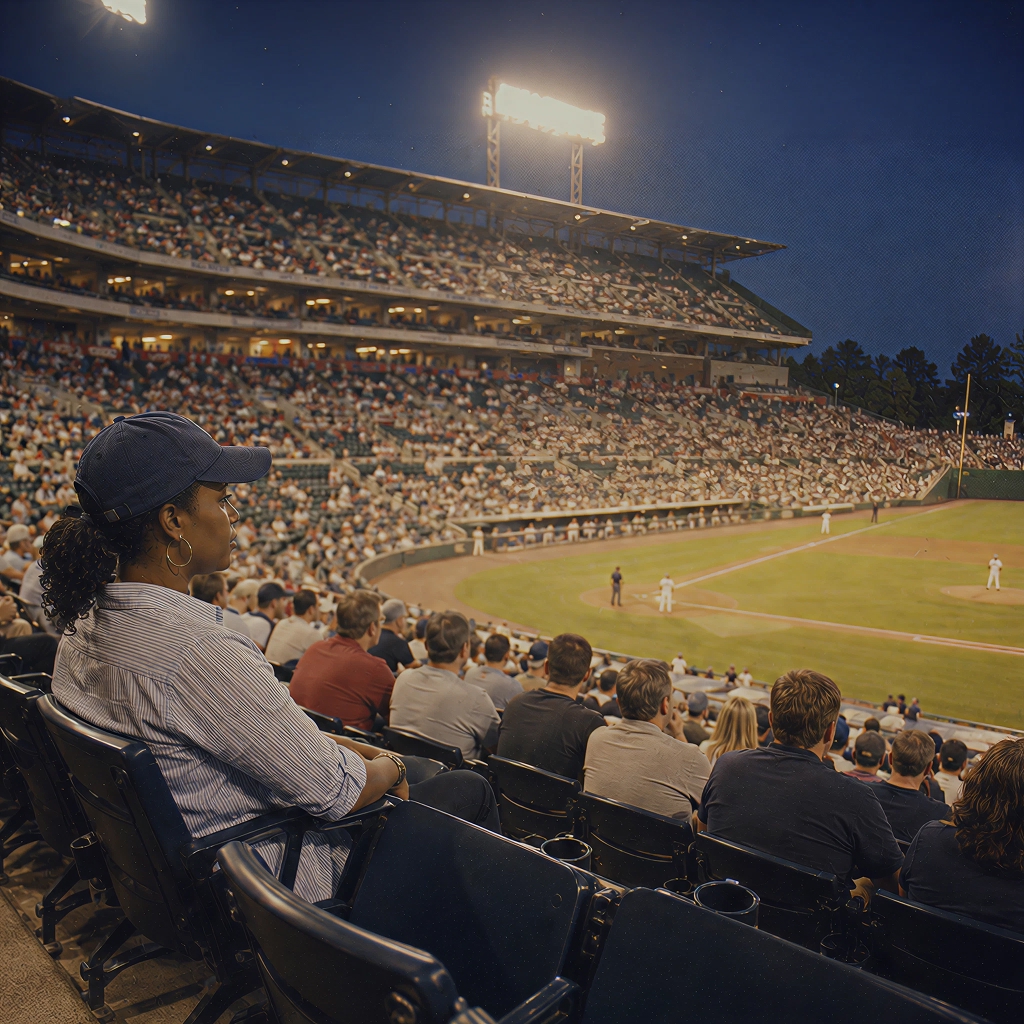
With Tate gone, there was one piece of business left to me, and I almost let it go by. In the bottom of the first Michael Harris II lined a sharp double to center driving in a run. I was up out of my seat with everybody else. It wasn't until the bat boy trotted back to the dugout with the wood that I connected Harris to the bat Tate had seeded through Naomi's cousin Darius at the party on Saturday. So I watched his at-bats the rest of the night — I had the seats for it. Whatever he was swinging, it wasn't Wallop wood.
Naomi was wrung out. She had the specific flatness of a person who's been holding a whole week together with both hands and is almost, not quite, done. She watched the game without much in it.
At one point, when the seat between us had been empty for a full inning, she looked at it, and then looked at me, and shrugged, "You did get him up closer."
Just that. I couldn't tell whether it was a thank-you or a halfhearted joke — that the closer seat was empty because the man would always rather be down on the field than up in the good seat his daughter wanted for him. Maybe she couldn't tell either. We left it there, the two of us, in the two seats that were full.
He came back up to us in the fifth, shoulders relaxed, a slight, dreamy smile. He'd given our bat pitch, it turned out. He had it in him to do a little business even in the middle of his own good time. Somebody down there had said the thing everybody says now — send us the numbers when you've got them, we can't look at a bat without the numbers — and Tate had told them they were coming.
He'd come in easy, though, before any of that. He and Naomi had spent three hours waiting out Gwen's plane the night before, the two of them in the front seat of our wagon, and he brought it up twice without my asking — the radio they'd fought over, a biscuit place she'd hunted down in the dark. Tate, who volunteers nothing, volunteering that.
Naomi flew home to New Orleans the next morning. We came by the house early to say goodbye. She held Tate a long time. Me she gave a shorter one, one-armed — and then, half out of it, she told me to keep him eating. Make him stop at noon. Don't let the day run long enough that he skips it. It was her job, the worry she'd carried a thousand miles off, and she was deputizing me for it. I told her I would. She held my eyes a beat past the promise. And I had her number — anything happened, I was to call. Then she was gone, and it was mine to do.
— Freely
Fantasy baseball without the homework.
Want in for the 2027 season? Leave your address and we’ll send one note when leagues open in March.