Bats Are Cheap
Bats distributed to date: zero. Equipment managers contacted: four — one of whom delivered a sentence I have not stopped repeating to myself for three days. Status of the field correspondent: alone in Los Angeles, by unilateral arrangement (not mine).
"Bats are cheap, losses are expensive, and we just lost a game to bats that broke."
That is the sentence. The man who said it is an assistant equipment manager for the Los Angeles Choirboys of Anaheim. He said it on Saturday late morning in a corridor under the stadium. He did not say it cruelly. He said it the way a doctor tells you a thing is broken — neutrally, as a matter of professional concern, with no time to perform any of the things one might perform around delivering bad news. I have been turning the sentence over since Saturday like a stone in a pocket. It does not get smaller.
We left Anaheim on Sunday after the series finale, the Choirboys coming back to take the remaining two games. I had assumed we were driving to our motel in Hollywood — I had researched Hollywood, I had a list — and I was getting on the 5 north when Tate said, "Take the 91 west," and then a few minutes later, "Get over for the 110 north." I said okay. I believe in Tate's directions the way I believe in gravity: there is no profit in arguing.
He had me exit at Manchester Avenue. Surface streets east, then more surface streets, no phone, no checking. There was no hesitation in any of it.
I said, "You know your way by heart?"
He didn't answer. He said, "Right at the next light."
I had been peppering him for ten minutes — where are we headed, is this for the dispatch, am I dressed appropriately, who do you know here, should I come in — and at right at the next light I felt the questions die in my throat like a bad swallow. He had been here before. He had been here many times. He had been carrying this stop on his calendar for longer than I had known him, and he had not mentioned it because it was not for me to know.
We pulled up to a small house on a quiet street. My only frame of reference was Boyz n the Hood: stucco, a low chain-link fence, a lemon tree in the yard heavy enough that the branches were touching the dirt. Tate got his bag from the back. He did not say goodbye. He went up the walk, and before he reached the door it opened — an older woman, older than me, younger than him. She did not greet him with words. She held him for a long time, with both arms, in a manner that prevented me from guessing the nature of their relationship. From the curb I could see the side of her face and the way her hand pressed flat against the back of his shoulder. The hold had years in it. I do not know what kind of years.
I drove away.
Monday morning I went to Cofax on Fairfax Avenue, because it was on a list I had made in Phoenix and because I needed a thing I had decided on in advance. The breakfast burrito at Cofax is bacon, tater tots, eggs, and an aggressive jack cheese wrapped in a flour tortilla engineered to survive contact with all of the above and an abundance of red or green salsa. It is excellent. I had it on a paper plate at a counter facing the window, and I was about a third of the way through it when I went back to Saturday morning.
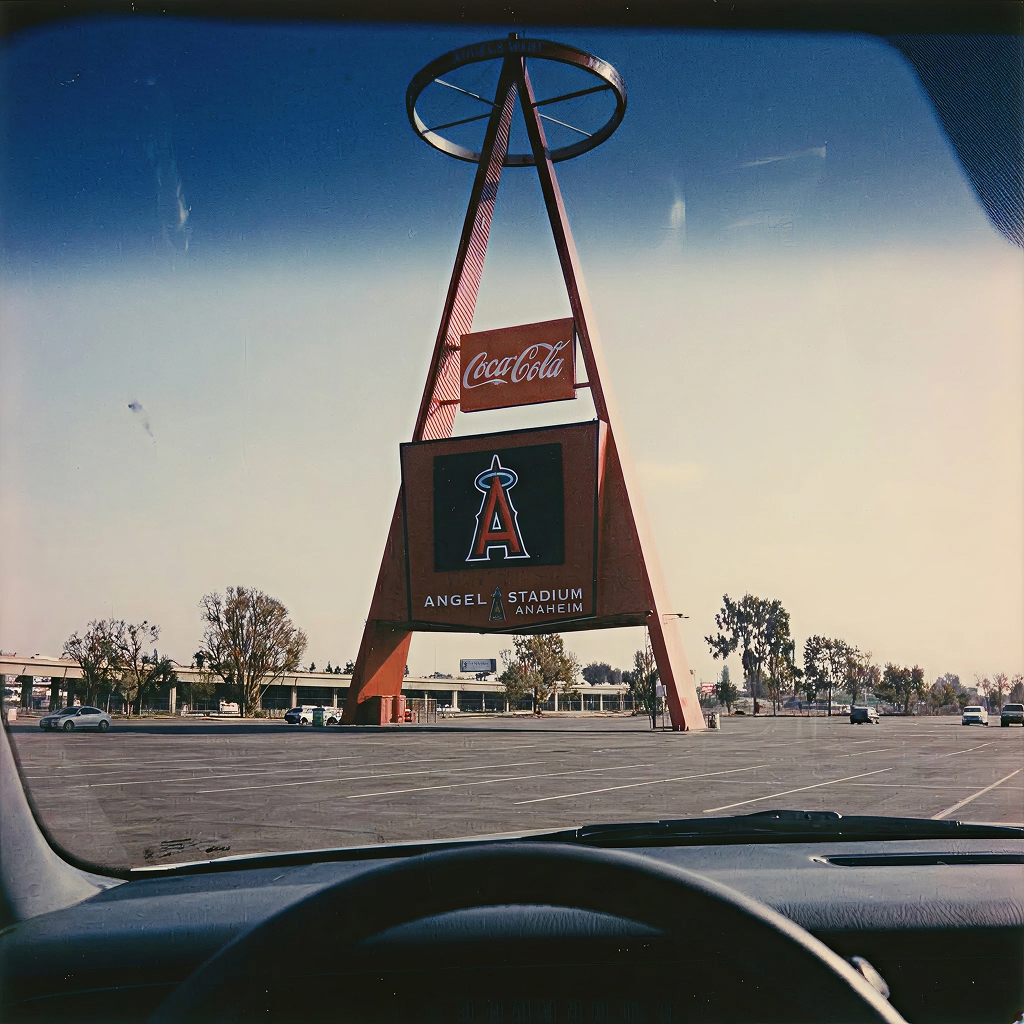
The pitch was mine. That part is important. Tate had drilled me on the protocol in the Angel Stadium parking lot Saturday morning before we walked in — starters and everyday guys, one bat per player, get a name and a number — and he had also given me a hook. The night before, in the bleachers, two of Seattle's hitters had muscled broken-bat flares into the outfield and brought runners home. Two runs scored on bats that snapped in the hitter's hands. The Choirboys lost 3-1 in the 10th. Tate had watched those two at-bats with the particular stillness of a man cataloguing something for later, and after the second one he had leaned over and said, quietly: Use that tomorrow.
So I did. I went into that corridor with the protocol in my back pocket and Tate's hook in my mouth, and I introduced myself, and I told the assistant equipment manager about the Mount St. Helens volcanic soil and the new-growth Douglas fir and the mineral content, and then I delivered the hook. I said something close to: Seattle's guys put up two runs on broken bats last night. Bats that don't snap turn those plays into outs. You'd be 1-0 instead of 0-1 in your home opener.
I was pleased with the delivery. I thought the rhythm of it was right.
The EM looked at the bat I was holding. He looked at me. He took maybe two seconds — the kind of two seconds that tell you everything about how the next sentence is going to come out — and then he said the line.
I kept talking for three more sentences. I have been a writer for thirty years and I could not feel the moment ending around me. Tate could. Tate, who had been standing exactly two paces behind me — close enough to catch my elbow if I fell, far enough not to crowd the meeting — looked at the floor. Did not say anything. Did not move. Just looked at the floor in the way a man does when he is granting another man the privacy of not being seen.
That mercy told me how bad it was.
We walked back to the wagon in silence. Skipped the game entirely. Tate said nothing in the parking lot. He said nothing on the freeway back to the motel. He said nothing through dinner, which I had researched and which I do not remember eating.
At Cofax on Monday morning the burrito had gone cold in my hand, and a woman two seats over was watching me with the careful neutrality of someone who had decided I was not actually about to cry but was reserving the right to revise that estimate.
I walked back to the wagon and sat in it for a while. Then I did the only thing I could think to do that Tate could not. I wrote an email to an old colleague from the Seattle Post-Intelligencer who had landed at the Los Angeles Times sometime after the P-I went under in 2009. We have not spoken in eleven years. I wrote three drafts and sent the second. I asked if he had time for coffee.
Tuesday I sat at the motel desk and tried to write the Anaheim dispatch. I could not. I wrote three pages around it and tore up two of them. I refreshed the Wallop standings on my phone and saw that Cal Raleigh had finally hit his first home run of the season the night before for the Dept. of Precipitation. I have been waiting two weeks. He is on my roster — Gary's other launch project, a home-run fantasy league he's been running out of Knockwood, the one where I am a beta tester rather than the field correspondent. It would normally have been the best thing to happen to me on a Tuesday.
The reply came in around four. Wednesday morning, ten o'clock, are you available.
Wednesday morning I drove downtown.
I parked in a structure on Spring Street that cost more than the breakfast burrito and the previous night's dinner combined. I walked north toward First Street, with City Hall ahead of me and to the right, and the historic Los Angeles Times building catty-corner to it on the southwest corner of First and Spring. I was going to the LA Times.
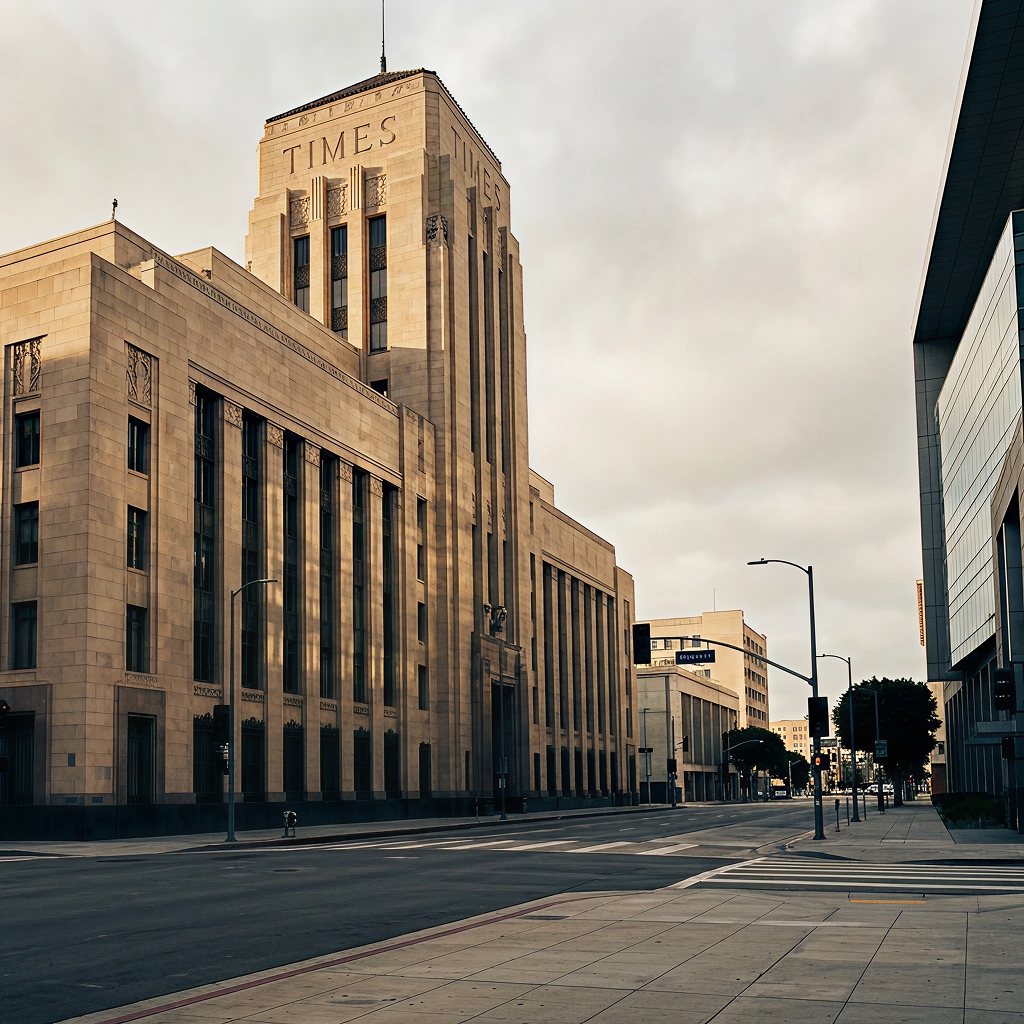
The building is exactly what you would want it to be, a monument to the heyday of journalism. Beige stone, art deco, the word TIMES carved in capitals at the top. I walked up to the doors. I pulled the handle of the first door, and it did not move. I pulled the handle of the second door. It did not move either. The lobby behind the glass was dark. I could see the outline of the floor and the suggestion of a desk. Whether the famous Globe Lobby was preserved behind that darkness or had been gutted for condos, I could not tell.
I stepped back to the sidewalk. Across Spring, occupying the entire block to the east, stood the Los Angeles Police Department headquarters — built in 2009, all glass and dark stone, the year my own paper folded, the year I stopped paying attention to my industry's funeral because watching it was unbearable. The watcher and the watched, in 2026, on First Street: one is locked, one is operational, one is in the shadow of the other.
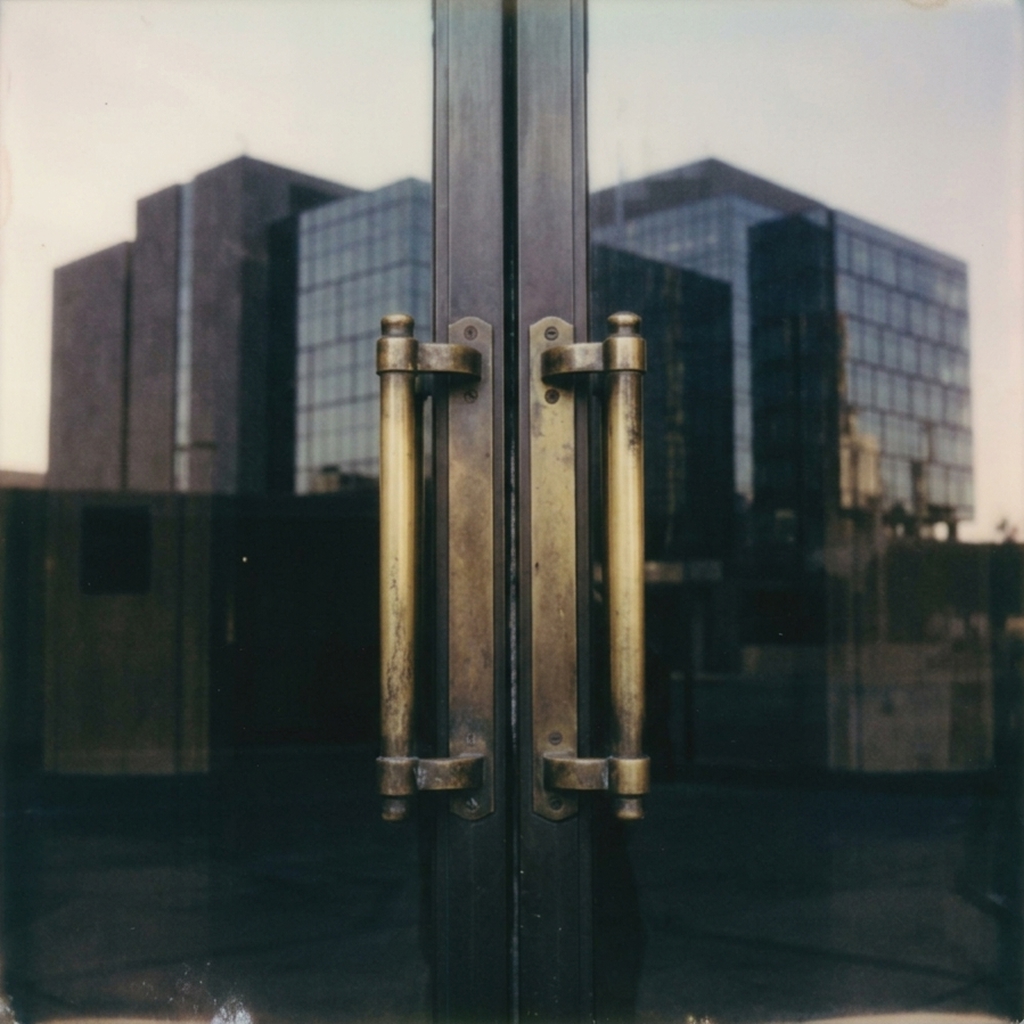
The colleague had not given me the address because everybody in Los Angeles knows the LA Times is not in this building anymore. They moved to El Segundo in 2018. The information was so universal that he could not have predicted I needed it. I had been so out of it that I did not know to ask.
I stood there for a minute that was longer than a minute, and then I started walking north because the only thing I could think to do was eat lunch and the only place I could think to eat it was Philippe's, six blocks up on Alameda, which has been making the same French dip sandwich since 1908. Nothing about Philippe's has changed because nothing about Philippe's needs to change. It was the only thing in Los Angeles that did not feel like it had moved while I wasn't looking.
I returned to the motel to email my colleague an apology for not showing. He generously sent his cell number and we rescheduled for tomorrow morning, this time at a mutually understood location.
Bats are cheap, losses are expensive.
Tate is still wherever he is. I'm getting ready to drive to El Segundo. I'm putting one Wallop bat in the passenger footwell, in case the meeting goes a way I do not deserve.
— Freely
Fantasy baseball without the homework.
Wallop is a home run-only game for friends — simple enough to play all season without the daily grind. Start a league and draft any time before September.
Start a League