Ninety
Bats distributed: four, possibly five. Operational vehicles: one. Covered dishes: none.
Cascade Heights is southwest of downtown, up a long grade of streets that climb and bend without telling you why. I had spent Friday in Savannah learning to read a city like a painting — the squares, the ironwork, the moss silver in the lamplight — and I came into Atlanta still squinting for the picture. There wasn't one. There were brick ranches set well back on graded lots, carports, a basketball hoop gone netless, retaining walls dark and damp at the base, big water oaks holding the whole street under a green ceiling. Somebody's gardenias coming open. A church van at a curb. The houses had been there seventy years and meant to be there seventy more. It was the most ordinary street I had seen in a week and it would not resolve into anything but itself.
Tate had been quiet most of the way along the interstate. All spring he'd walked into clubhouse lots like he held the deed; now he sat with his jaw set and a hand flat on his knee, watching the house numbers come up. I put the quiet down to the thing from Savannah still sitting between us.
"So this is the grandmother on Naomi's mother's side," I said. "Bridgewater?" Naomi had typed it into my phone two weeks before — the name she carried and Tate didn't — and I'd been turning the family over ever since.
Tate took a second. "Her mother's mother," he said. He nodded at a brick ranch up the block. "That's the place."
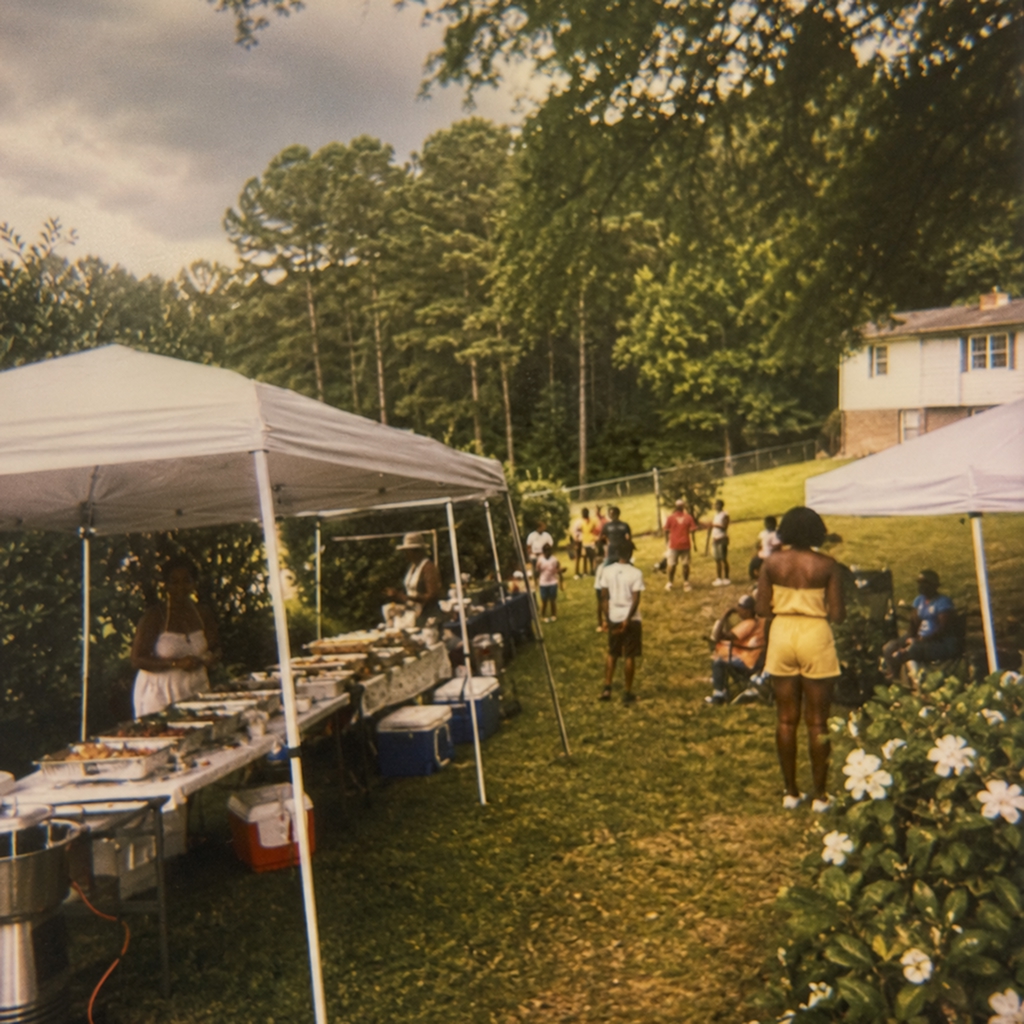
Cars were parked two deep in the drive and along both curbs. A canopy stood in the side yard; through the gap between houses I could see foil pans on a folding table. I pulled along the curb behind a Tahoe and we sat a second while Tate looked at the house.
A couple of teenagers were out at the cars, lifting something from a trunk. I had forty-some sample bats in the back, a windshield with a star in it, and no good place for any of it. What I said, getting out, before I had decided to say it, was, "Think it's alright to leave it on the street here? I've got a load of product in the back."
One of the teenagers glanced over, flashed a big crooked smile. "Mister, nobody's messing with your ratty-ass car." He went back to his business.
Tate was already walking up the drive, the flowers he'd had me stop for after Macon held down at his side in their cone of cellophane. I stood at the door of the wagon. A sprinkler ticked two yards down. Voices and music came out muffled from the party. I understood, a half step behind myself, what I had asked and where I had asked it.
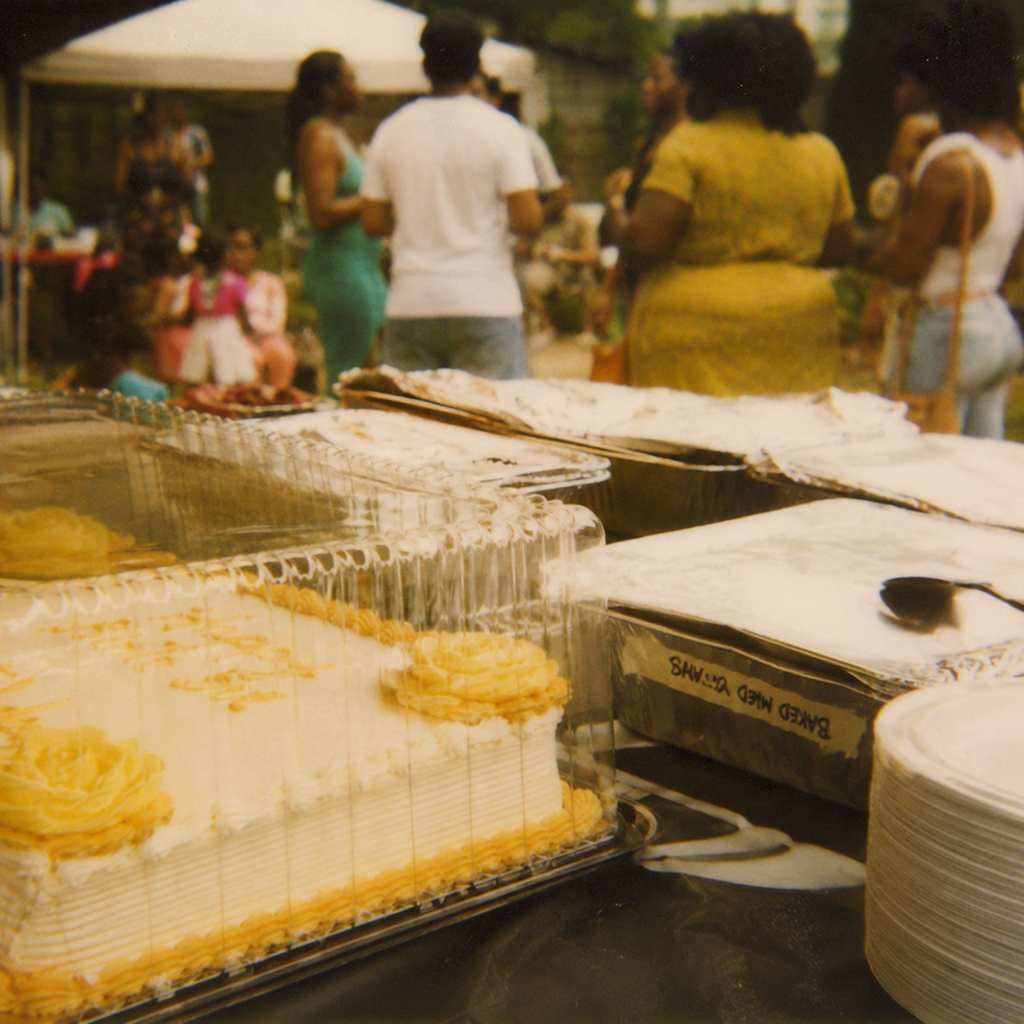
The backyard ran downhill to a chain-link fence and a stand of pines. Two canopies, a long line of folding tables end to end, coolers underneath, a steam tray going on an extension cord run out through a window. The food table was already loaded — foil pans, a few of them labeled in marker on tape, a sheet cake under a plastic dome with a piped yellow rose in each corner. I stood in front of it with both hands empty. Tate had brought flowers for Miss Cordelia. Everybody in that yard had brought something. I had brought Cecil Tate.
Tate made for the kitchen, and the yard grabbed at him the whole way — a plate pushed into his hand he hadn't asked for, a man in a lawn chair he had to bend down to hear, a photograph somebody pulled him into before he could straighten. He went through all of it a half-beat stiff, like a man at the head of a receiving line he wasn't sure was his. I trailed him, because his was the one face in that yard I knew.
I found the other face I knew in the kitchen, which was narrow and bright and entirely Naomi's. She had it running — hair tied up, an apron over a good dress, two older women working at her shoulders like a kitchen line, taking handoffs without being told. It was her grandmother's kitchen and she moved through it like she'd been handed it, which I supposed she had. I'd seen her cook for strangers in New Orleans. I had not seen this.
She looked up and caught Tate in the doorway. "Well, look who it is." Loud, for the room. "Cecil Poitier Tate, in the flesh — my whole grown life and he still shows up after every last thing's been lifted and carried." The aunties laughed. One of them said Naomi in a scolding voice that was really a delighted one. She crossed and got a hand on his arm and kissed his cheek and was already turning back to the stove. "You eat. Plenty of it, no thanks to you."
She caught me on the turn. "Marshall." Not quite a question, not quite a welcome — a noting. "You good?"
"I'm good."
"Then get out of my kitchen and get yourself a plate and a drink." She handed the spoon off to one of the aunties.
A girl in pigtails, maybe six, planted herself in front of me with a juice box. "That's Mister Cecil," she said, pointing with the straw at him crossing the yard. "Are you his friend? He's Auntie Naomi's daddy." Then she ran off before I'd worked out the answer.
Dinner was a moving thing — no sitting down to it, plates filled at the tables and carried off to chairs and laps and the porch rail. I ended up at the end of a table with Tate and cousins Darius and Andre, cornbread going one way and a dish of greens the other. Naomi came through with a sheet pan held flat above her head, and on the way past, not slowing, not quite to anyone, she said, "Y'all sharing a room down there, or did Wallop spring for two?"
"One room," Tate said, eyes on his plate. "Gary's idea of a budget."
Then the pan was down and the greens came back the other way and a cousin was asking Darius about somebody's transmission. I kept eating.
The light was the kind that comes before rain. I'd drifted toward the carport, where Miss Cordelia was holding court in the good chair with one of her sisters beside her and children running barefoot around her chair. The plate they'd brought her was still untouched. The flowers Tate had brought had wilted a little in their jar at her elbow. A woman about my age was bent over her hand as I came up. "You taught my daddy, Miss Cordelia," she said. "I taught his whole grade," Cordelia said. "Sit down and eat." The woman moved off. Cordelia saw me and tipped her head at a folding chair beside her, and I sat.
She was small and straight-backed and her eyes were very clear. She took my hand in both of hers and held it.
"You came all this way with Cecil," she said. She was placing me, being gracious about the work of it.
"I did. And thank you for having me, ma'am. Happy birthday."
"We love having everybody here." She patted the back of my hand.
A small boy ran past us chasing a girl squealing with laughter. Cordelia watched them go. "I lose track," she said. "Nine great-grands now, last I counted." Her eyes came back to me. "You got children, Mr. Freely?"
"A son," I said. "Starting college in the fall."
"Where at?"
"Iowa."
"Well he's gonna get a good education, cause I don't suppose there's much else to do in Iowa!" She gave a sweet little laugh that was picked up by those around her.
She let go of my hand to wave at someone past me, her face opening into another name. "Don't be a stranger in this yard."
My phone was in my pocket and it stayed there. The graduation date I had was a guess. I hadn't heard from them in ten days. I'd called them a son.
I went inside to find a bathroom and found the hallway instead.
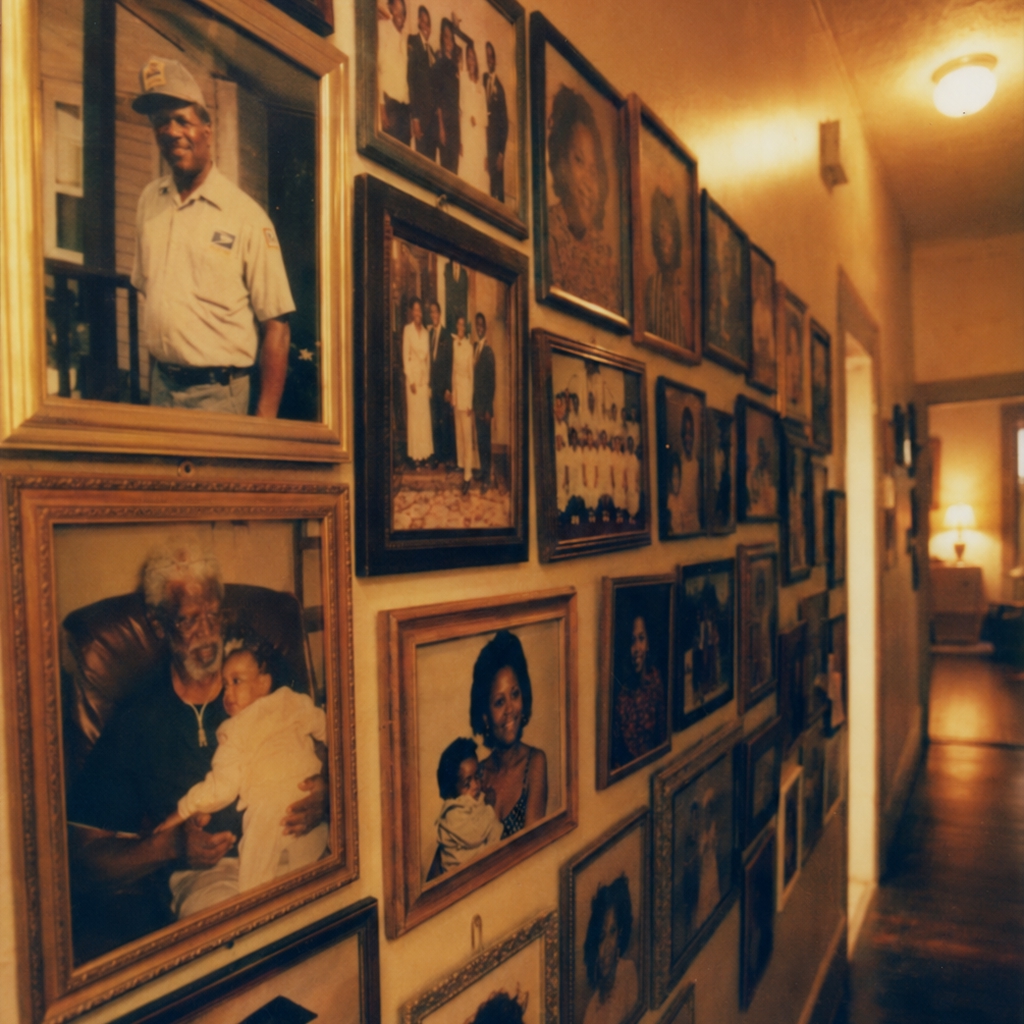
It was hung the whole length with photographs, the frames not matched, going back decades, arranged by no system I could see except that the oldest were nearest the floor. A man in a postal uniform on a porch — this porch — squinting into a summer. The same man older, gray, in a recliner with a baby. Church groups. Graduations in that gymnasium kind of light. A young woman on the front steps with an infant against her shoulder, and then that woman through the years — a nursing pin, a cap and gown, a Christmas, a beach — and the girl beside her growing up into a face I knew, into Naomi.
I couldn't find Tate in any of it. Not the porch, not the recliner, not the graduations, not the Christmases. I went down the wall a second time to be sure. He turned up twice, both frames near the top, both recent — less gray than the man in the wagon, at a table, at a cookout — folded into the back of a group like a man who'd come in late and been made welcome.
In the kitchen doorway behind me one of the older women was talking low to the other, not to me, never to me. "—and when Naomi was little and her daddy wasn't in the picture, Gwen did it all herself. Out there in California, by herself." A pan went into the oven. I moved off down the hall.
I'd taken the set of Tate's shoulders in the driveway for Savannah weight. Standing in that hallway I wasn't sure anymore. I'd walked into the backyard assuming Tate had been coming here all Naomi's life.
Tate found me at the fence rail later. He'd come out to where I was. We didn't say much. We'd been in a car together for ten weeks; we didn't need to. It was the first easy thing I'd seen in him all day, and it had come and found me. He kept half an eye on the street the whole time, watching for something I didn't know to look for. I figured he was watching the weather.
Darius came over with a couple of beers, handed me one, and the talk turned to ball. He had gone to school out in Stockbridge two grades behind a man who now played center for Atlanta. Tate's head came up. He asked how close they were. "Me? Not tight," Darius said. But his older brother had played with him from when they were nine and stood in his wedding party year before last. Marquis Grissom had had a hand in half the kids who came up around here in those years. Tate sat with that for a minute. He set his cup on the rail, walked out to the wagon I'd been so worried about, and came back across the grass with one of our sample bats loose in his hand.
He gave it to Darius. Showed him the grip, turned it over, gave the same wood speech I'd heard him give equipment men in four cities. Darius stepped away from the fence and looked around before taking a swing in the open part of the yard, and a couple of the younger guys drifted over to watch. It wasn't a pitch. Tate wasn't selling anybody anything. He was a man at a family party showing Darius a thing he knew about, and the bat I'd been guarding like cargo was just a bat in his hands.
When the younger guys drifted off, the bat was still under Darius's arm. Tate wrote a number on the back of a napkin and gave it to him. "Let me know how it swings for him."
Headlights belonging to a taxi swung into the drive and a woman got out of it, a coat held over her head against the first spitting rain — late, travel-flat, a roller bag bumping behind her over the grass. It went through the yard like a current. Gwen's here. Gwen made it. That flight out of LA, hours late. The family swelled toward her under the dripping canopy.
She got to her mother first. Then the kitchen swallowed her — sisters and aunts and cousins she'd been gone from, Naomi in the middle of them — and a sound came out of that small bright room I could hear from across the yard. Tate stayed where he was, his head half-turned to the kitchen, listening to it crest. When it seemed to die down, he crossed the yard and found her. She held him for a long time, with both arms, her hand flat against the back of his shoulder, saying something I didn't hear. He let her.
I watched. I had seen that hold before. A small stucco house in South Los Angeles, seven weeks ago. A lemon tree down to the dirt.
I'd been in the car then.
Then the rain came in earnest and the whole yard moved at once.
It wasn't graceful. The canopies held but the open tables didn't, and there was a run on the foil and the wrap, and a tablecloth went over a sheet pan like a sail, and the kids who'd been wild all afternoon turned sleepy and furious in the same minute and had to be carried. Aunt Carol was hollering for the deep containers. Naomi was hollering back that they were in the pantry. Coolers got dragged toward the carport with the water sheeting off the lids. Tate carried one up the two porch steps, set it down, put a hand on the rail a second, and breathed.
I grabbed what I could — a stack of folding chairs, because chairs took no finesse — with the beer in my other hand I'd been nursing too long. Naomi came past with a stack of plates and plucked the can out of my fingers without breaking stride.
"Let's not do another Miami, Marshall." She said it to the air and kept moving. Then, over her shoulder: "Bring those in through the kitchen. Lean 'em by the door."
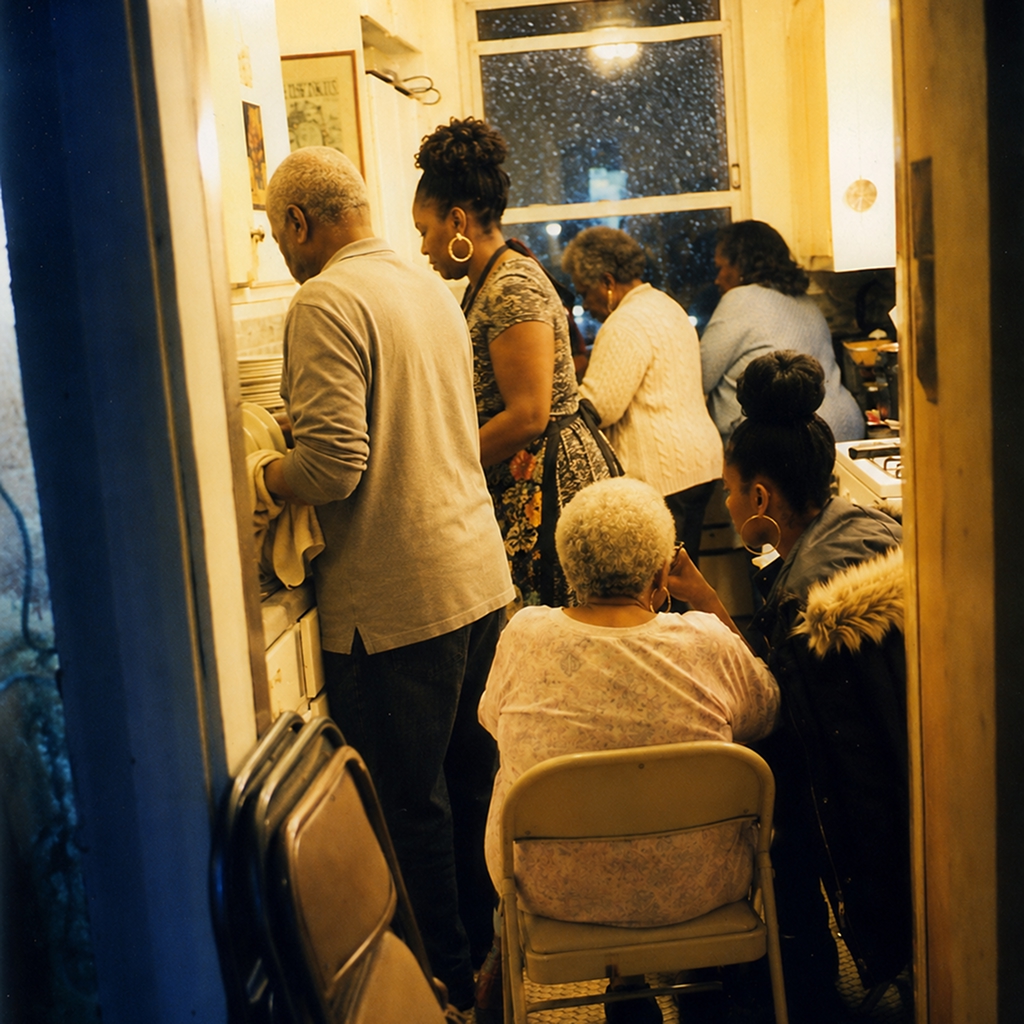
So I carried the chairs into the house, into the bright loud kitchen I'd watched all night from the wrong side of. It was full — Miss Cordelia set in a chair somebody had carried in for her, Gwen beside her with her coat still over her shoulders, two aunties at the sink, Naomi back at the counter, Tate handed a stack of plates to dry.
Nobody needed me. I leaned the chairs by the door where she'd told me to.
The rain came down on Cascade Heights, and I stood in the doorway a second on my way back out for the remaining chairs.
— Freely
Fantasy baseball without the homework.
Want in for the 2027 season? Leave your address and we’ll send one note when leagues open in March.