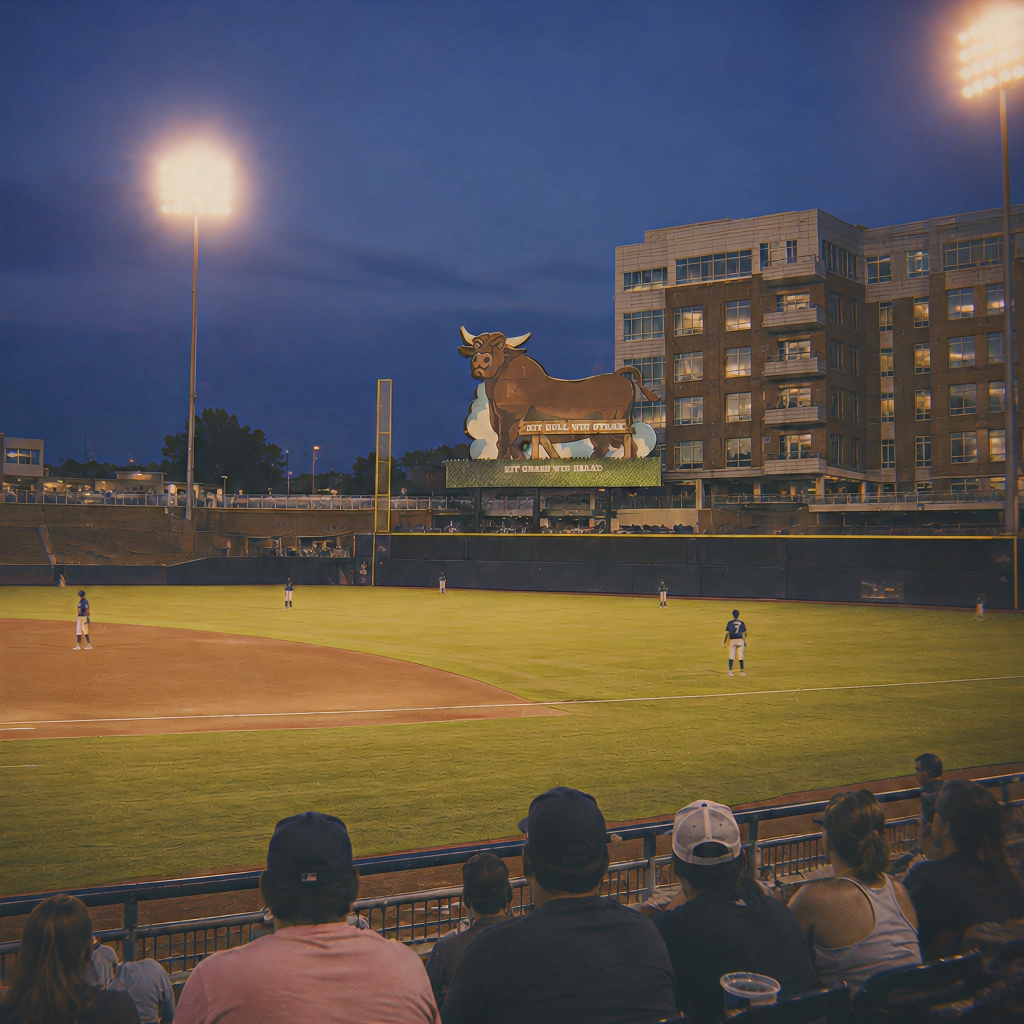
The Bull
Bats distributed: four, possibly five — and two that won't count. Breweries: decline to state. Gas: up again, on trouble in some strait I keep having to look up.
Asheville was my idea. I'd been reading about it for years — the mountains, the breweries, the people who'd been there describing it like they were letting me in on something. We had a few days before there was any reason to be anywhere, the first real slack since March, and I spent it like you spend money you've decided doesn't count. I booked two nights up in the Blue Ridge and talked the place up the whole drive out of Atlanta like a man who'd built it himself.
Tate didn't have much to say about it. He doesn't drink anymore, and a brewery town for a man who doesn't drink is just a town that smells like bread. The first afternoon I wanted to walk down to the river, where the breweries are, and he said he'd sit this one out. Said it easy, no reason. I went without him.
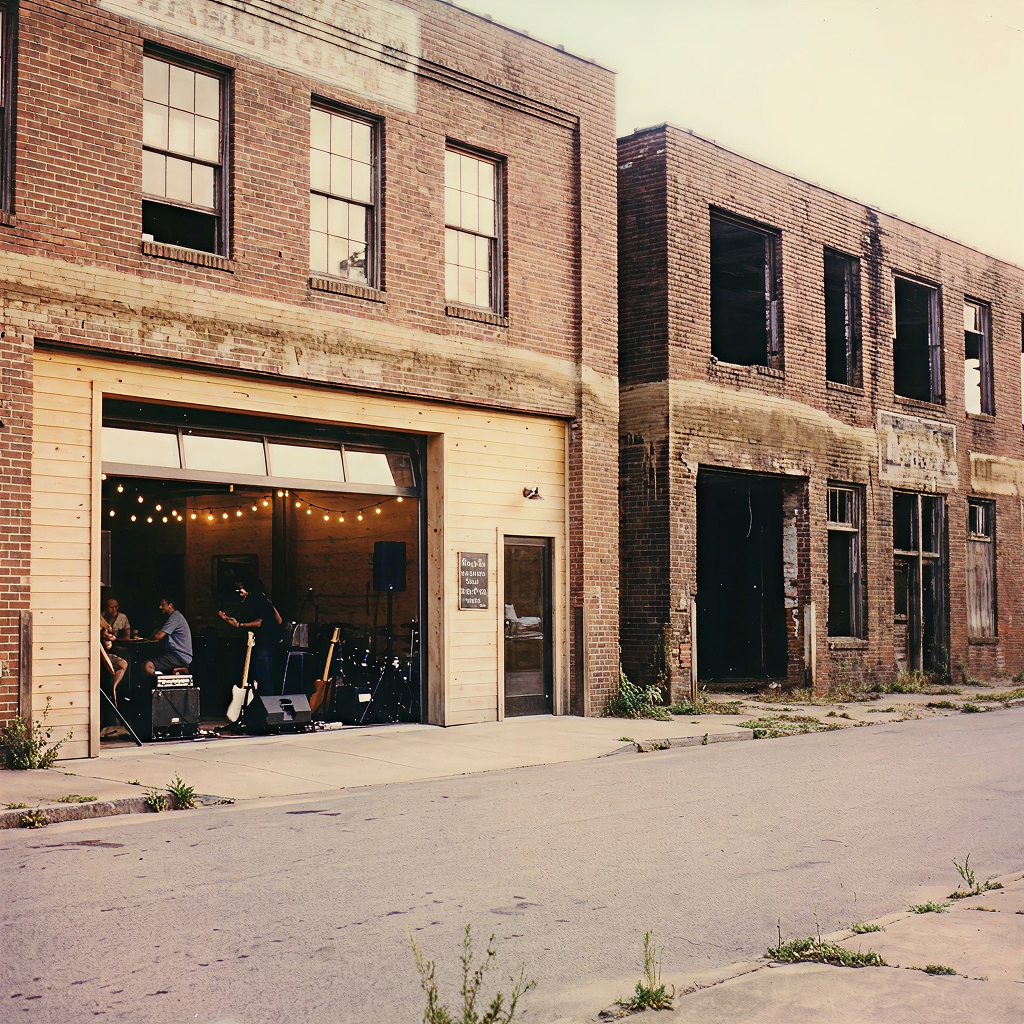
The river is where Helene's flood came through, two years back. You can still read the line on the brick, mud-colored, higher than a man, and the places that came back came back next to the places that didn't — a taproom with a new floor and a band tuning up, and beside it a building with the windows still gone. Everybody was kind about it. A man pouring told me they'd been lucky, considering, and I believed him. I bought a flight of beers and stood in a room that had mostly come back.
A bachelor party two tables over waved me into it so I wouldn't drink alone — the groom in a paper crown gone soft at the points, all of them a year or two out of college, three beers ahead and just getting started. I had one with them. I learned the groom's name and lost it again. When the talk turned to whose round was next, I could see where it went from there — the old guy buys a round, the old guy's a story they tell at the wedding — and I got up before it got to me. Somebody asked was I coming to the next place. I said I'd catch up. We all knew I wouldn't.
My phone buzzed while I was standing there. My ex-wife, asking again about Asher's graduation tickets. They'd handed them out, six to a kid, and she wanted to know how many I'd need. I typed 1, then changed it to one — it looked like more that way — and sent it before I could do worse. Then I stood there with the beer I hadn't wanted and thought about that one sitting on her phone three time zones away, next to whatever number she had put down for herself.
I came back to the room before dark, feeling stone sober. Tate was where I'd left him. He took one look at me and didn't ask.
We went and ate. I'd booked Cúrate, the tapas place everybody lists, the one with the chef who'd been on television, and it was good, and it was expensive, and it was exactly what I'd come for. Tate didn't bother with any of that. He worked through the chorizo and the fried things and a second plate of the ham without looking up, while I pushed the little artful plates around in front of me — all but the bread they'd rubbed with tomato and oil, which I could have eaten all night. Over the last of it he said there was a minor league ballgame Sunday he'd like to get to. He said it between bites, like it didn't matter either way. I knew the mountains were over.
I knew Durham the way I know most things baseball: from a movie. I'd run the whole thing in my head on the drive down — the bull on the wall, the old catcher who never got out of the minors. In the parking lot I said something to Tate about Crash Davis. He thought about it a second, shook his head. "The real guy made the bigs," he said. "Three years in Philadelphia, when they were the A's." That was the end of what I had to say about it.
The park was small and right. The bull was out past the left-field wall, and the grass was the kind of green that doesn't photograph. Before the game, Tate worked his way down toward the field, same as always, and I came behind him with two bats.
The man who came over was one of their coaches, sixty-odd, built low, bowlegged, a ballplayer's body gone to seed. He didn't know Tate from anybody. Tate didn't help him along — he just stood there with the bat, in no hurry. The coach took it out of his hand, choked up on it, sighted down the barrel, gave it a half-swing. Then he put his eyes back on Tate. "You played. Where?" he said. I'd watched men do that four or five times now, in four or five towns. There's no corollary for old newspapermen. I got going on the volcanic soil anyway, the pitch I can do in my sleep, and he waved it off before I reached the ash. "Leave a couple, we'll get 'em in the cage." Easiest yes of the trip. He said the big club had stopped taking his word for a bat — Tampa wanted every one run through the lab now, sensors and exit numbers, some kid with a laptop to call it real. Tate laughed at that. For a second the two of them were on the same side of something, and I was the one holding the bats.
We knew it didn't count for anything. The home office only counts a bat that makes it into a big-league hand, and these would live in a Triple-A cage and stay there, same as the half-dozen we left in Hillsboro back in April. It wouldn't move the number.
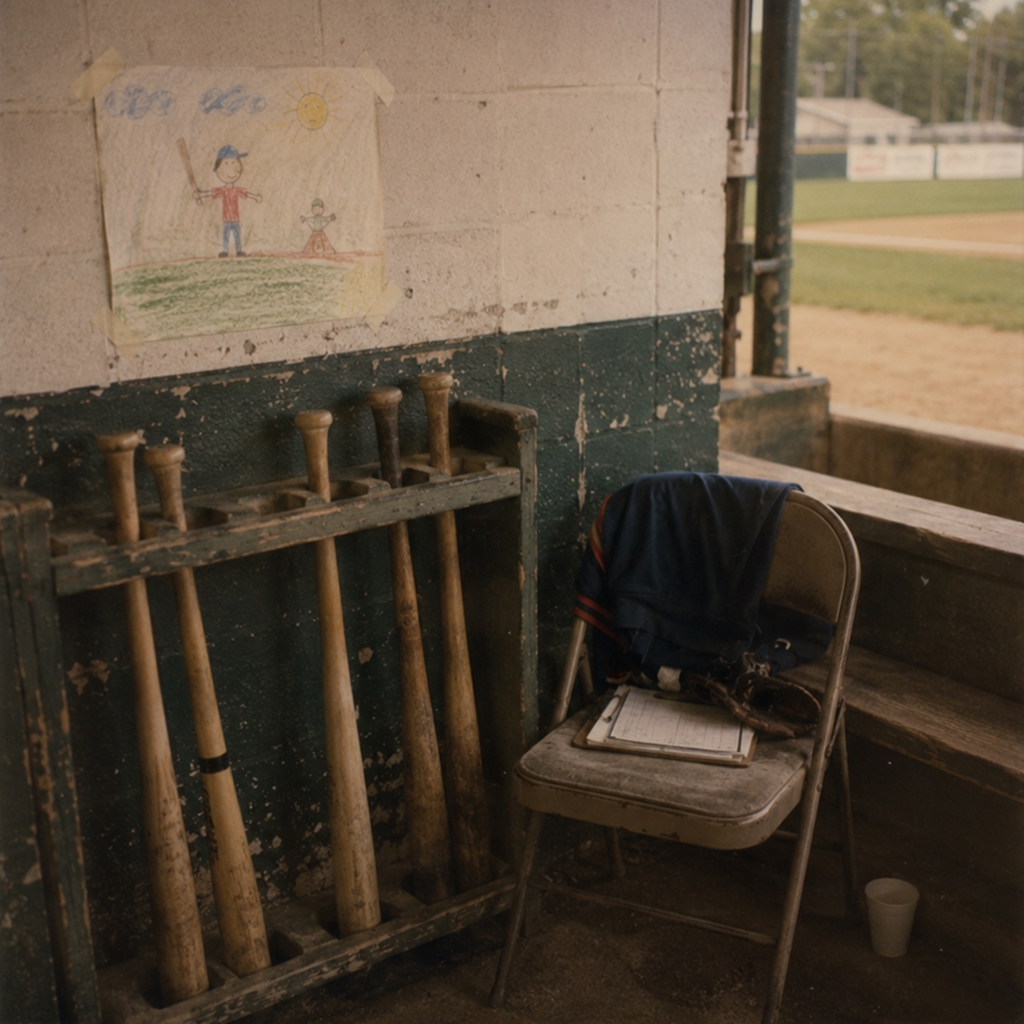
He took us around. He had his own chair and a kid's drawing taped over the bat rack; he hollered at the groundskeeper by name, told me the park's history like I'd asked for it, knew the regulars down front well enough to give one of them grief about the chili dog he was working on.
He'd played, he said — a few years in the system — and then he'd quit and stayed. "Ever get the call?" Tate asked him. "Nope." The coach looked at him. "You?" "Close, once," he said. Tate was easy down there. Easier than the mountains, easier than I'd seen him since Atlanta, easy the way you get in a room built to your size. And in the morning we were leaving.
I had my phone out before I knew I'd reached for it. There was a flight — DC to Seattle, one stop, in by early afternoon. Two hundred-odd dollars and a seat to click. I didn't click it. Instead I said it out loud, on the warning track — that I was thinking about flying back for the graduation, leaving him the wagon in DC a few days. I asked him how he'd feel about it, like it was his to sign off on.
He watched a kid shag flies for a second. "If the kid's expecting you," he said, and left it there. I put the phone away with the seat unbought. But it was out now, in the air, where I'd have to answer for it.
The game was the game. Five-oh-five start versus Charlotte, heat that didn't quit after dark, Tate watching every inning the same as the last. When the final out was made, the loudspeaker called the children down to run the bases, and the field filled up with kids rounding first in a long crooked line. I got up and filed out with the families. Tate stayed where he was, watching them go all the way around.
— Freely
Fantasy baseball without the homework.
Want in for the 2027 season? Leave your address and we’ll send one note when leagues open in March.