Three, Four
Bats distributed: twenty-one. Pages of lab report copied: a hundred and fifty-three.
The first hour and a half of Indiana had water in it. It stood brown in the fields on both sides of the road, and the fence lines were caught up with cornstalks and boards. The radio said the river at Anderson had come up higher last week than it had in 1913 and was down now, and that the work was far from over. Then it went to a ballgame.
Somewhere past Indianapolis I started working on a line I have wanted to say in a car since I was about twenty. It needs a hundred and six miles to Chicago and it needs to be dark. I had the better part of two hundred and a Sunday afternoon. I worked at it off and on for an hour and could not get it to come out. Then we were up at Gary with the mills going and I understood that a hundred and six miles out had been a stretch north of Lafayette where I was hunting the ballgame back.
I told Cecil there was a thing I had been waiting most of my life to say in a car and the arithmetic had gone against me. He asked what it was. I said it doesn't work if you have to explain it.
We came into the city a little after five, which was a little after six where we started. We took two rooms up on Lincoln. It is a more expensive city than the last one.
Monday I sat with the schedule. Five after seven, five after seven, and twenty after one on Wednesday, which is a getaway day. That left Thursday open all the way through.
I wrote to my ex before I had my shoes on.
I'll be there Friday for check-in.
She wrote back inside two minutes.
Then come. If you say you're coming you have to come. Not like graduation.
I went down to the office for coffee. When I came back up I looked up the drive — two hundred and eighty-five miles, one road most of the way, four and a half hours if nothing happens.
Cecil picked a man out of a batting-practice group in Texas in May — a coach with the Chicago Orphans — and the man told us to bring some wood up when we came through. We had four of them in the back for him.
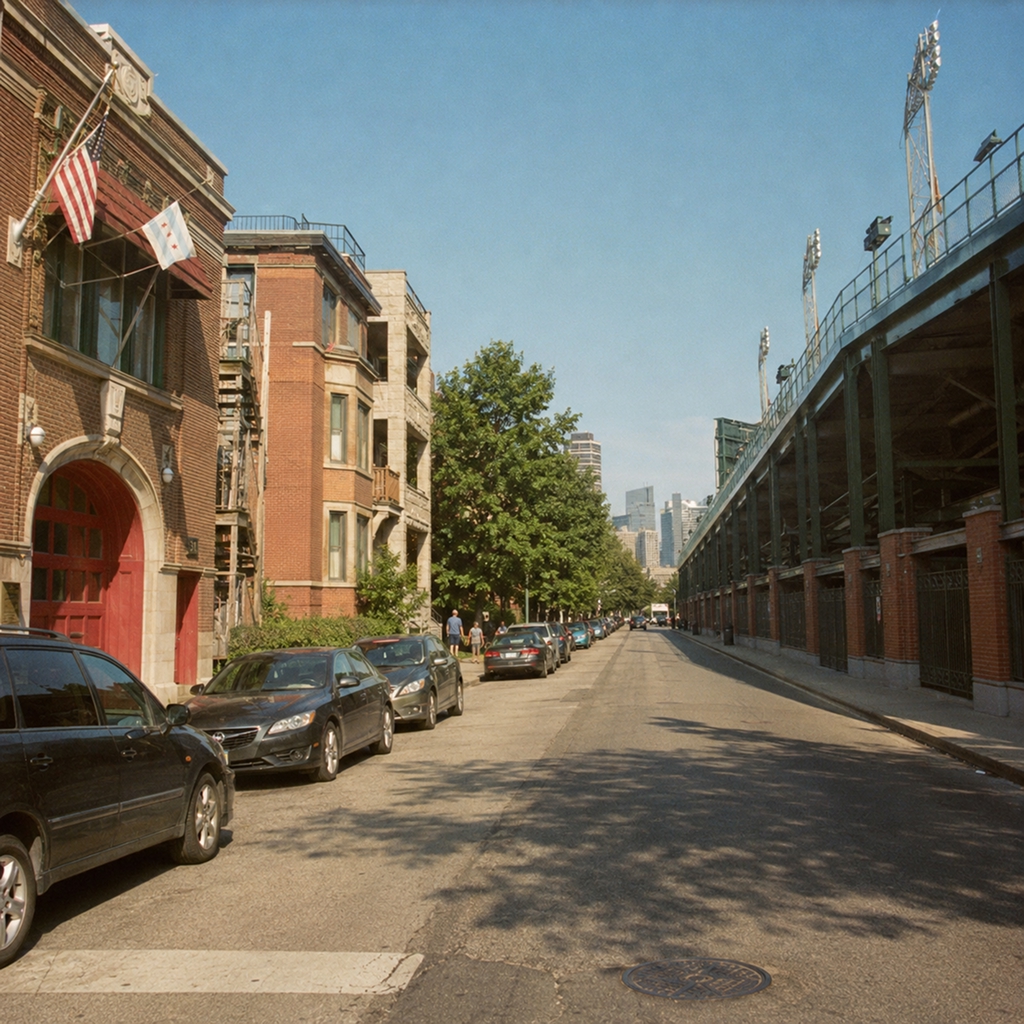
The ballpark on the North Side does not have a parking lot. It has a corner, and then it has three-flats and taverns and a school and a firehouse and people's back porches, and the outfield walls are somebody's street. I drove around for eleven minutes and paid a man in a lot behind a hardware store.
In the lot Cecil got out his wallet and looked at the back of a parking stub he had written on in May, and put it back, and we walked over.
A woman at a door on the Waveland side had our names on a sheet and let us in at four. There are posts inside holding the deck up, and people sit behind them and pay less for it.
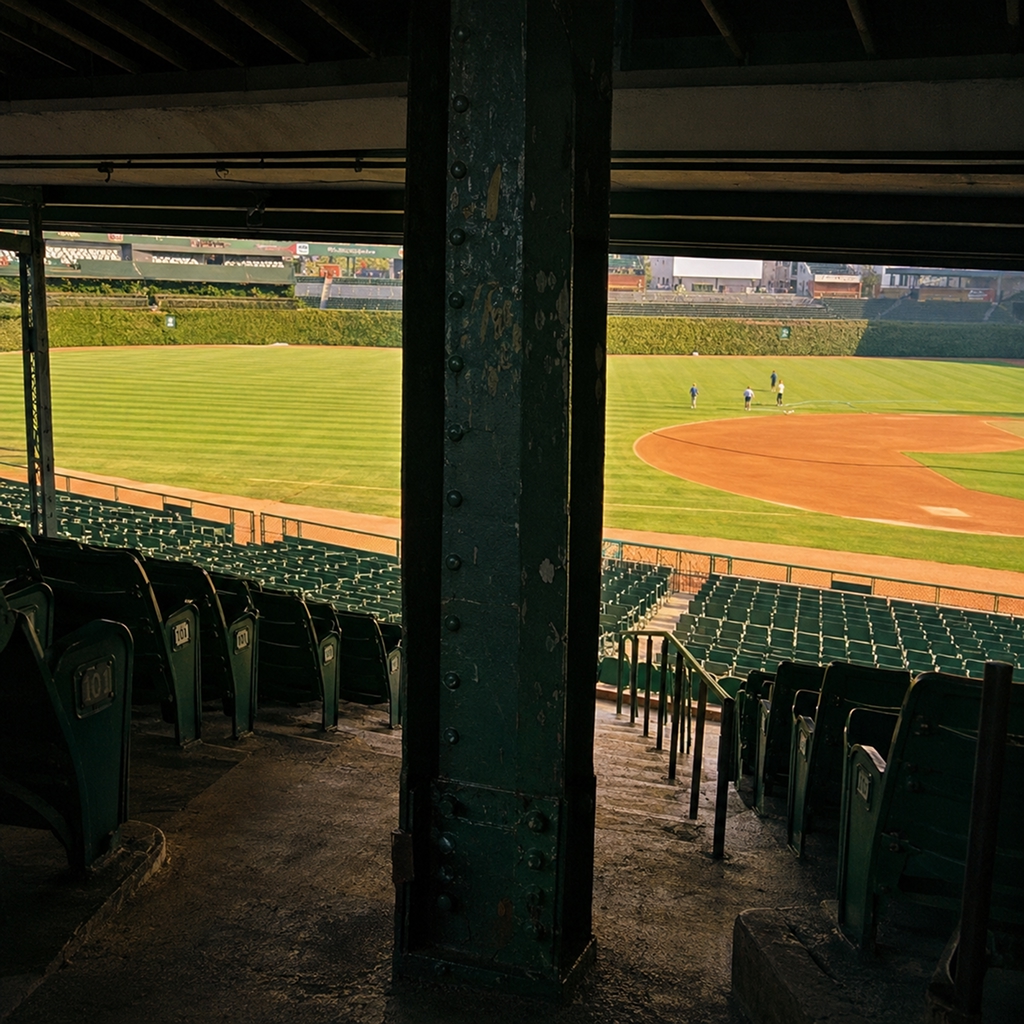
Cecil looked at the flags on the roof before he looked at anything on the field. They were standing straight in off the lake.
"That's in," he said. "They'll quit trying to lift it by the third."
Pete Henley came down the line to us before we had gone twenty feet.
"You got here," he said.
He took all four out of my arms at once and stood them against his shoulder.
"How many'd you bring?"
"Four."
"I said three or four."
"You said not a lot."
He said four wasn't a lot. Then he stood one up and turned it and looked at the end of it, and asked how they break.
"Same as any wood," Cecil said. "Keep the label up."
Henley said he'd tell them. He said they'd get them in the cage tomorrow and he'd have something for me by Wednesday.
I gave him the reports before he asked, and he read standing up with the cage going behind him. He asked about the density profile.
"They both put it high," I said. "One of them says how high, and puts a number on how much it moves from one stick to the next. The other one wouldn't put a number on that at all. They ran the same wood and wrote it up two different ways. I have been through both of them twice."
"Which one's right?"
"I don't know," I said.
He turned two more pages.
"Can I keep this?"
I said he could.
He put it under his arm and asked Cecil something about weight, and while they were talking it came to me that it was the only set. I had them run off at a copy place on Broadway in Louisville because I wanted to read them on paper.
I asked him if I could have it back until Wednesday.
"Wednesday's fine," he said, and handed it over.
We sat up in the top deck for the ballgame. The place was two colors. There were as many of the cross-town Fixers' shirts in our section as the home club's, and people had come in family groups wearing both.
The first two men up for the home club hit balls out of the park one after the other, into that wind. Cecil watched the second one land and said the flags had it wrong — it was going around in there and not straight in. Five went out in all. The last one ended it in the tenth, a seven to five walk-off.
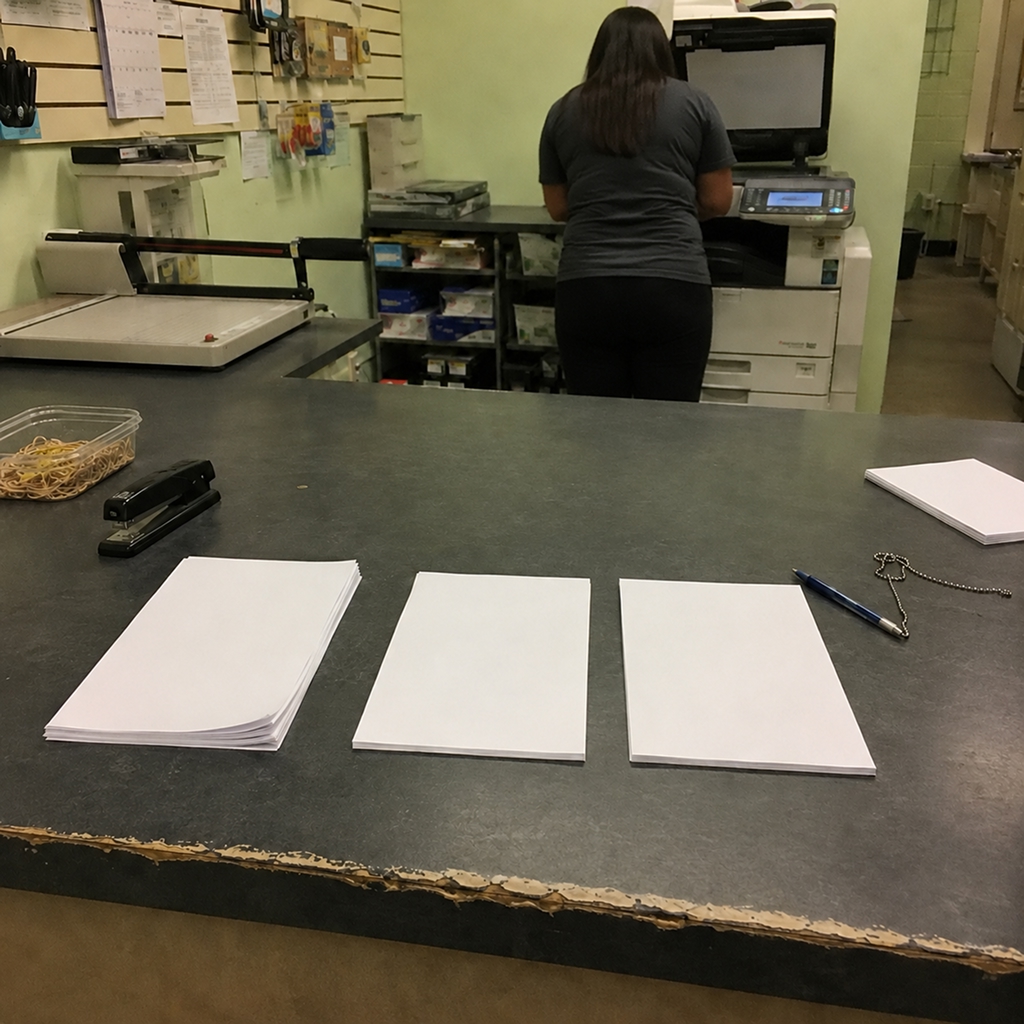
Tuesday I took the reports to a print shop on Belmont and had three copies made. A hundred and fifty-three pages at fifteen cents, and the woman did a dozen over on her own because the first pass came out crooked along the bottom. Cecil sat in a chair by the window with the sports page. It took about twenty minutes.
I ate an Italian beef standing up at a counter after.
Then the post office. One copy went to the man in Pittsburgh I told in July I would send him what came back the day it came back.
One of the other two had nowhere to go. The equipment manager in Cincinnati wrote his address on a ticket stub for me on the fifth of August and spelled the middle of it out loud, and I put the shirt through a dryer in Louisville with the stub still in the pocket. The club's address takes about two seconds to find. I do not know how he spells his name. He spelled the street for me and not himself.
I asked the woman at the window what it would cost to send it so that somebody had to sign for it. She said about nine dollars over the postage. I put it back in the bag.
It rained in the eighth that night and they were an hour and a half getting back to it. The home club won that one too, and we came out of there close to midnight.
Wednesday they played at twenty after one.
The scoreboard out over center field is worked by hand. There are men up inside it, and between innings a hand comes out of one of the squares and takes the old number down and sets the new one in.
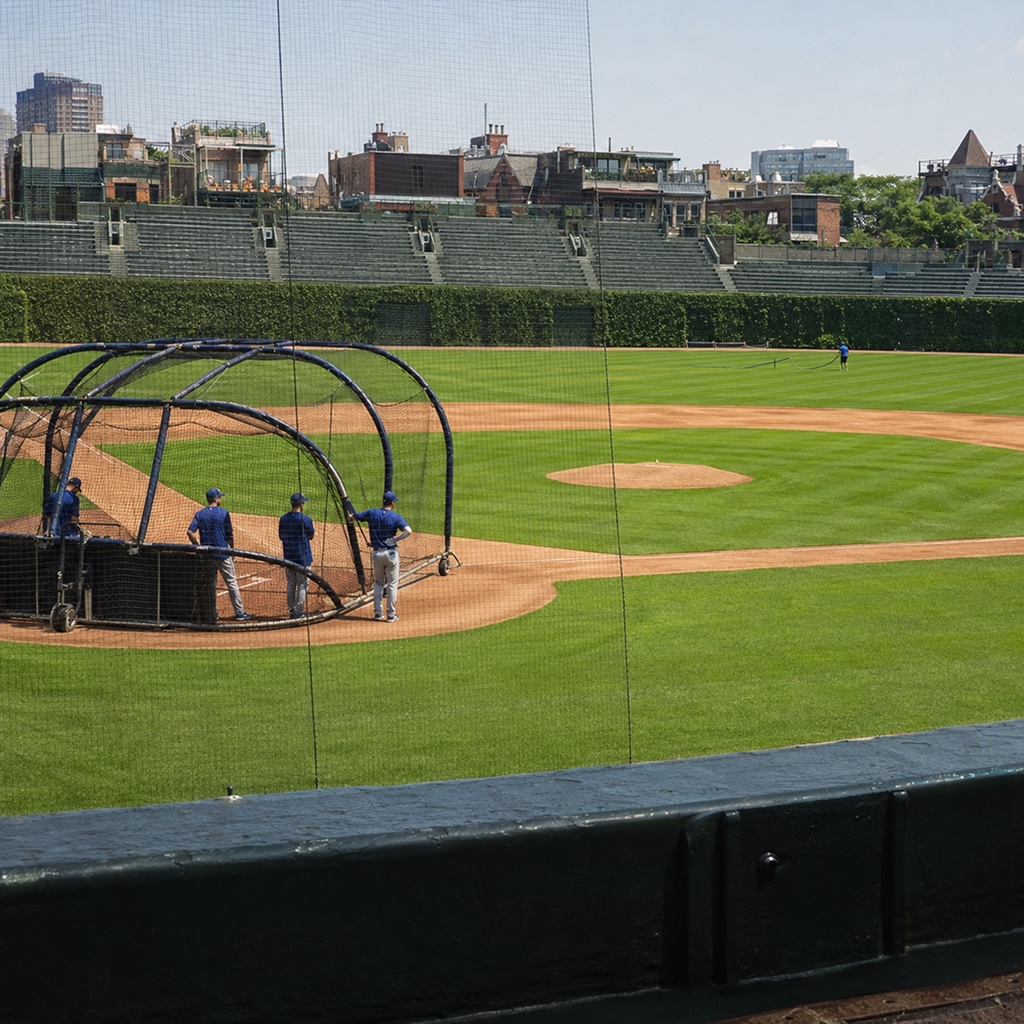
I found Henley by the cage at half past eleven and gave him the copy.
Three of them had swung one over the two days. One liked it. One said it felt dead in his hands. The third one took it into the cage twice and did not say anything about it either way, and Henley said that one was worth more to him than the other two put together.
Then he said he had to take it up to somebody.
"He's going to want one number," he said. He had it open at a chart. "There's two numbers in here, and this one's in a unit we don't keep. He asks me which one, I'm guessing."
He said he'd keep it and he'd call me. Then he went back to the cage, because they were hitting.
Cecil watched them a while after he went. He said the man in there had his hands too far off his body and had had them that way a while. I asked if anybody had told him, and he said somebody had.
The visitors won it three to nothing. Nobody hit one out all afternoon, and we were out of there before four.
We ate on Clark afterward and Cecil went up to his room.
I put the wagon in order in the lot. The bat I bought in Louisville was in back with the freight. I put it on the front seat.
— Freely
Fantasy baseball without the homework.
Want in for the 2027 season? Leave your address and we’ll send one note when leagues open in March.