On Background
Bats distributed: seventeen. Days the lab reports are late: seven.
The phone went off in his shirt pocket a little after four, north of Columbus, and he took it right there in the seat with the road atlas still open on his knee. I got his half of it.
"Cecil Tate." Then a long stretch of nothing out of him. "Mhm." A while. "No, I understand that." Longer. "That's about how it goes this time of year." Then: "After the season, then." Then: "I appreciate the call."
He put the phone back in the pocket and looked out at Ohio going by.
"Nobody hires anybody in August," he said, to the windshield, and then he found the place he'd lost on the atlas.
I did not ask who it was. I had heard the name at a turnstile in Cleveland on Friday from a woman with a canvas tote, and that is what I know about it.
Four hours down 71 with the corn out both windows. We filled the tank outside Mansfield. Four dollars and a penny. The MLB trade deadline came and went at six o'clock while we were still on the road.
A station out of Cincinnati read the names as they came in — two men off the club we were driving to see, one off the club they were playing Tuesday. I did not know any of the three. Cecil said the first one had been up and down four times and would be all right about it.
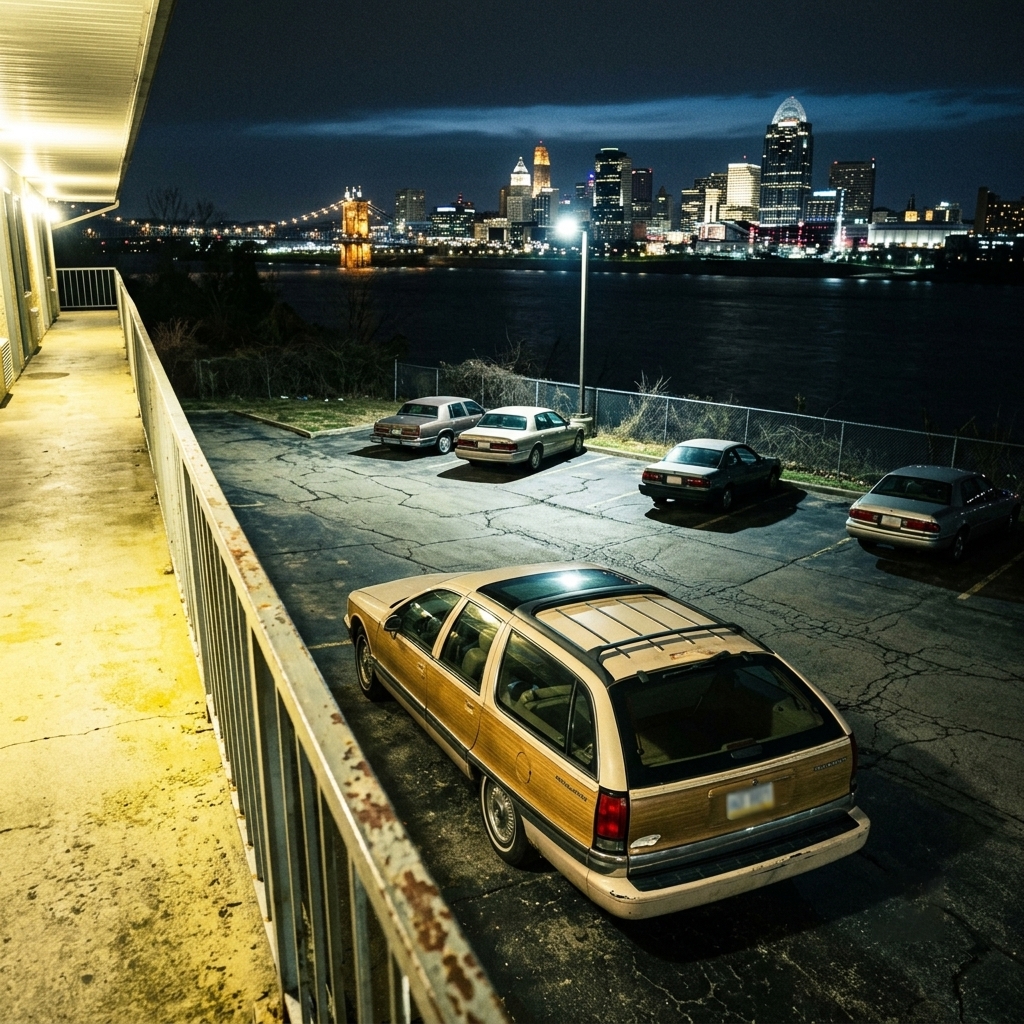
We took rooms on the Kentucky side, because the river is a state line and a state line is worth eleven dollars a night.
Tuesday had nothing in it until the ballgame. I knocked at noon and he had somebody else's game going on the television with the sound off. I knocked again at four and he was asleep in the chair with his shoes on.
I said we ought to get out there early.
He asked what time the gates opened.
The cheapest ticket in that park on a Tuesday is a bench out in the bleachers in left, and we were through the gate with the first of the crowd at ten after five.
The men on the field were the Oakland Itinerant Athletic Exhibition.
I stood at the rail and waited for them to be finished. They were finished at twenty of six, and two men wheeled the cage off through a gate in the fence, and nobody else came out.
I asked Cecil when the home club hits.
"Half past three," he said. "Earlier, some places."
I said the gates open at ten after five.
"They do."
Then he asked what I'd wanted to see, and I told him.
"Some parks sell you an early ticket for that," he said. "You stand out in right behind a rope."
Then: "But you don't sell a man a bat from the seats."
He told me what he'd had in mind, which was watching the ballgame and seeing who was swinging what and going at somebody tomorrow.
I have known baseball almost entirely from a seat. I did not know that.
He had his phone out right there at the rail, hunting a number for a name he already had. In Pittsburgh I'd had to talk him into a call like that, and he'd looked at me a long second before he made it. Nobody talked him into this one. Two calls I could hear the shape of and one I couldn't. Then he said we ought to eat early tomorrow and be at the gate on Joe Nuxhall Way at three.
It took him eleven minutes.
The Hobos went up three to nothing in the top of the fifth and the Scarlets had it back level by the end of the inning. They gave the lead away again in the seventh on a throwing error, and scored twice in the eighth on two pitches that got away from the same man. Five to four.
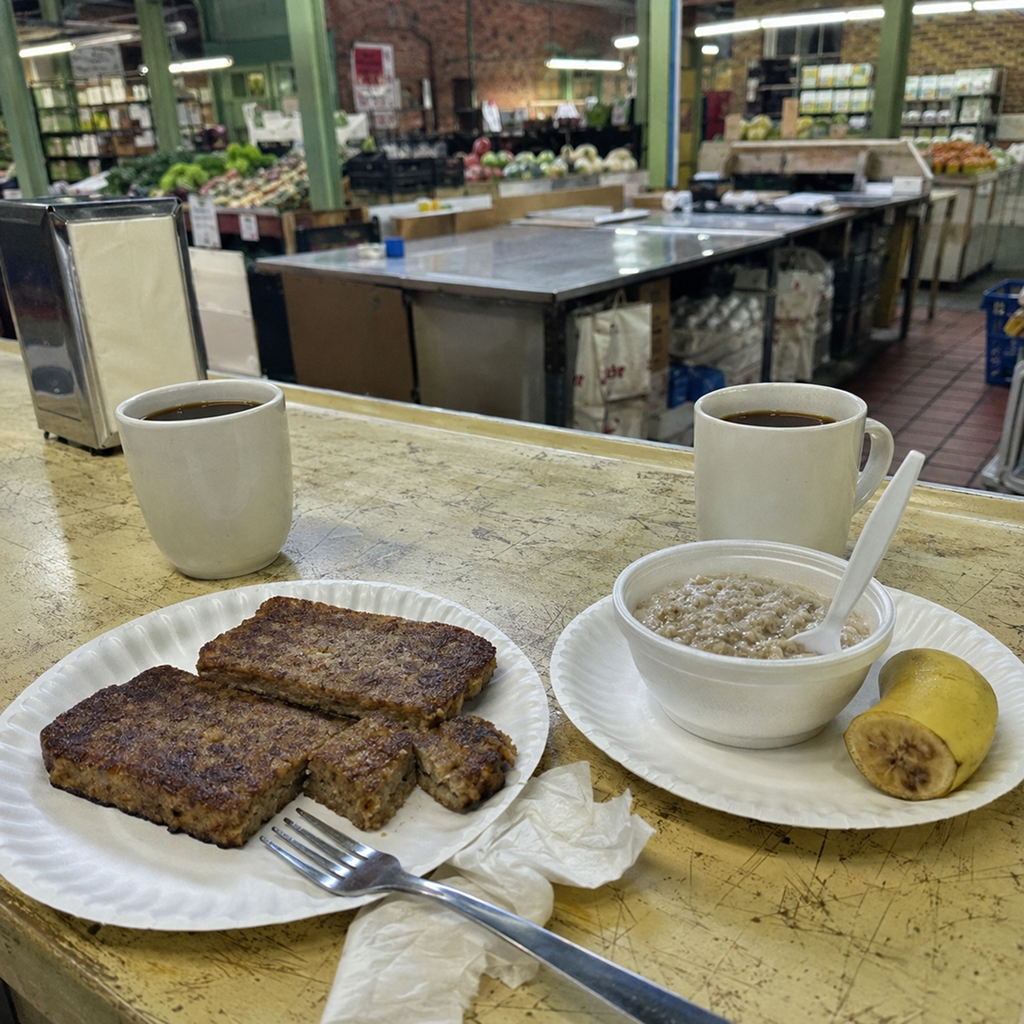
We ate early. There is a plaque at Findlay Market that says it has been standing in Over-the-Rhine since before there was a ballclub in this city. I had goetta at a counter — pork and beef and oats, pressed into a loaf and sliced and fried.
Cecil had oatmeal and half a banana off the same counter and did not say one word about mine.
There is a banner up for the parade they run on Opening Day, which they say is the oldest of its kind in the country because the Scarlet Stockings are the oldest club in the country. 1869. The first one that admitted out loud it was paying its men.
I said the paperwork on that is thinner than the banner makes it sound — the 1869 club broke up the year after, and the outfit playing tonight did not play a league game until 1882, and what those two have in common is a city and a color.
Cecil said, "Somebody in that 1882 outfit had seen the '69 club play."
Hollis met us at the door at three with two laminates in his hand and my name spelled right on one of them.
He called Cecil Coach Tate. Nobody has said that in front of me since Hillsboro in April.
He is their hitting coach. Somebody in their front office forwards the pieces around, he said, and he'd sat down with a stack of them the night before to see who he'd be talking to. He got as far as Miami. He said they run long. He said all that fast, like a thing he had decided in advance to say, and then he was done with it and we were walking.
He asked when the testing on the wood would be finished. I said soon.
On the phone Tuesday night, Cecil had offered to come look at their hitters.
"I've got a second baseman hitting one ninety-one," Hollis said on the walk down. "Hits it on the nose about as often as anybody I've ever had."
He said it again at the bottom of the ramp. Then: "I'm about out of ideas on him."
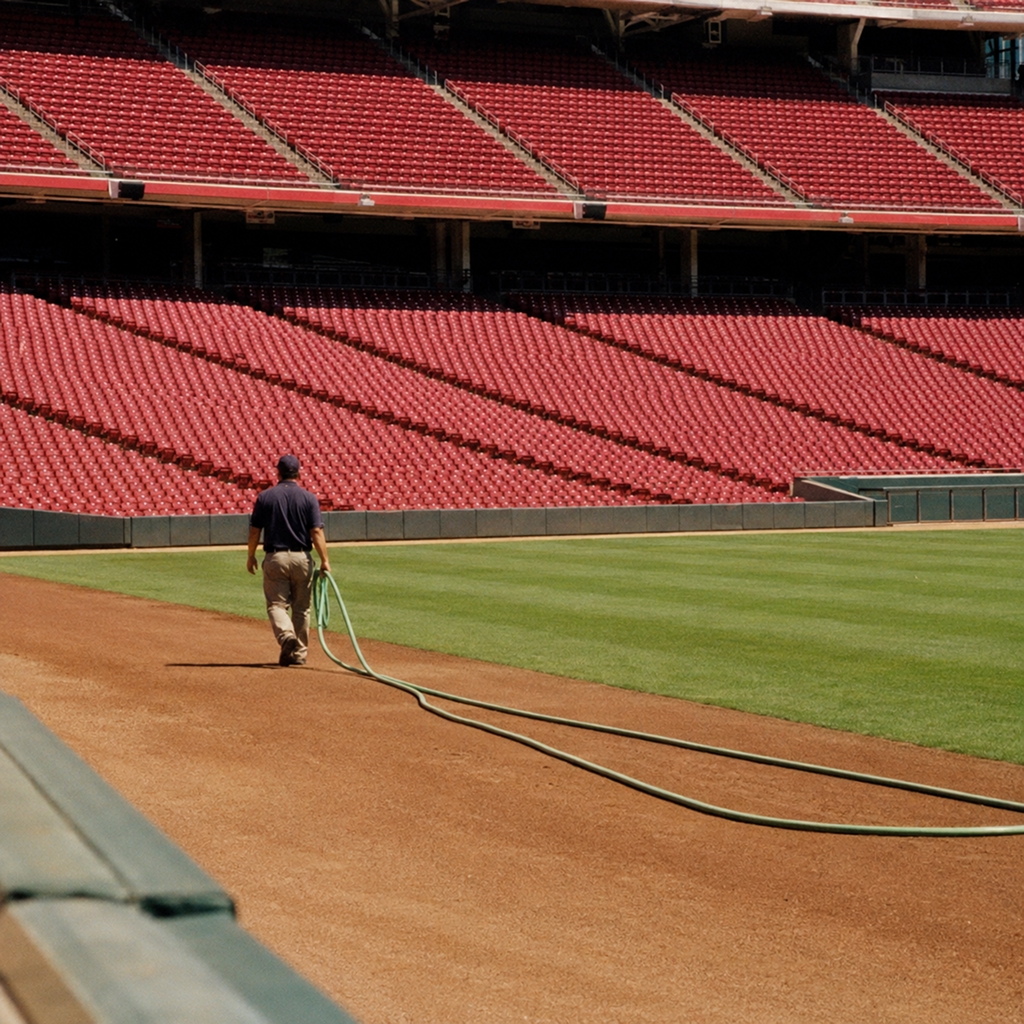
They hit before anybody is let in. Every seat red and empty. A crew walking a hose out along the warning track. A radio going somewhere underneath us with nobody near it.
Cecil stood at the rail and watched them take ground balls for a minute. Then he picked up one of ours and went out.
He did not hand it to the first man who came over. He crossed to a particular one and held it out handle first.
"Do me a favor," he said. "Put one in play with this."
He put one in play with it. The next one went into the second deck in left, and it did not sound like a man hitting one ninety-one.
The fellow who had been throwing to him stopped throwing. The man behind the cage took the phone away from his ear.
I heard that sound once before, in San Diego in March, off a bat in the hands of a reserve outfielder who hit singles for a living. It is not louder than the other kind. It is shorter, and it quits sooner than you expect, and in a building with nobody in it you hear how much sooner.
I looked at the man with the phone.
Then he missed two, and Cecil watched those and did not watch the one that went out.
Fifteen minutes. Maybe twenty. Then somebody hollered and the round was over. He came out of the cage and did not put ours back in the rack with the rest of them. He stood it against the fence and went in.
The man with the phone came over to us at the rail afterward. He was pleasant and he was not in a hurry and neither one of those things meant what I wanted it to mean.
Cecil talked. He asked the man what he goes through in a month. He asked what breaks and when. Then he said:
"It won't make a man better. It'll quit wasting the ones he already hits right."
That is mine. I built it in front of a motel mirror in April out of a pitch I made in Sacramento, the one time in four and a half months he has told me a pitch of mine was any good. I have said it out loud to four men and a mirror in every motel from Walla Walla to Boston, and it has never once done a thing.
The equipment manager nodded. At Cecil.
Then he said to send him the lab reports.
He was not being a jerk about it. He said everything goes through people upstairs now and those people want numbers, and if I send him what the labs come back with he'll walk it in there himself. He gave me an address and spelled the middle part of it. Six weeks at the lab and two more for them to look at what came out, the man in Miami said. That is eight. It has been nine. I wrote the address on the back of a ticket stub. Cecil had the bats up off the rail before I was done writing, and the one off the fence with them.
We were most of the way across the lot when somebody said hey behind us, and then said it again louder.
It was the man Cecil had handed the bat to. He had come out a door I do not think he was supposed to come out of, in a compression shirt and shower sandals, and he was not out of breath but he had moved.
He wanted two.
He asked what they run. Cecil told him what they run. He said he'd take two, and came up with a roll from somewhere, and counted it into Cecil's hand, and Cecil took it and handed it to me. I put it in an envelope by itself and put the envelope in the bottom of my bag.
I have given a bat to a lot of men this summer who took it like a pen off a counter. This one went through what Cecil had in his arms and asked which two came nearest the same weight. He held those two, one and then the other, and took them.
I took the pad out of my jacket and asked him for his name and a number so we'd know where to send more when he wanted more. He gave me the name. He said he'd rather take mine, and put it in his phone while I read it out, and read it back once on his own.
Then he said, easy about it, that he'd appreciate it if his name stayed out of whatever this was.
He said it looking at the building.
I told him it would.
I wrote the name down and put the pad back in my jacket, and he shook Cecil's hand and then mine and went back in the door he'd come out of.
We sat out in left for the game, where the tickets are cheap, and watched for one hitter.
He hit one out. It got over the wall and not much more. I was on my feet anyway, before it came down. Cecil stayed where he was and watched him run it out.
I asked if that was our bat.
Cecil said he couldn't hear it.
There was a man four rows down with binoculars around his neck who had not lifted them all night. I do not remember getting down there. I had them up at my own eyes before either of us thought about the strap, and he came forward off his seat about six inches and stayed there, and by the time the blur came together it was a boy in a helmet going down the dugout steps with the bat under his arm.
I let go of the man's binoculars. I told him I was sorry. He said it was all right and did not ask.
I went back up and sat down.
The Scarlets won it three to two.
I'll tell the home office this much. On Wednesday afternoon a man who plays in the major leagues paid his own money for two Wallop sticks. On Wednesday night he hit a ball out of the ballpark, and I cannot say for certain that it was one of ours.
Thursday it was eighty-eight at a quarter to one, which is why there were seats.
I bought two of them eleven rows back of the visiting dugout, on the aisle, which is the closest I have sat to a major league infield since a man from a newspaper in Los Angeles comped us in April. From eleven rows you can read the mark burned into a bat.
I took what the seats cost out of the envelope before we left the motel and folded the rest back the way it had been.
Cecil looked at the price printed on his ticket, and then at me, and then sat down.
He was in the lineup. The first time he came up he set himself in there and I read the mark burned into the bat from eleven rows.
Cecil had seen it before I did.
His name was in my jacket.
Five balls left that ballpark in the space of an afternoon — one to lead off the game, two in the fourth, one in the seventh, one in the ninth with a man on. Five different men hit them. Every one of them went farther than the one the night before. None by our man.
The home team came away with the win, six to five.
I called Gary from the lot before we got in the car. I had an address on a ticket stub in my pocket and a man in Pittsburgh I had promised the same reports a week ago, and nothing to send either of them. I had one thing worth sending and it was a name.
He said the labs were saying next week. Then he talked for a while about the Fourth of July campaign.
The Chicago Fair Play Committee would be home all weekend, four and a half hours up through Indianapolis. We could have been in that lot by Friday supper.
I said there was no sense walking into another building until we had the numbers to walk in with.
Cecil had the door open and one foot already in the car. "Where are we headed, then?"
— Freely
Fantasy baseball without the homework.
Wallop is a home run-only game for friends — simple enough to play all season without the daily grind. Start a league and draft any time before September.
Start a League