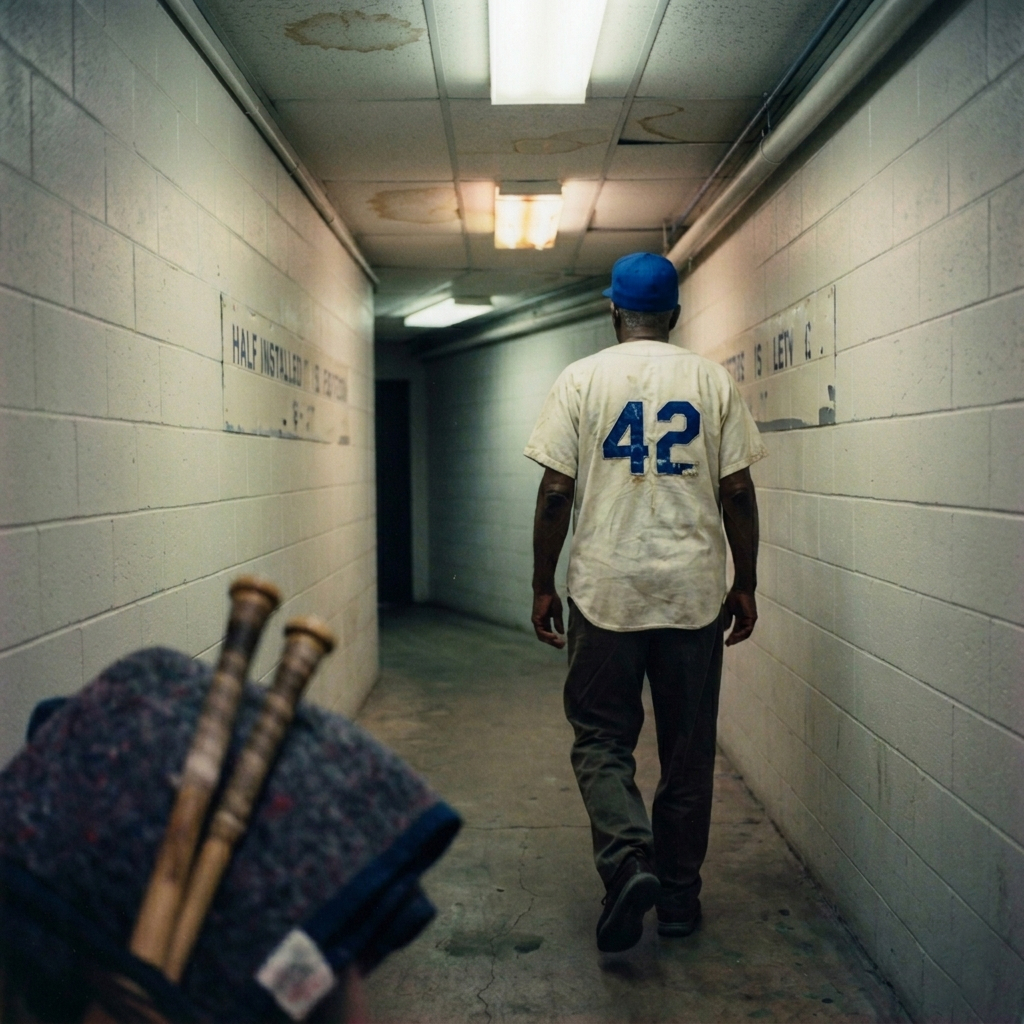
Forty-Two
Bats distributed to date: zero. Equipment managers contacted: six — one of whom we found by walking through an unmarked door because nobody was out front. Status of the "Moneybat" pitch: under consideration, technically.
We took I-5 north from Los Angeles, following the Texas Drovers to Sacramento — same opponent we watched at Trolley Stadium, different ballpark, different planet. I pulled into In-N-Out on Panama Lane in Bakersfield because I had researched this. Halfway through his burger, Tate stood up, walked out the door, crossed the parking lot to a McDonald's I hadn't noticed, and came back with a large fries.
"In-N-Out can't make a french fry," he said, and ate them with the contentment of a man who has never once consulted a food blog. I looked down at my In-N-Out fries which suddenly felt limp and bland.
Sutter Health Park was built for the Sacramento River Cats — a Triple-A club, fourteen thousand seats, the kind of park where every foul ball reaches the concourse and the outfield seating is a grass hill. The Itinerant Athletic Exhibition are playing their first season here after the move from Oakland while their Las Vegas stadium gets built. So a major league team is operating out of a facility designed for prospects and rehab assignments. The concourses are narrow. The clubhouse corridors feel like a high school that added a wing. The whole operation has the energy of a restaurant that opened before the menus were printed.
We couldn't find an equipment manager out front because there wasn't anyone out front. The Hobos' operation is still finding its legs. Tate walked through an unmarked door near the third-base tunnel and I followed him with the bats because I have learned that this is what I do.
Tate was different in there. His stride changed, his shoulders dropped. Not relaxed, exactly. Settled. This was his scale. Forty years of minor league clubhouses and half-finished facilities and equipment rooms that doubled as storage. The major league team was visiting his level. He knew where things were before anyone told him.
We found a young man with a radio and a clipboard who looked like he'd been hired sometime that morning.
I gave the pitch. I told him: yours is the franchise that changed how baseball thinks about value. Billy Beane counted cards. Beat the house on half the budget. Wallop Lumber Co. is doing the same thing — an undervalued wood from volcanic soil, mineral-dense, tighter grain, ignored by every established supplier because it isn't ash and it isn't maple and it doesn't come from Pennsylvania. The Moneybat, if you will. I asked if Beane was around. "He was a player," I said. "He'd get it."
The man with the clipboard looked at me for a moment that lasted longer than a moment. He said Beane hadn't been day-to-day with the organization in a while. He said the bats were interesting. He said they couldn't commit to anything right now because — and here he gestured at the corridor, the half-installed signage, the water-stained ceiling tile — they were still figuring out where the batting cages were. He took my card. He said he'd pass it along.
Walking back to the concourse, Tate said: "That was a good pitch."
Three weeks in. The first time he has said anything about the quality of my work.
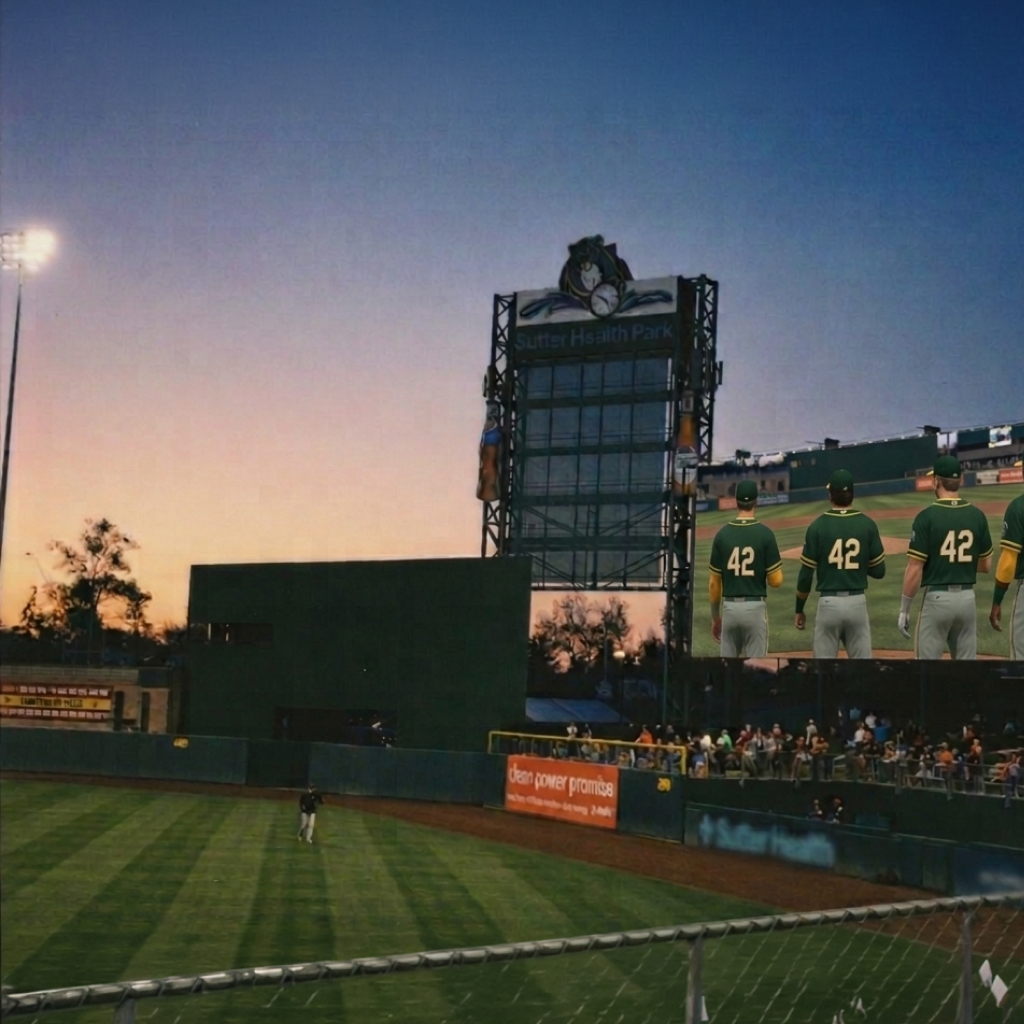
Tate came to the stadium on Jackie Robinson Day in a Brooklyn Dodgers jersey. Number 42. Not a replica from the team store, not a giveaway — soft and faded in the way cotton gets when it has been washed more times than it has been worn and has been worn plenty. The league didn't make April 15 a universal thing until 2009. This jersey is older than that. It says Brooklyn because that's where it happened.
I looked at the lineups. Every player on the field wearing 42. I said, to Tate, because I cannot help myself: "Forty-two. The answer to the ultimate question of life, the universe, and everything."
Tate did not respond to this.
I kept going. I said something close to: "It was going to happen at some point, wasn't it? Robinson, or the next guy. The game couldn't stay closed forever."
Tate looked at me. Not the flat look he gives when I'm being annoying. A different one.
"You make it sound like the door was closed one day," he said, "and the next day Robinson walked through and then it was just open for everybody."
I said I didn't mean —
"Boston didn't put a Black man on the field until 1959," he said. "Twelve years later. The Yankees waited until '55. Detroit, '58. Half the league spent a decade pretending it hadn't happened."
He was looking at the field. A foul ball cracked off somewhere behind third and the crowd murmured and settled. Tate didn't move.
"Black men played alongside white men in the 1880s," he said. "Fleetwood Walker caught for Toledo in 1884. Then Cap Anson — biggest star in the game — refused to take the field against Black players, and everybody else fell in line. No vote. No rule. Just a gentleman's agreement." He said the word gentleman the way you'd say tumor. "They built the wall on purpose. Things that are built on purpose don't come down on their own."
I did not speak. I was aware of my Hitchhiker's Guide reference hanging in the air like a balloon at a funeral.
"In Cincinnati," he said, "Jackie got a letter that said he'd be shot if he played. He played. One of his teammates said they should all wear 42 so the sniper wouldn't know who to shoot."
He gestured toward the field, "And now they all do."
I looked at the field. Every player in a Sacramento ballpark wearing the number of a man who wore it in Cincinnati while somebody in the stands may have been holding a rifle. What I was seeing was a tribute. What Tate was seeing was the long shadow of a death threat that became a tradition because the man it was meant to stop refused to stop.
I did not make another reference. I did not offer context or commentary or a callback to anything I had read. For the first time in three weeks I did not have a sentence ready, and I knew enough to leave the silence alone.
The inning changed. Nine men in 42s ran out of the dugout and spread across the field, each one finding his position, the numbers fanning out across the grass until they were just players again. Tate watched them settle. The game went on.
We are here through the 16th. San Francisco after that.
— Freely
Fantasy baseball without the homework.
Wallop is a home run-only game for friends — simple enough to play all season without the daily grind. Start a league and draft any time before September.
Start a League